Knee Pain in Young Adults is becoming an increasingly common reason for orthopaedic consultation. Many patients in their twenties and thirties visit me with pain while climbing stairs, running, working out, playing sports or even sitting for long hours.
The first question I ask is not, “Does this patient need surgery?”
I ask:
Can we understand the cause early and preserve the natural knee?
That approach is important because Knee Pain in Young Adults does not always mean severe cartilage damage, arthritis or the need for an operation. In many cases, the problem may be related to overuse, sudden changes in exercise, muscle weakness, sports injuries or poor movement mechanics.
My philosophy is simple:
Preserve the joint first. Use surgery only when it is genuinely needed.
My orthopaedic training, including my senior residency at AIIMS, exposure to sports medicine and joint-preserving techniques in South Korea, and sports medicine experience at Rush University in Chicago, has reinforced this approach throughout my practice.
Why Is Knee Pain in Young Adults Increasing?
There is no single reason behind Knee Pain in Young Adults.
Modern lifestyle often combines long periods of inactivity with sudden bursts of intense exercise.
A young professional may sit at a desk for eight to ten hours and then go directly to the gym for heavy squats or leg training.
Someone who has not exercised for months may suddenly start running five kilometres every day.
Another person may play football or badminton every weekend without doing enough strength or conditioning work during the week.
The knee is capable of handling high loads, but the muscles, tendons and supporting structures need time to adapt.
When training load increases faster than the body can tolerate, pain can develop.
These are some of the most common Reasons for Knee Pain in Young Adults.
Common Causes of Knee Pain in Young Adults
The Causes of Knee Pain in Young Adults can vary significantly from one person to another.
That is why the diagnosis should always come before treatment.
1. Sudden Increase in Exercise
A sudden increase in running, gym training or sports activity is one of the most common causes I see.
A person may increase:
- running distance,
- gym weights,
- squat repetitions,
- sports frequency,
- or training intensity
within a very short period.
This can lead to Knee Pain After Workout, especially if the muscles and tissues around the knee are not yet prepared for the new workload.
The answer is not always complete rest.
In many cases, the better approach is to temporarily reduce the irritating activity, improve strength and gradually rebuild the knee’s capacity.
2. Patellofemoral Pain Syndrome
Patellofemoral Pain Syndrome commonly causes pain around or behind the kneecap.
Patients may experience discomfort while:
- climbing stairs,
- going downstairs,
- running,
- squatting,
- sitting for a long time,
- or getting up from a chair.
This is especially common in active young adults.
The pain may be related to training load, muscle weakness, movement patterns and how force is being distributed around the kneecap.
For most patients, my first question is not whether surgery is required.
I want to know whether we can improve strength, movement and load distribution first.
3. Chondromalacia Patella
Chondromalacia Patella is another term young patients often see on MRI reports.
The word itself can sound worrying.
But an MRI finding does not automatically determine treatment.
The important questions are:
How much pain does the patient have?
What activities trigger it?
What does the clinical examination show?
Is the knee stable?
How much cartilage involvement is actually present?
For a young patient, preserving healthy cartilage matters.
Treatment should be based on the entire clinical picture rather than one sentence from an MRI report.
4. Muscle Weakness
The knee does not work independently.
The muscles of the hip, thigh, calf and lower leg all help control how forces pass through the joint.
Weak quadriceps or poor hip control may increase stress on the knee during running, stairs and squatting.
This is why simply taking painkillers may not solve the problem.
If weakness is contributing to Knee Pain in Young Adults, strengthening must become part of the treatment.
5. Sports Injuries
Sports Injury Knee Pain is common in people who participate in football, badminton, basketball, running and other activities involving quick direction changes.
A sudden twist, awkward landing or direct impact may injure:
- ligaments,
- the meniscus,
- cartilage,
- tendons,
- or other structures around the knee.
Not every sports injury requires surgery.
I first look at the severity of the injury, stability of the joint, swelling, mechanical symptoms and the activity level the patient wants to return to.
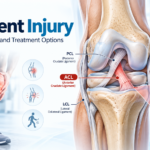
6. ACL Injury
The anterior cruciate ligament, or ACL, plays an important role in knee stability.
ACL injuries often occur during sudden pivoting, landing or changes in direction.
Some patients describe a pop followed by swelling and instability.
Treatment depends on several factors.
A competitive athlete who repeatedly experiences instability may require a different treatment plan from a less active person whose knee remains functionally stable.
The decision should be individualised.
The MRI is important, but the patient is more important.
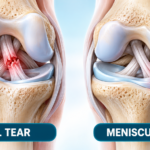
7. Meniscus Injury
The meniscus helps distribute load within the knee.
In young adults, meniscus injuries commonly occur after twisting movements or sports-related trauma.
Some tears cause pain alone.
Others may cause:
- catching,
- locking,
- swelling,
- or difficulty straightening the knee.
Whenever possible, preserving useful meniscal tissue is important.
A healthy meniscus contributes to long-term joint protection.
For me, the question is not simply whether a tear can be removed.
The better question is:
Can useful tissue be preserved?
8. Poor Exercise Technique
Poor movement technique can place unnecessary stress on the knee.
This may happen during:
- squats,
- lunges,
- jumping,
- running,
- or weight training.
The problem is sometimes not the exercise itself, but how the exercise is being performed.
Correcting technique can reduce unnecessary stress and help prevent repeated pain.
9. Previous Knee Injury
A previous injury may continue to affect the knee even after pain has settled.
Many people return to sport once they feel better, but they may not have regained full strength or movement control.
This can increase the risk of another episode of Knee Pain in Young Adults.
Recovery should therefore be based on function, not pain alone.
Knee Pain Symptoms in Young Adults
Knee Pain Symptoms in Young Adults can vary depending on the underlying problem.
Common symptoms include:
- pain around the kneecap,
- pain while climbing stairs,
- pain while squatting,
- swelling,
- stiffness,
- clicking,
- catching,
- locking,
- pain after exercise,
- or a feeling that the knee is giving way.
Some patients experience pain only during exercise.
Others notice discomfort even during everyday activities.
The pattern of symptoms often provides important clues about the cause.
When Should Knee Pain at Young Age Be Taken Seriously?
Not every episode of Knee Pain at Young Age is serious.
But some symptoms should not be ignored.
You should consider an orthopaedic assessment if there is:
- repeated swelling,
- significant pain after an injury,
- difficulty bearing weight,
- locking,
- instability,
- inability to fully bend or straighten the knee,
- or persistent pain that affects daily activity.
A hot, red or significantly swollen knee, especially when accompanied by fever, should also be assessed promptly.
Early diagnosis often gives us more options to preserve the joint.
Does Every Young Adult With Knee Pain Need an MRI?
No.
MRI is a valuable investigation, but it should be used for the right reason.
A careful history and physical examination are still extremely important.
I want to know:
Where is the pain?
When did it start?
Was there an injury?
Does the knee swell?
Does it lock?
Does it give way?
What type of exercise or sport does the patient perform?
Imaging should support clinical judgment.
It should not replace it.
Knee Pain Treatment for Young Adults
The correct Knee Pain Treatment for Young Adults depends on the underlying cause.
There is no single treatment that works for everyone.
My preference is to start with the least invasive option that has a realistic chance of solving the problem.
1. Activity Modification
If knee pain started after a sudden increase in exercise, the first step may be to reduce the activity that is irritating the joint.
This does not always mean stopping exercise completely.
It may mean temporarily reducing:
- running distance,
- workout intensity,
- jumping,
- heavy squats,
- or repetitive sports activity.
The aim is to allow the knee to recover without unnecessary deconditioning.
2. Physiotherapy and Strengthening
Physiotherapy is an important part of Knee Pain Treatment for Young Adults in many cases.
A rehabilitation programme may focus on:
- quadriceps strength,
- hip strength,
- hamstring control,
- calf strength,
- balance,
- flexibility,
- and movement control.
But rehabilitation should eventually match the patient’s real-life goals.
A runner should be prepared to run again.
A footballer should regain the strength needed for cutting and turning.
A gym-goer should be able to return to training safely.
3. Correcting Training Load
One of the most overlooked causes of knee pain is poor load management.
Some people train too often.
Others increase weights too quickly.
Some do not allow enough recovery between intense sessions.
The knee may not need complete rest.
It may simply need a better training plan.
4. Medicines When Appropriate
Pain-relieving or anti-inflammatory medicines may be useful in selected cases when advised appropriately.
However, medication should not be used to repeatedly hide pain while the same activity continues to irritate the knee.
If symptoms keep returning, the underlying cause needs to be addressed.
5. Gradual Return to Exercise
Returning to activity too quickly is another common mistake.
A safer progression may involve:
walking → strengthening → jogging → running → sport-specific movements.
The exact progression depends on the diagnosis.
The goal is to make the knee ready for the activity rather than simply waiting for pain to disappear.
When Does Surgery Become Necessary?
Joint preservation does not mean avoiding surgery at all costs.
Certain knee problems genuinely require surgical treatment.
These may include selected cases involving:
- significant ligament instability,
- displaced meniscus tears,
- cartilage injuries,
- fractures,
- or other structural problems.
But surgery should have a clear purpose.
I do not believe in operating simply because an MRI shows an abnormality.
The symptoms, examination, imaging and functional limitations should all point in the same direction.
Can Surgery Be Part of Joint Preservation?
Yes.
Sometimes surgery is performed precisely because we want to protect the natural knee.
For example, restoring stability in an unstable joint or preserving meniscal tissue in an appropriate case may help protect the knee over time.
Joint preservation does not mean “never operate.”
It means:
Do what gives the patient the best chance of keeping a healthy, functional natural knee for as long as possible.
Why Joint Preservation Matters in Knee Pain in Young Adults
Young patients may need their knees to remain active for several decades.
That changes the way I think about treatment.
When treating Knee Pain in Young Adults, I ask:
Can we preserve the cartilage?
Can we protect the meniscus?
Can we restore stability?
Can we improve strength?
Can we correct poor movement patterns?
Can we avoid an unnecessary procedure?
These questions matter more than simply treating pain for a few days.
The long-term health of the joint should always remain part of the treatment plan.
How to Reduce Knee Pain After Workout
Knee Pain After Workout may often be reduced by improving training habits.
Some practical steps include:
- increase exercise gradually,
- avoid sudden changes in running distance,
- strengthen the hips and thighs,
- allow enough recovery,
- use proper exercise technique,
- warm up before demanding activity,
- and avoid repeatedly training through increasing pain.
Your body needs time to adapt.
Fitness improves through gradual progression, not sudden overload.
When Should You Visit an Orthopaedic Specialist?
You should consider seeing an orthopaedic doctor if knee pain:
- keeps returning,
- persists for several weeks,
- follows a significant injury,
- causes repeated swelling,
- produces locking or instability,
- limits normal activities,
- or makes exercise increasingly difficult.
Seeing an orthopaedic specialist does not automatically mean surgery.
In many cases, early evaluation can actually help prevent the need for more invasive treatment later.
Conclusion
Knee Pain in Young Adults can develop because of exercise overload, muscle weakness, sports injuries, patellofemoral problems, meniscus injuries, ligament problems and several other factors.
The most important step is identifying the correct cause.
For many patients, treatment may involve activity modification, physiotherapy, strengthening and gradual return to exercise.
For selected injuries, surgery may be necessary.
But my approach remains the same:
Preserve the natural knee whenever possible and choose treatment according to the individual patient—not simply according to an MRI report.
A young painful knee does not always need aggressive treatment.
Very often, it needs the right diagnosis, the right rehabilitation and enough time to recover.
Frequently Asked Questions
What are the most common causes of knee pain in young adults?
The Causes of Knee Pain in Young Adults include sudden increases in exercise, muscle weakness, Patellofemoral Pain Syndrome, sports injuries, meniscus problems, ligament injuries and previous knee injuries.
Why am I getting knee pain at a young age?
Knee Pain at Young Age may result from exercise overload, sports injuries, muscle imbalance, poor movement mechanics or a previous injury. It does not automatically mean arthritis.
What are common knee pain symptoms in young adults?
Common Knee Pain Symptoms in Young Adults include pain while climbing stairs, squatting or exercising, along with swelling, stiffness, clicking, locking or instability.
Why does my knee hurt after a workout?
Knee Pain After Workout can occur when training intensity increases too quickly, muscles are not adequately conditioned or exercise technique is placing too much stress on the joint.
What is Patellofemoral Pain Syndrome?
Patellofemoral Pain Syndrome is pain around or behind the kneecap. It often becomes noticeable while running, squatting, climbing stairs or sitting with the knee bent for a long time.
Is Chondromalacia Patella serious?
Chondromalacia Patella does not automatically mean that surgery is required. Its significance depends on the patient’s symptoms, clinical examination and degree of cartilage involvement.
Can sports injury knee pain be treated without surgery?
Some cases of Sports Injury Knee Pain improve with structured rehabilitation and activity modification. Other injuries involving significant instability or structural damage may require surgery.
What is the best knee pain treatment for young adults?
The best Knee Pain Treatment for Young Adults depends on the diagnosis. Treatment may include activity modification, physiotherapy, strengthening, load management, medication or surgery in selected cases.
Does every ACL injury require surgery?
No. ACL treatment depends on knee stability, associated injuries, activity level and sporting goals. Treatment should be individualised.
Can knee pain in young adults be prevented?
Not every case can be prevented, but gradual training progression, muscle strengthening, good exercise technique and adequate recovery may reduce the risk of several common knee problems.