Knee Pain While Climbing Stairs is one of the common complaints I see in my orthopaedic practice. Many patients immediately worry that their knee is wearing out or that surgery may eventually be necessary. I prefer to begin with a different question:
Does this knee really need an operation, or can we preserve the natural joint?
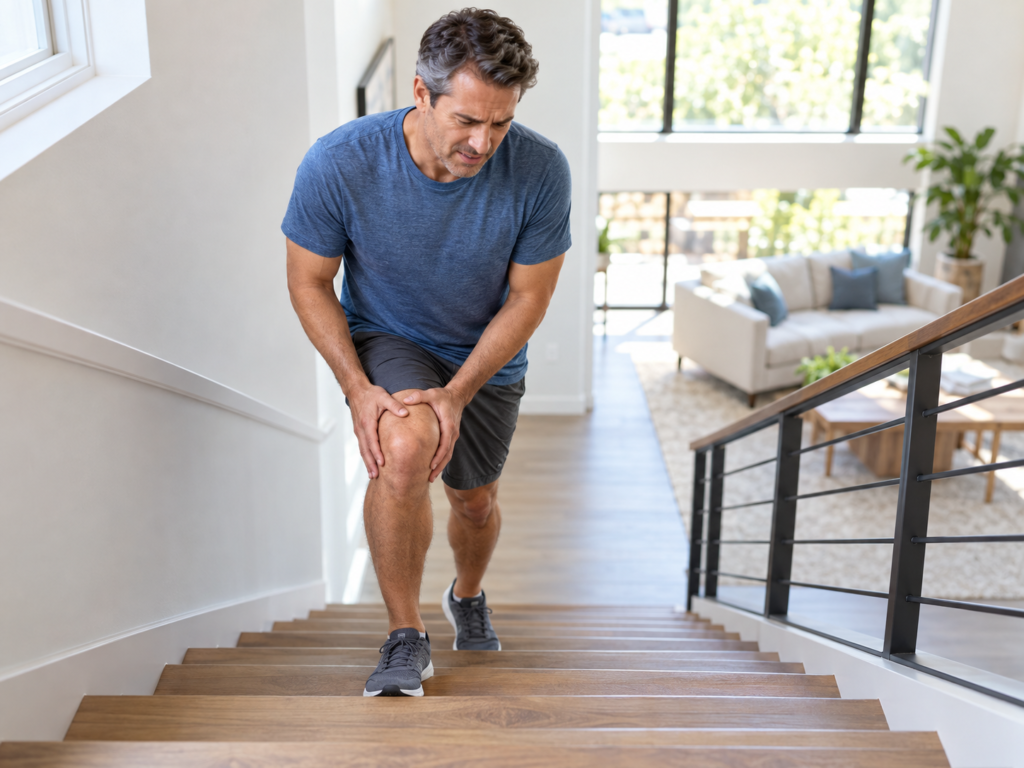
That question guides the way I approach Knee Pain While Climbing Stairs. Climbing stairs places more load on the knee than normal walking, so discomfort during this activity may sometimes be an early sign that the kneecap, cartilage, muscles or surrounding tissues are under stress.
For me, the first goal is not to plan a procedure. It is to understand why the knee is hurting and whether we can protect the joint before the problem progresses.
What Causes Knee Pain While Climbing Stairs?
When we climb stairs, the knee bends while supporting our body weight. This increases pressure around the kneecap and requires good control from the quadriceps and other muscles surrounding the joint.
Common causes of Knee Pain While Climbing Stairs can include patellofemoral pain, cartilage irritation around the kneecap, early osteoarthritis, muscle weakness and tendon overload.
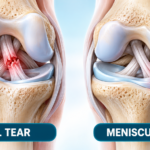
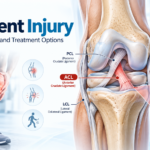
Previous knee injuries may also contribute. In some patients, meniscus or ligament problems can cause pain, especially when there is swelling, catching, locking or a feeling that the knee may give way.
What matters to me is finding the actual cause.
Two patients can experience knee pain going up stairs but may need completely different treatment plans.
My First Priority Is Joint Preservation
My training at AIIMS, New Delhi, followed by my exposure to sports medicine and joint-preserving techniques during my fellowship in South Korea and observership at Rush University in the USA, strengthened one principle that continues to guide my practice:
Preserve the patient’s natural joint whenever it is medically possible.
When someone comes to me with Knee Pain While Climbing Stairs, I first assess whether the cartilage is reasonably healthy, whether the knee is structurally stable and whether the pain can be managed without surgery.
Depending on the diagnosis, physiotherapy, muscle strengthening, activity modification, weight management, medication or other conservative treatments may help.
The aim is not simply to stop today’s pain. It is to protect the knee for the years ahead.
Technology Should Support the Decision, Not Make It
Modern orthopaedics gives us access to better imaging, arthroscopy, navigation, robotics and advanced surgical techniques.
I value these technologies, but I do not believe technology itself should become the reason for treatment.
A robotic system cannot decide whether a patient with Knee Pain While Climbing Stairs truly needs surgery. That decision should come from careful examination, diagnosis, imaging when required, the patient’s symptoms and clinical judgment.
Technology becomes valuable when it helps us perform the right treatment more accurately.
When Should Knee Pain While Climbing Stairs Be Checked?
Occasional discomfort after unusual activity may improve with rest. However, persistent Knee Pain While Climbing Stairs deserves attention, particularly when it begins affecting daily activities.
I recommend an orthopaedic evaluation when the pain continues repeatedly or is accompanied by swelling, stiffness, locking, instability, difficulty bending or straightening the knee, or increasing difficulty while climbing or descending stairs.
These symptoms do not automatically mean surgery.
They simply mean we need to understand what the knee is trying to tell us.
Does Every Patient With Knee Pain Need Surgery?
No.
I do not believe that every painful knee needs an operation simply because advanced surgical options are available.
Treatment for Knee Pain While Climbing Stairs should depend on the condition of the joint, extent of damage, age, activity level, symptoms and long-term expectations of the patient.
If we can preserve the natural knee safely, that is the path I prefer to explore first.
When significant structural damage or advanced disease makes surgery genuinely necessary, modern technology can help improve planning and precision. But technology remains a tool—the patient and the joint always come first.
Final Thoughts
Knee Pain While Climbing Stairs should not be ignored, but it should not immediately create fear of surgery either.
My approach is simple: diagnose the cause early, protect healthy structures and preserve the natural joint whenever possible.
The most advanced treatment is not always the treatment with the most technology.
Sometimes, the real advancement is knowing when a patient does not need surgery—and doing everything possible to preserve the joint they already have.