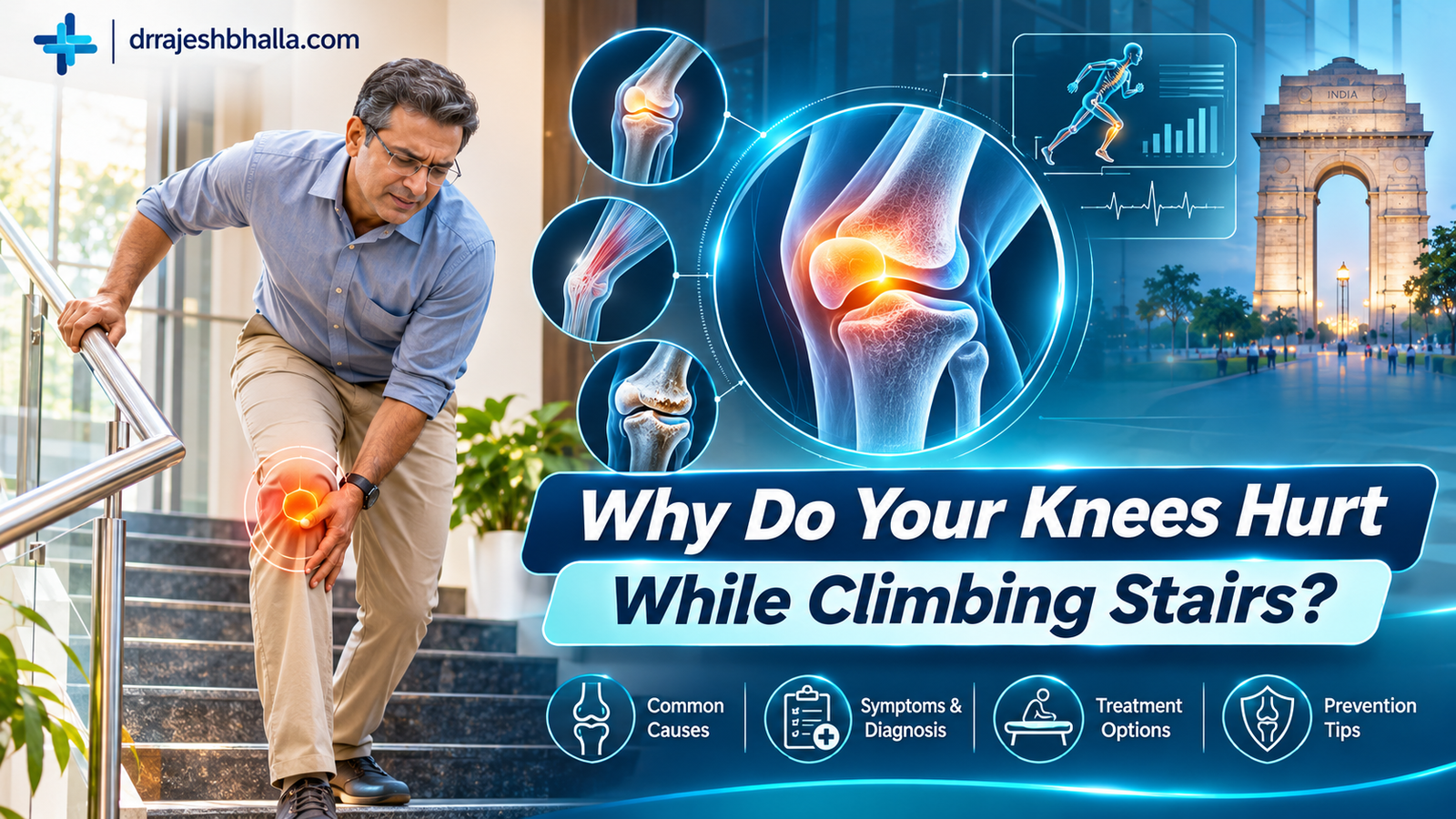
Knee Pain on Stairs can turn a simple everyday activity into an uncomfortable experience. Whether you’re climbing upstairs after a long day or walking downstairs at home, recurring knee pain can affect your confidence, mobility, and independence.
Imagine returning home after a tiring day. You reach the staircase, take a few steps, and suddenly feel pain around your knee. You instinctively grab the railing and slow down.
Perhaps you’ve started avoiding stairs whenever possible. Maybe you’re worried about going for your morning walk, playing with your children, or keeping up with your daily routine.
What once seemed effortless now requires extra care.
If this sounds familiar, you’re not alone.
Knee pain during stair climbing can affect people of different ages, including working professionals, homemakers, fitness enthusiasts, and older adults.
The encouraging news is that knee pain does not always mean serious joint damage or the need for surgery. Many common knee conditions can be managed with appropriate exercises, activity adjustments, and medical guidance.
However, persistent pain should not be ignored.
In this guide, we’ll explore seven common causes of knee pain while climbing stairs, warning signs, treatment options, practical prevention tips, and when to consult an orthopaedic specialist.
What Causes Knee Pain on Stairs?
Knee Pain on Stairs can develop when the structures inside or around the knee become irritated, overloaded, injured, or affected by joint changes.
Common causes include patellofemoral pain syndrome, knee osteoarthritis, patellar tendon problems, meniscus injuries, and reduced muscle strength.
Climbing stairs requires more effort from your knees than walking on level ground. Your muscles must work harder to lift your body while going upstairs and control your weight while descending.
During these movements, your kneecap, cartilage, tendons, ligaments, and surrounding muscles work together to provide support and stability.
When one or more of these structures cannot comfortably tolerate the additional load, pain may develop.
The location of your pain, when it started, and whether you experience swelling, stiffness, or instability can help an orthopaedic specialist identify the possible cause.
7 Common Causes of Knee Pain on Stairs
1. Patellofemoral Pain Syndrome (Runner’s Knee)
Patellofemoral pain syndrome is a common cause of discomfort around or behind the kneecap.
It often becomes noticeable during activities such as climbing stairs, squatting, running, or sitting with bent knees for a long time.
You might experience a dull ache at the front of your knee or pain that gradually increases during activity.
This condition can affect both active individuals and people who spend much of their day sitting.
Possible contributing factors include sudden changes in exercise intensity, reduced muscle strength, and certain movement patterns.
What may help: A physiotherapist may recommend gradual strengthening exercises for the quadriceps and hip muscles, alongside suitable activity modifications.
2. Knee Osteoarthritis
Knee osteoarthritis involves changes in the cartilage, bone, and other structures of the knee joint.
Over time, these changes may make activities such as walking, standing, and stair climbing uncomfortable.
Common symptoms include knee stiffness after resting, pain during movement, reduced flexibility, and occasional swelling.
Some people also notice cracking or grinding sensations.
However, pain while climbing stairs does not automatically mean you have arthritis.
What may help: Depending on the condition, treatment may involve strengthening exercises, appropriate physical activity, weight management where relevant, and medical guidance.
3. Patellar Tendon Problems
The patellar tendon connects the kneecap to the shin bone and plays an important role in straightening the leg.
Activities involving repeated jumping, running, or other high loads may irritate this tendon.
Patellar tendinopathy often causes pain just below the kneecap.
For some people, climbing stairs or squatting may make the discomfort more noticeable.
What may help: Adjusting aggravating activities and following a progressive rehabilitation programme may improve symptoms.
4. Meniscus Injury
The meniscus is a C-shaped cartilage structure inside the knee that helps absorb shock and distribute weight.
An injury may occur after a sudden twisting movement, during sports, or because of age-related tissue changes.
A meniscus injury may cause pain when the knee bends under load, including while climbing stairs.
Other symptoms can include swelling, catching, clicking, or difficulty fully straightening the leg.
What may help: Treatment depends on the type of injury, symptoms, and examination findings. Some injuries respond to rehabilitation, while others require further assessment.
For more information, read Meniscus Tear vs ACL Injury: 7 Key Differences.
5. Weakness in the Muscles Supporting Your Knees
Your knees do not work alone.
The quadriceps, hamstrings, gluteal muscles, and other supporting muscles help control knee movement during walking, climbing, and standing.
When these muscles are weak or poorly coordinated, certain activities may become more demanding.
You may notice discomfort after prolonged inactivity or when returning to exercise.
What may help: A personalised strengthening programme can improve muscle function and movement control.
6. Previous Ligament Injuries
Ligaments help keep the knee stable during walking, turning, climbing, and other movements.
A previous ligament injury may contribute to discomfort or instability, especially if strength and movement control have not fully recovered.
Some individuals recovering from an ACL injury find climbing stairs difficult during rehabilitation.
However, pain during stair climbing alone does not confirm a ligament injury.
What may help: Appropriate assessment, strength training, and rehabilitation based on the underlying injury.
Learn more in Ligament Injury: Types, Symptoms and Treatment.
7. Overuse and Sudden Changes in Physical Activity
Have you recently started going to the gym, increased your walking distance, or begun a demanding workout routine?
Sometimes, knee discomfort develops because activity levels increase faster than the body can adapt.
Repeated squatting, running, jumping, or other activities may irritate tissues around the knee.
This does not mean exercise is harmful. The challenge may be an excessive workload without appropriate preparation and recovery.
What may help: Gradually increasing activity, allowing recovery time, and modifying painful exercises.
You may also find our article on Knee Pain After Gym helpful.
Why Does Your Knee Hurt More While Going Downstairs?
Many people find walking downstairs more uncomfortable than climbing up.
When descending stairs, the quadriceps muscles must control your body weight as your knee bends and your foot reaches the next step.
This controlled lowering movement places additional demands on the knee joint.
For people with patellofemoral pain or certain other knee conditions, this activity may aggravate discomfort.
However, pain while going downstairs is not enough to diagnose a specific condition.
A doctor may consider where the pain occurs, whether it affects one or both knees, and whether swelling, stiffness, or instability is present.
Is Knee Pain While Climbing Stairs a Sign of Arthritis?
Not necessarily.
Although knee osteoarthritis can make stair climbing uncomfortable, other conditions may produce similar symptoms.
Younger adults may experience pain related to physical activity, tendon irritation, or patellofemoral problems.
Older adults may experience these conditions as well as age-related joint changes.
Arthritis may be one consideration when knee pain occurs alongside stiffness, recurring swelling, or reduced mobility.
A clinical examination can help determine whether arthritis or another condition may be responsible.
Knee Pain on Stairs: Warning Signs You Shouldn’t Ignore
Sometimes, mild discomfort improves with appropriate activity adjustments.
However, certain symptoms require medical attention.
Consider consulting an orthopaedic specialist if you experience:
- Persistent or worsening knee pain
- Repeated swelling around the joint
- Difficulty walking or performing daily activities
- A feeling that the knee may give way
- Locking or catching during movement
- Difficulty bending or straightening the leg
- Pain that begins after a fall or sports injury
Seek urgent medical care if you cannot bear weight after an injury, have a visibly deformed knee, develop severe swelling, or experience a hot, red joint with fever.
Getting an appropriate diagnosis can help you understand the cause and avoid delaying necessary treatment.
How Is Knee Pain While Climbing Stairs Diagnosed?
A proper assessment begins with understanding your symptoms and how they affect daily life.
An orthopaedic specialist may ask when the pain started, where it occurs, whether an injury happened, and which movements make the discomfort worse.
Physical Examination
The doctor may assess your knee movement, swelling, tenderness, stability, muscle strength, and walking pattern.
X-ray
An X-ray may help identify bony changes or signs of osteoarthritis when clinically appropriate.
MRI Scan
An MRI may be recommended when a ligament injury, meniscus tear, or another soft-tissue condition is suspected and imaging would help guide treatment.
Not everyone with knee pain requires an MRI or X-ray.
The choice of investigation depends on symptoms, medical history, and examination findings.
How to Relieve Knee Pain While Climbing Stairs
Treatment depends on the underlying cause of the pain.
For many common knee problems, non-surgical management is an appropriate starting point.
1. Modify Painful Activities
Temporarily reduce movements that repeatedly aggravate the knee.
If stair climbing causes discomfort, using a handrail and taking controlled steps may help while you seek appropriate guidance.
2. Strengthen Supporting Muscles
Exercises targeting the quadriceps, hamstrings, and hip muscles may help improve knee support.
A physiotherapist can recommend exercises suited to your diagnosis and physical ability.
3. Choose Suitable Low-Impact Exercise
Activities such as swimming, stationary cycling, or walking on level ground may help maintain fitness when they do not significantly aggravate symptoms.
4. Manage Swelling and Discomfort
Applying a wrapped cold pack may help relieve discomfort after activity.
Medication may be appropriate in some situations, depending on the diagnosis and your medical history.
5. Maintain a Healthy Body Weight
For people who are overweight, gradual weight management may reduce load on the knee joints.
6. Follow a Personalised Physiotherapy Programme
Physiotherapy may improve muscle strength, movement control, flexibility, and confidence during everyday activities.
7. Seek Further Treatment When Necessary
Persistent pain, recurrent swelling, locking, or instability may require additional medical assessment.
Surgery may be considered for selected conditions, but it is not automatically needed simply because your knee hurts while climbing stairs.
The goal of treatment is to address the underlying condition and help improve comfortable movement.
Practical Tips to Protect Your Knees Every Day
Maintaining healthy knees does not mean avoiding movement.
It means staying active in ways that suit your physical condition and gradually building strength.
Some practical habits include:
- Stay regularly active within your comfort level.
- Strengthen the muscles around your knees and hips.
- Warm up before demanding physical activities.
- Increase exercise intensity gradually.
- Avoid repeatedly pushing through painful movements.
- Allow appropriate recovery after strenuous workouts.
- Seek medical advice if symptoms persist or worsen.
If your knees make clicking or popping sounds, remember that occasional painless joint noises are often harmless.
However, clicking accompanied by pain or swelling deserves attention.
Read our related article: Why Does Your Knee Make Clicking or Popping Sounds?.
Meet Prof. Dr. Rajesh Bhalla – Orthopaedic Surgeon in Delhi
When knee pain starts affecting your daily life, you may have several questions.
Why does my knee hurt? Will the problem get worse? Can it improve without surgery? Will I be able to return to my normal activities?
These concerns are understandable, especially when discomfort begins limiting the things you enjoy.
Prof. Dr. Rajesh Bhalla is an orthopaedic surgeon in Delhi with more than 15 years of experience in treating bone, joint, and musculoskeletal conditions.
His professional qualifications include M.S. and DNB in Orthopaedics. He completed senior residency training at AIIMS, New Delhi.
His background also includes international training in sports medicine and joint-preserving techniques, including fellowship training in South Korea and additional orthopaedic exposure in the United States.
His clinical interests include knee conditions, arthritis, sports injuries, joint preservation, and orthopaedic surgery.
Understanding the Patient, Not Just the Knee Pain
Knee pain affects more than the joint.
It can influence how comfortably you walk, whether you feel confident travelling, and how easily you participate in everyday family activities.
For some people, even climbing a few flights of stairs can become stressful.
Understanding these challenges is an important part of patient-focused orthopaedic care.
Dr. Bhalla’s practice describes an approach involving clinical assessment, individual treatment planning, and consideration of appropriate non-surgical and surgical options.
Not every patient with knee pain needs surgery.
Depending on the diagnosis, treatment may include physiotherapy, activity modification, medication, or other interventions.
The aim is to help patients understand their condition and make informed decisions about their knee health.
Learn more about Prof. Dr. Rajesh Bhalla’s qualifications and orthopaedic experience.
Frequently Asked Questions About Knee Pain on Stairs
1. Why do my knees hurt when I climb stairs?
Knee pain during stair climbing can occur because of patellofemoral pain, osteoarthritis, tendon problems, muscle weakness, or previous injuries. The cause depends on your symptoms and clinical examination.
2. Why does my knee hurt more when going downstairs?
Walking downstairs requires the leg muscles to control body weight as the knee bends. This movement can aggravate patellofemoral pain and certain other knee conditions.
3. Is Knee Pain on Stairs a sign of arthritis?
Not always. Arthritis is one possible cause, but tendon irritation, patellofemoral pain, and injuries can produce similar symptoms.
4. Can knee pain while climbing stairs improve without surgery?
Yes. Many common causes can be managed with physiotherapy, activity modification, and other non-surgical treatments. The appropriate approach depends on the underlying diagnosis.
5. Which exercises may help knee pain during stair climbing?
Exercises that gradually strengthen the quadriceps, hamstrings, and hip muscles may help certain knee conditions. A physiotherapist can recommend an appropriate programme.
6. Should I stop climbing stairs if my knees hurt?
You may need to modify stair use temporarily if it repeatedly causes pain. Complete avoidance is not always necessary, but severe pain, instability, or persistent symptoms require medical advice.
7. Can young adults experience knee pain while climbing stairs?
Yes. Young adults can experience stair-related knee pain due to patellofemoral problems, tendon irritation, sports injuries, or sudden increases in exercise activity.
8. When should I consult an orthopaedic specialist?
Consult an orthopaedic specialist if knee pain persists, worsens, repeatedly returns, or interferes with everyday activities. Swelling, locking, and instability also deserve medical attention.
Conclusion: Don’t Let Knee Pain Control Your Daily Life
Walking comfortably, climbing stairs, and enjoying everyday activities are things many of us take for granted until knee pain makes them difficult.
If you’ve started avoiding stairs or changing your routine because of discomfort, it may be time to understand what your body is telling you.
Knee Pain on Stairs can have several causes, including patellofemoral problems, temporary overuse, tendon irritation, osteoarthritis, or previous injuries.
The encouraging part is that many knee problems can be managed without surgery, depending on the underlying condition.
Appropriate exercises, activity adjustments, and timely medical advice may help improve comfort and mobility.
Understanding the cause of your knee pain is the first step toward making informed treatment decisions.
Your Knee Health Matters – Consult Dr. Rajesh Bhalla in Delhi
Your daily comfort matters.
Whether it’s climbing the stairs at home, enjoying a morning walk, or spending time with your family, recurring knee pain shouldn’t be something you simply ignore.
If discomfort is affecting your movement or confidence, an orthopaedic consultation can help identify the possible cause and discuss suitable treatment options.
Prof. Dr. Rajesh Bhalla provides orthopaedic consultations in Karol Bagh, New Delhi.
Contact Us
Prof. Dr. Rajesh Bhalla – Orthopaedic Surgeon
- Call Us: +91 8595471202
- Email: drrajeshbhalla@yahoo.com
- Website: www.drrajeshbhalla.com
Our Clinic Location
Orthopaedic Clinic – JMC Hospital
Joshi Road, Block 63, Karol Bagh, New Delhi, Delhi 110005.
Take the Next Step Towards Better Knee Health
You don’t have to continue guessing why your knees hurt.
An individual orthopaedic assessment can help you understand your symptoms and make informed decisions about your treatment.
Call +91 8595471202 to enquire about a consultation with Prof. Dr. Rajesh Bhalla.
Medical References
Medical Disclaimer: This article is intended for general educational purposes only and does not replace an individual medical examination, diagnosis, or personalised treatment advice.