Ligament injury occurs when a ligament, which connects bones and helps stabilise a joint, is stretched or torn. It can affect the knee, ankle, shoulder or other joints and may cause pain, swelling and difficulty moving the affected area. The right treatment depends on the severity of the injury.
A sudden twist of the knee, an awkward landing while playing sports, or a fall on an uneven surface can cause a ligament injury. Sometimes, pain and swelling appear immediately. In other cases, you may first notice that your joint feels weak or unstable while walking.
Ligament injuries are common among athletes, but they can also happen during everyday activities. Many injuries improve with appropriate treatment and rehabilitation, while severe tears may require specialist care.
Understanding the types of ligament injuries, recognising their symptoms, and knowing when to seek medical attention can help you make informed decisions about your joint health.
In this guide, we explain the causes, symptoms, diagnosis, treatment options, and recovery process for ligament injuries.
What Is a Ligament Injury?
Ligaments are strong bands of connective tissue that connect one bone to another. They help stabilise joints and prevent excessive or abnormal movement.
A ligament injury occurs when this tissue is stretched beyond its normal limit or partially or completely torn. These injuries commonly affect the knee and ankle, although ligaments in the wrist, thumb, shoulder, and other joints can also be damaged.
For example, suddenly changing direction while playing football may injure a knee ligament. Similarly, twisting your ankle while walking on an uneven surface can cause an ankle sprain.
A ligament injury does not always mean that the ligament is completely torn. The severity can range from mild stretching to a significant tear that affects joint stability.
The correct diagnosis is important because treatment depends on the location of the injury, the amount of tissue damage, and how well the joint functions.
What Are the Different Types of Ligament Injuries?
Ligament injuries can occur in several joints. The appropriate treatment depends on which ligament is affected and how severely it has been damaged.
1. Knee Ligament Injury
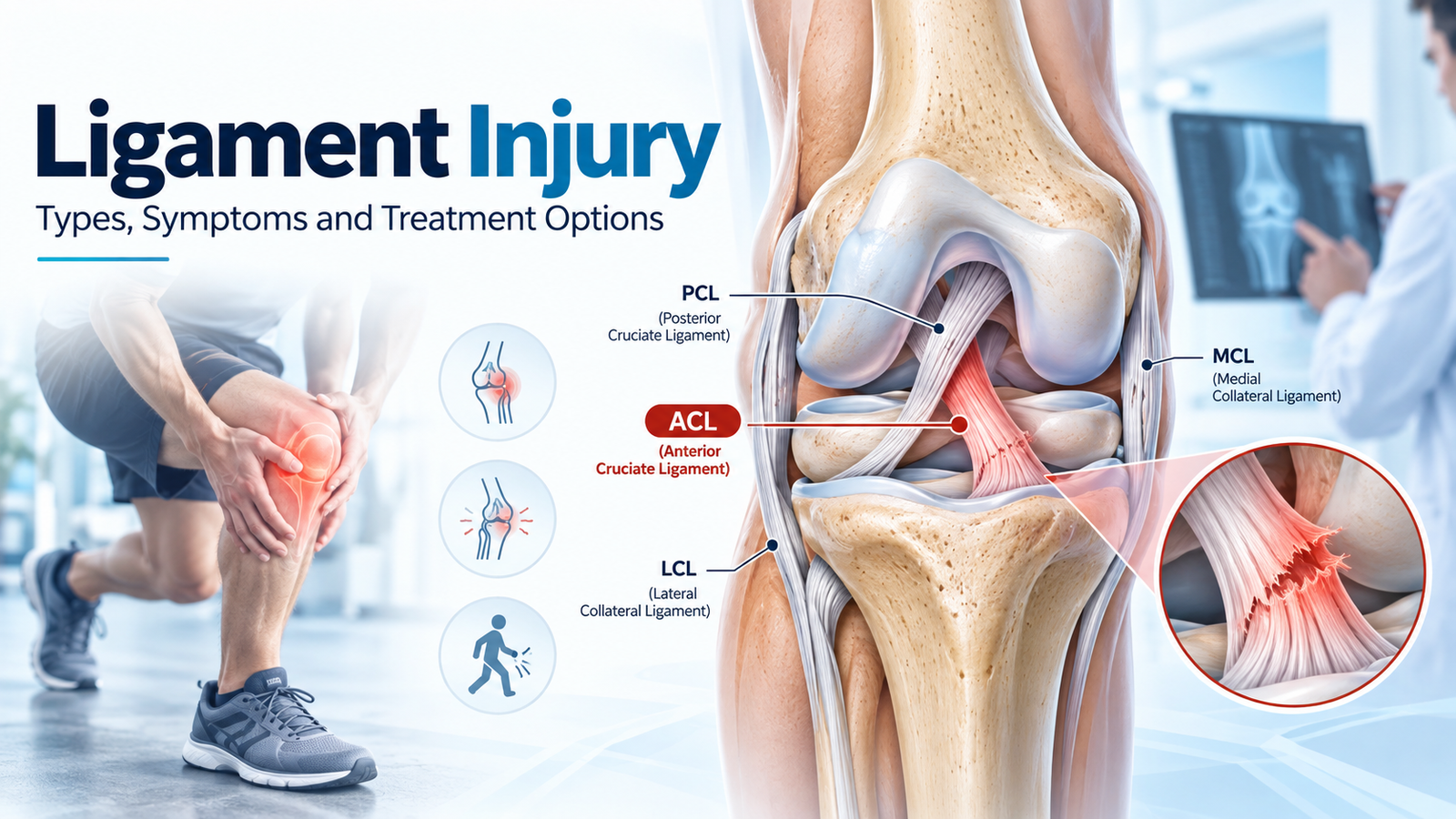
The knee is one of the most common areas affected by ligament injuries. Its stability depends on four major ligaments that work together to control movement.
- Anterior Cruciate Ligament (ACL): The ACL helps control forward movement and rotation of the knee. It may be injured during sudden stops, quick turns, pivoting movements, or awkward landings.
- Posterior Cruciate Ligament (PCL): The PCL helps prevent the shinbone from moving too far backwards. A direct blow to the front of the knee can damage it.
- Medial Collateral Ligament (MCL): The MCL supports the inner side of the knee. It may be injured when a force pushes the knee inward.
- Lateral Collateral Ligament (LCL): The LCL supports the outer side of the knee and may be damaged when a force pushes the knee outward.
Common symptoms include knee pain, swelling, difficulty bending the joint, and a feeling that the knee may give way.
If you suspect a knee ligament tear, an orthopaedic assessment can help determine the extent of the injury and whether you need further investigations or treatment.
2. Ankle Ligament Injury
An ankle ligament injury often occurs when the foot rolls unexpectedly inward or outward. This can happen while walking, running, climbing stairs, or participating in sports.
Typical symptoms include pain around the ankle, swelling, bruising, tenderness, and discomfort while standing or walking.
Mild ankle sprains often improve with suitable care. More severe injuries may require a brace, temporary support, physiotherapy, or further medical assessment.
Do not assume that every ankle injury is a sprain. A fracture can sometimes cause similar symptoms, particularly when putting weight on the foot is difficult.
3. Shoulder Ligament Injury
The shoulder contains several supporting structures that help maintain joint stability. A fall, direct impact, or shoulder dislocation can damage ligaments around the joint.
A shoulder ligament injury may cause pain, swelling, restricted movement, or difficulty lifting the arm. Treatment depends on the specific structures involved and whether the injury has affected shoulder stability.
4. Wrist and Thumb Ligament Injury
The wrist and thumb rely on ligaments for stability during gripping, lifting, and everyday hand movements. A fall onto an outstretched hand or a sudden twisting movement may stretch or tear these tissues.
Symptoms may include pain, tenderness, swelling, weak grip, and difficulty moving the wrist or thumb.
Persistent pain following a fall should be assessed by a healthcare professional because a fracture or another soft-tissue injury may produce similar symptoms.
What Are the 7 Common Symptoms of a Ligament Injury?
The symptoms of a ligament injury vary depending on the joint involved and the severity of the damage. Some symptoms appear immediately, while others become noticeable over the following hours.
- Pain: The affected area may hurt during movement, standing, walking, or putting weight on the joint.
- Swelling: Inflammation around the injured tissue can cause the joint to become swollen.
- Bruising: Discolouration may develop around the injured area.
- Tenderness: Touching or pressing the area may cause discomfort.
- Reduced movement: Bending or straightening the joint may become difficult.
- Joint instability: The joint may feel loose or seem to give way during movement.
- A popping sensation: Some people notice a pop at the time of injury, although this does not confirm a ligament tear on its own.
The level of pain does not always indicate the severity of the injury. A significant ligament tear may not cause extreme pain in every person.
Seek prompt medical attention if you cannot bear weight, experience substantial swelling, notice a visible deformity, or feel that the joint is seriously unstable.
What Causes Ligament Injuries?
Ligament injuries occur when a joint experiences more force or movement than the supporting tissue can tolerate.
Sports and Physical Activities
Sports such as football, basketball, badminton, and tennis often involve quick turns, sudden stops, jumping, and landing. These movements can put considerable stress on the knee and ankle ligaments.
Sudden Twisting Movements
A ligament can be injured when a joint twists unexpectedly. For example, the foot may remain planted while the body turns, placing excessive rotational force on the knee.
Falls and Accidents
Slipping on stairs, falling onto an outstretched hand, or landing awkwardly can damage ligaments around the ankle, wrist, shoulder, or knee.
Direct Impact
A collision during sports or a direct blow to a joint can stretch or tear the supporting ligaments.
Previous Ligament Injuries
A joint that has not regained adequate strength and stability after an earlier injury may be more vulnerable to further problems.
Inadequate preparation before intense exercise, sudden increases in training load, and returning to demanding activities too soon can also contribute to injury risk.
What Are the Grades of Ligament Injuries?
Doctors commonly classify ligament sprains into three grades based on the extent of tissue damage.
Grade 1: Mild Ligament Sprain
A Grade 1 injury involves stretching or minor damage to the ligament. The tissue remains largely intact, and the joint usually retains most of its stability.
Pain and swelling are generally mild. Many Grade 1 injuries improve with appropriate care and a gradual return to normal activity.
Grade 2: Partial Ligament Tear
A Grade 2 injury involves a partial tear of the ligament. Pain, swelling, and tenderness may be more noticeable, and the joint may become less stable.
Treatment may include temporary support, activity modification, and a structured rehabilitation programme.
Grade 3: Complete Ligament Tear
A Grade 3 injury involves a complete tear or rupture of the ligament. The affected joint may feel unstable, and movement can become difficult.
Some complete ligament tears can be managed without surgery, depending on the ligament involved and the patient’s activity requirements. Other injuries may require surgical repair or reconstruction.
The grade of injury is only one part of the assessment. The affected joint, associated injuries, functional instability, and personal goals also influence the treatment decision.
How Is a Ligament Injury Diagnosed?
An accurate diagnosis helps distinguish a ligament injury from a fracture, tendon injury, cartilage problem, or other joint condition.
Medical History
The doctor will ask how the injury happened, when the symptoms started, and whether you have experienced swelling, restricted movement, or joint instability.
Physical Examination
The affected joint is examined for tenderness, swelling, movement, and stability. Specific clinical tests may help identify which ligament is injured.
X-Ray
An X-ray is useful for identifying many fractures and certain bone injuries. However, it does not usually show a ligament tear directly.
MRI Scan
An MRI can provide detailed images of ligaments and other soft tissues. It may be recommended when a significant tear is suspected, the diagnosis remains uncertain, or associated injuries need to be assessed.
Not every patient requires an MRI. The decision depends on the examination findings and whether the scan will help guide treatment.
What Are the Treatment Options for a Ligament Injury?
Ligament injury treatment depends on the severity and location of the damage. Some injuries improve with conservative care, while others require specialist intervention.
1. Initial Care and Protection
During the early stage, the main goals are to protect the joint, reduce discomfort, and prevent further injury.
- Protection: Avoid movements that may worsen the injury. A suitable brace or support may be helpful.
- Rest: Temporarily stop sports and activities that increase pain.
- Ice: Apply a cold pack wrapped in a towel for around 15–20 minutes at a time. Never place ice directly on the skin.
- Compression: A supportive bandage may help manage swelling, provided it is not too tight.
- Elevation: Raise the injured limb on pillows when possible to help reduce swelling.
These measures can help with many minor sprains, but they are not a substitute for medical assessment when the injury is severe.
Avoid prolonged complete inactivity unless advised by your clinician. Appropriate movement can often be introduced gradually as the injury improves.
2. Medication for Pain Relief
A healthcare professional or pharmacist may recommend suitable pain relief based on your symptoms, medical history, and other medicines you take.
Not every painkiller or anti-inflammatory medicine is suitable for everyone. Follow professional advice and the product instructions.
Medication can help manage discomfort, but it does not repair a torn ligament by itself.
3. Braces and Joint Support
A brace, splint, or other suitable support may help protect an injured joint and provide additional stability during recovery.
The choice of support depends on the ligament involved and the severity of the injury. Some people need temporary support, while others may require more structured protection.
A brace should be used according to medical advice and should not replace rehabilitation when it is needed.
4. Physiotherapy and Rehabilitation
Physiotherapy plays an important role in recovering from many ligament injuries.
Once the initial symptoms are under control, a physiotherapist may introduce exercises to improve movement, restore muscle strength, and develop balance and coordination.
A rehabilitation programme may include:
- Gentle range-of-motion exercises.
- Strengthening exercises for the muscles around the affected joint.
- Balance and coordination training.
- Gradual progression towards everyday activities.
- Sport-specific exercises when appropriate.
The exercises should match the type of injury and the stage of healing. Returning to strenuous activity too early may aggravate the injury or increase the risk of another one.
5. Ligament Repair or Reconstruction Surgery
Surgery may be considered when a ligament is severely damaged, the joint remains unstable, associated injuries need surgical treatment, or the person’s activity requirements make surgery a suitable option.
For example, some patients with an ACL tear may benefit from ACL reconstruction, particularly when the knee remains unstable or they want to return to sports involving pivoting and sudden changes of direction.
However, not every ligament tear requires surgery. Many injuries can be managed with appropriate rehabilitation and other non-surgical measures.
An orthopaedic specialist can explain the expected benefits, potential risks, alternatives, and recovery requirements before you make a decision.
For more information, read our guide to ACL injury and ACL reconstruction surgery.
How Long Does a Ligament Injury Take to Heal?
Ligament tear recovery time varies from person to person. It depends on the injured ligament, the extent of the damage, overall health, and the rehabilitation programme.
A mild sprain may improve within a few weeks. More severe injuries can take several months or longer to recover from. Recovery after ligament reconstruction surgery generally takes several months, and returning to demanding sports may take longer.
Reduced pain does not necessarily mean the ligament has fully recovered.
Before returning to sports, you may need to regain adequate strength, joint movement, balance, and control. Your healthcare professional can help determine when it is appropriate to resume demanding activities.
Avoid using a fixed recovery timeline as the only measure of healing.
How Can You Prevent Ligament Injuries?
Although not every ligament injury can be prevented, a few practical habits may help reduce the risk.
Warm Up Before Exercise
Prepare your muscles and joints with gradual movements before beginning intense exercise or sports.
Build Muscle Strength
Strengthening the muscles around the knee, ankle, and other joints can improve support and movement control.
Practise Balance and Landing Techniques
Controlled landings, good movement patterns, and appropriate changes of direction are particularly important for athletes.
Wear Suitable Footwear
Choose footwear that suits your activity and playing surface. Suitable footwear may help improve grip and movement control.
Increase Training Gradually
Avoid suddenly increasing the intensity, duration, or frequency of your workouts.
Allow Time for Recovery
Do not rush back into demanding activities while significant pain, swelling, weakness, or instability remains.
If you have experienced a previous ligament injury, completing an appropriate rehabilitation programme before returning to sports is particularly important.
When Should You Consult an Orthopaedic Specialist?
Not every minor sprain requires specialist treatment, but some symptoms should not be ignored.
Seek medical assessment if you experience:
- Severe or worsening pain.
- Significant or rapidly increasing swelling.
- Difficulty bearing weight or walking.
- A joint that repeatedly gives way.
- Restricted movement that does not improve.
- Persistent pain after an injury.
- Symptoms that do not improve with appropriate initial care.
Seek urgent medical attention if the joint looks deformed, the injured area becomes numb or unusually cold, or the skin becomes blue or pale. These signs may indicate a more serious injury.
If you suspect a knee or sports-related ligament tear, an early assessment can help identify the problem and determine whether you need imaging, joint support, physiotherapy, or surgery.
For information about available care, visit our page on ligament injury treatment in Karol Bagh.
Frequently Asked Questions About Ligament Injuries
1. Can a ligament injury heal without surgery?
Yes. Many mild ligament injuries and some more severe tears can be managed without surgery. Treatment depends on the affected ligament, joint stability, associated injuries, and activity requirements.
2. What is the difference between a ligament sprain and a ligament tear?
A sprain is an injury caused by stretching or tearing a ligament. A tear describes damage to the ligament and may be partial or complete. The terms are often used together.
3. What are the first signs of a ligament tear?
Common signs include pain, swelling, tenderness, reduced movement, and joint instability. Some people notice a popping sensation when the injury occurs, but this alone cannot confirm a tear.
4. Does every ACL tear require surgery?
No. Some people can manage an ACL tear with physiotherapy and activity modification. Surgery may be considered when the knee remains unstable, when high-demand activities are important, or when associated injuries influence the treatment decision.
5. Can I walk with a ligament injury?
It depends on the severity of the injury. Some people can walk with a mild sprain, while others may need temporary support or help avoiding weight-bearing. Do not force yourself to walk through significant pain or instability.
6. How can I recover faster from a ligament injury?
Follow an appropriate treatment and rehabilitation plan, protect the injured joint, and gradually rebuild strength. Returning to strenuous activities too early may delay recovery or cause further injury.
7. Can a ligament tear happen without playing sports?
Yes. Falls, road accidents, awkward steps, and sudden twisting movements during everyday activities can also cause ligament injuries.
8. When should I get an MRI for a ligament injury?
An MRI may be recommended when a significant ligament tear is suspected, the examination does not provide a clear diagnosis, or associated soft-tissue injuries need to be assessed. Your doctor can determine whether imaging is necessary.
Conclusion
A ligament injury can affect everyday movement, exercise, work, and sports. Although some injuries are relatively mild, others can cause significant joint instability and require specialised treatment.
Understanding the type of injury, recognising the symptoms, and getting an appropriate assessment are important steps towards recovery. Depending on the severity, treatment may involve initial care, bracing, physiotherapy, or surgery.
If you have persistent pain, swelling, or a feeling that your joint is giving way, consult a qualified healthcare professional rather than relying on symptoms alone.
The aim of treatment is to restore joint function, improve stability, and help you return to your normal activities as safely as possible.
Medical disclaimer: This article is intended for general educational purposes only. It does not replace a medical examination, diagnosis, or personalised treatment advice.