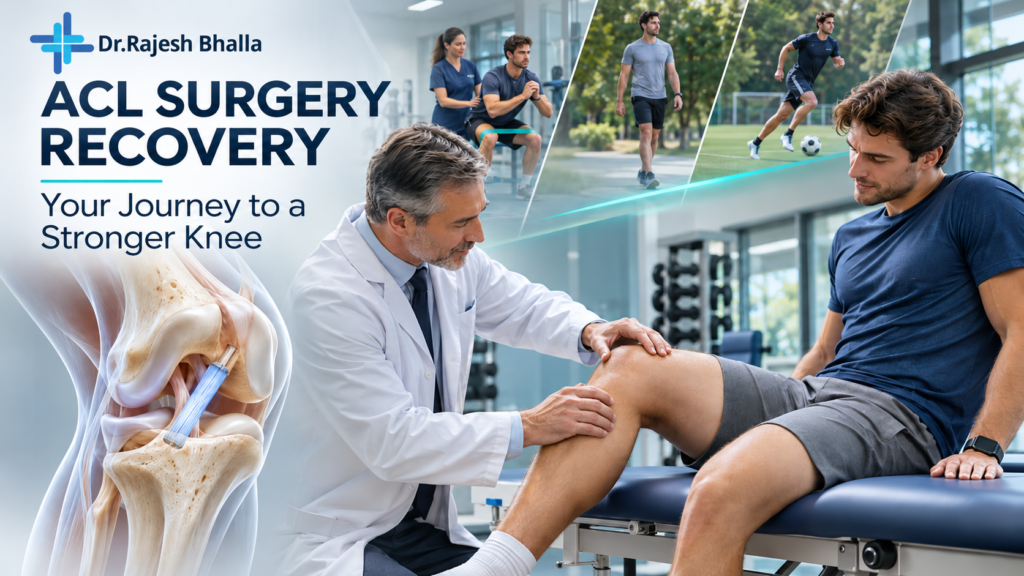
ACL surgery recovery time varies from person to person, but most patients need several months of rehabilitation to regain knee strength, stability, and confidence. While walking and basic daily activities may become easier within the first few weeks, returning to demanding sports often takes 9 to 12 months or longer.
If you have recently undergone ACL reconstruction or are preparing for surgery, you may be wondering when you can walk normally, return to work, start exercising, or play sports again.
These are important questions because recovering from ACL surgery is not simply about waiting for the surgical wound to heal. Your knee also needs time to restore movement, rebuild muscle strength, and regain the stability required for everyday activities.
Understanding the different stages of recovery can help you set realistic expectations and avoid putting unnecessary stress on your healing knee.
This guide explains the ACL surgery recovery timeline, rehabilitation stages, activities to avoid, warning signs, and important steps that support a safe return to an active lifestyle.
What Is ACL Surgery?
The anterior cruciate ligament (ACL) is one of the main ligaments inside the knee joint. It helps control forward movement and rotation of the shinbone while supporting knee stability during walking, running, jumping, and changing direction.
An ACL injury commonly occurs during sports such as football, basketball, badminton, or activities involving sudden twisting movements and awkward landings.
A significant ACL tear may cause knee swelling, discomfort, reduced movement, and a feeling that the knee is giving way.
Not every ACL injury requires surgery. Treatment depends on the severity of the tear, associated knee injuries, the patient’s activity level, and the degree of joint instability.
When surgery is recommended, ACL reconstruction usually involves replacing the damaged ligament with a tendon graft. The procedure is commonly performed using arthroscopic techniques.
The reconstructed ligament needs time to heal and adapt, while the surrounding muscles require structured rehabilitation to regain strength and control.
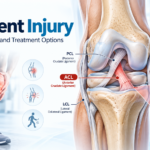
To understand the condition in greater detail, read our guide on Ligament Injury: Types, Symptoms and Treatment Options.
How Long Does ACL Surgery Recovery Take?
ACL surgery recovery generally takes 6 to 12 months, depending on the activities a patient wants to resume. Many everyday activities become manageable earlier, whereas a safe return to competitive sports often requires at least 9 months of rehabilitation.
The recovery process is usually divided into several stages.
| Recovery Period | Typical Progress and Goals |
|---|---|
| First 1–2 weeks | Manage pain and swelling, protect the knee, and begin prescribed exercises |
| Weeks 2–6 | Improve knee movement, walking ability, and muscle activation |
| Weeks 6–12 | Build strength, balance, and confidence in everyday movements |
| Months 3–4 | Progress strengthening and consider jogging when clinical criteria are met |
| Months 4–6 | Introduce more challenging exercises and controlled functional activities |
| Months 6–9 | Continue advanced strengthening and supervised sport-specific training |
| Months 9–12 and beyond | Consider returning to demanding sports after appropriate assessment and clearance |
These are general milestones rather than fixed deadlines. Patients who have additional meniscus repairs, cartilage injuries, or other ligament damage may need a modified rehabilitation programme.
A person may feel comfortable walking long before the reconstructed ACL and surrounding muscles are ready for sudden turns, jumping, or high-impact activity.
This is why recovery should be measured through knee function, strength, balance, and medical assessment rather than time alone.
ACL Surgery Recovery Timeline: Week by Week
The first few months after ACL reconstruction are important for restoring movement and progressively rebuilding knee function.
Week 1–2: Managing Pain, Swelling and Early Movement
The initial recovery stage focuses on protecting the operated knee while beginning gentle rehabilitation.
Some pain, swelling, stiffness, and difficulty walking are expected after surgery. Your surgeon may recommend crutches or a knee brace depending on the procedure and your specific condition.
During this stage, rehabilitation generally focuses on:
- Reducing pain and swelling.
- Protecting the surgical wound.
- Regaining the ability to straighten the knee.
- Gradually improving knee bending.
- Activating the quadriceps muscles.
- Practising safe walking with appropriate support.
Cold therapy, elevation, prescribed medicines, and carefully selected exercises may help manage early symptoms.
However, exercises should follow the surgeon’s and physiotherapist’s instructions. Doing too much too soon may increase swelling and discomfort.
Contact your medical team if pain or swelling is worsening rather than gradually improving.
Week 3–4: Improving Walking and Knee Mobility
During the third and fourth weeks, many patients begin noticing improvements in movement and comfort.
The main goal is to restore a more natural walking pattern while gradually increasing muscle control.
Rehabilitation may include:
- Supervised knee bending and straightening exercises.
- Quadriceps and hamstring strengthening.
- Gait training.
- Gentle balance activities.
- Low-impact exercises approved by the physiotherapist.
Some patients can gradually reduce their reliance on crutches during this period. Others may need support for longer, particularly when additional procedures were performed.
Avoid comparing your progress with someone else’s recovery. The rehabilitation plan should reflect your own surgical findings and physical condition.
Week 5–6: Building Strength and Confidence
By weeks five and six, daily movements may become more comfortable.
Patients may find it easier to walk around the house, stand for short periods, and perform basic routine activities.
The focus increasingly shifts towards improving muscle strength and movement control.
Depending on progress, physiotherapy may introduce:
- Progressive quadriceps strengthening.
- Controlled mini-squats.
- Balance and stability exercises.
- Stationary cycling when appropriate.
- Functional movement training.
The knee may still experience swelling after increased activity. This does not necessarily indicate a serious problem, but persistent swelling should be discussed with your rehabilitation team.
Importantly, feeling better does not mean the reconstructed ligament is ready for twisting or high-impact activity.
Week 7–12: Restoring Functional Knee Strength
Between weeks seven and twelve, rehabilitation usually becomes more focused on strength, endurance, and movement quality.
Patients may begin managing more daily activities independently.
Exercise programmes often focus on:
- Improving quadriceps and hamstring strength.
- Increasing hip and lower-limb stability.
- Strengthening the muscles supporting the knee.
- Improving single-leg balance.
- Developing better coordination.
- Gradually increasing walking tolerance.
Physiotherapists may also assess how the knee responds to progressively more demanding exercises.
Some patients return to desk-based work before this stage, while others require additional time.
Running, jumping, and sudden direction changes should not begin simply because three months have passed. Progression requires appropriate strength, knee control, and professional assessment.
ACL Surgery Recovery Timeline: Month by Month
Month 3–4: Progressing Towards More Demanding Activities
By the third or fourth month, many patients have regained a substantial amount of knee movement and improved their walking ability.
Strengthening exercises generally become more challenging.
Selected patients may begin a supervised return-to-running programme if they meet the required rehabilitation criteria.
These may include:
- Full or nearly full comfortable knee movement.
- Minimal or no knee swelling.
- Sufficient quadriceps strength.
- Good control during functional exercises.
- Approval from the rehabilitation team.
Some patients will not be ready for running at this stage, and that can be entirely appropriate.
The focus should remain on movement quality rather than exercising as intensely as possible.
Month 4–6: Improving Strength, Balance and Coordination
During this period, rehabilitation may include more advanced exercises to prepare the knee for demanding physical activities.
Depending on clinical progress, training may involve:
- Progressive resistance exercises.
- Advanced balance training.
- Controlled jumping and landing drills.
- Agility preparation.
- Supervised movement-control exercises.
Not every patient will follow the same programme.
Someone aiming to return to recreational cycling may have different rehabilitation goals from an athlete preparing for competitive football.
Month 6–9: Preparing for Sports and Higher-Level Activities
Between six and nine months, some patients may begin more sport-specific rehabilitation.
This may include controlled running drills, acceleration training, changes of direction, and landing exercises under professional supervision.
However, these exercises should only be introduced when the patient demonstrates sufficient strength and movement control.
A physiotherapist may assess:
- Knee stability.
- Muscle strength compared with the other leg.
- Balance and coordination.
- Jumping and landing mechanics.
- Swelling or discomfort after activity.
- Confidence during demanding movements.
Returning to full competitive sports at six months is not appropriate for many patients, particularly those participating in sports involving pivoting, contact, or sudden changes of direction.
Month 9–12 and Beyond: Returning to Sports
Many rehabilitation programmes consider a return to demanding sports from approximately nine months onward, although some patients require twelve months or longer.
The decision should not depend only on how many months have passed.
Before returning to sports, the patient should demonstrate:
- Full functional knee movement.
- No significant pain or swelling.
- Satisfactory muscle strength.
- Good balance and neuromuscular control.
- Appropriate performance in functional testing.
- Confidence in the knee.
- Clearance from the treating surgeon and rehabilitation team.
Even after returning to sports, continued strengthening and injury-prevention exercises are important.
When Can You Walk Normally After ACL Surgery?
Walking is one of the first activities patients want to resume after ACL surgery.
Many patients begin walking with crutches or other prescribed support shortly after the operation.
However, walking without support and walking normally are not always the same thing.
Some patients gradually regain independent walking within the first few weeks, while others need longer because of pain, swelling, weakness, or associated injuries.
Your walking ability depends on several factors:
- The type of ACL surgery performed.
- Whether a meniscus repair or another procedure was required.
- The amount of postoperative swelling.
- Quadriceps muscle control.
- Knee movement and stability.
- Instructions regarding weight-bearing.
Avoid forcing yourself to walk without crutches before your physiotherapist considers it safe.
A normal walking pattern is more important than removing support as quickly as possible.
When Can You Return to Work After ACL Surgery?
Returning to work depends mainly on your job responsibilities and recovery progress.
People with desk-based jobs may return earlier than those whose work involves prolonged standing, lifting, climbing, or physically demanding activities.
Desk-Based Work
Some patients may be ready to resume office work within approximately 2–6 weeks, depending on symptoms, mobility, commuting requirements, and the advice of their medical team.
Working from home may sometimes allow an earlier return.
Jobs Involving Standing or Walking
Jobs that require prolonged standing, frequent walking, or climbing stairs may need a longer recovery period.
A phased return with suitable breaks or modified duties may help.
Physically Demanding Work
Construction workers, delivery personnel, labourers, and others involved in heavy physical activity may need several months before returning to full duties.
The appropriate timing depends on strength, stability, surgical restrictions, and the demands of the job.
Discuss your work requirements with your surgeon before resuming physically demanding tasks.
When Can You Drive After ACL Surgery?
Driving after ACL reconstruction depends on which knee was operated on, the type of vehicle, muscle control, pain levels, and the ability to respond quickly in an emergency.
Some rehabilitation guidance suggests that driving ability may recover within approximately 2–6 weeks in selected patients, but this should never be treated as automatic clearance.
Before driving, you should be able to:
- Control the pedals comfortably.
- Perform an emergency stop safely.
- Move your knee without significant restriction.
- Drive without impairment from pain medication.
- Meet your surgeon’s recommendations and applicable insurance requirements.
Driving may take longer after surgery on the right knee or when additional procedures have been performed.
When Can You Return to Sports After ACL Surgery?
Returning to sports is often one of the most demanding stages of recovery.
The timing depends on the type of sport, knee function, rehabilitation progress, and the risk of further injury.
| Activity | General Return-to-Activity Considerations |
|---|---|
| Walking | Usually begins early with appropriate support |
| Stationary cycling | Introduced when movement, wound healing, and clinical progress permit |
| Swimming | May begin after wound healing and approval; certain strokes may remain restricted |
| Jogging | Often considered around 3–5 months after meeting rehabilitation criteria |
| Strength training | Progressively introduced throughout rehabilitation |
| Controlled sport drills | May begin in later rehabilitation when appropriate |
| Football, badminton and other pivoting sports | Frequently require 9–12 months or longer plus functional clearance |
These timelines are not permission to begin an activity independently.
For example, badminton involves sudden stops, rapid changes of direction, and twisting movements that place considerable demands on the knee.
A patient who can comfortably jog in a straight line may not yet be ready to play a competitive badminton match.
Athletes should undergo appropriate return-to-sport testing and follow the recommendations of their surgeon and physiotherapist.
Why Is Physiotherapy Important After ACL Reconstruction?
Physiotherapy is a central part of the ACL surgery recovery process.
The operation addresses the damaged ligament, but rehabilitation helps restore the physical abilities needed for everyday movement and sports.
A structured physiotherapy programme aims to improve several aspects of knee function.
1. Restoring Knee Movement
Postoperative swelling and stiffness can limit knee bending and straightening.
Appropriate exercises help restore range of motion while respecting surgical restrictions.
2. Rebuilding Muscle Strength
Quadriceps weakness is common after ACL reconstruction.
Progressive strengthening of the quadriceps, hamstrings, hips, and other lower-limb muscles helps improve knee control.
3. Improving Balance and Stability
The ACL contributes to knee stability, especially during rotational movements.
Balance and coordination exercises help patients regain control during standing, walking, and more demanding activities.
4. Preparing for Everyday Activities
Rehabilitation gradually introduces movements relevant to daily life, such as climbing stairs, sitting down, standing up, and walking over uneven surfaces.
5. Supporting a Safer Return to Sports
Later rehabilitation focuses on jumping, landing, running, agility, and sport-specific movement when appropriate.
These activities prepare the patient for higher physical demands and help identify remaining weaknesses.
Learn more about the role of rehabilitation in our article on How Physiotherapy Helps in Sports Injury Recovery.
What Factors Affect ACL Surgery Recovery Time?
Two patients undergoing similar ACL reconstruction procedures may progress at different speeds.
Several factors influence the recovery process.
1. Severity of the Original Injury
An isolated ACL tear may require a different rehabilitation approach from an injury involving the meniscus, cartilage, or other knee ligaments.
Associated injuries can change the permitted movements and weight-bearing restrictions.
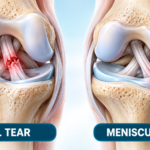
For more information about related knee injuries, read Meniscus Tear vs ACL Injury: 7 Key Differences, Symptoms and Treatment Options.
2. Type of Surgical Procedure
The graft selected for reconstruction and any additional procedures may influence discomfort, rehabilitation precautions, and recovery progress.
3. Muscle Strength Before Surgery
Patients with better preoperative movement and muscle strength may find certain rehabilitation tasks easier after surgery.
However, this does not guarantee a faster recovery.
4. Rehabilitation Consistency
Following a suitable physiotherapy programme helps patients progressively rebuild strength and movement control.
Missing rehabilitation sessions or attempting advanced exercises prematurely may interfere with progress.
5. Age and General Health
Age, existing medical conditions, overall fitness, and general health may influence healing and rehabilitation.
Recovery plans should account for these individual circumstances.
6. Activity Goals
A person who wants to return to walking and routine activities may have different rehabilitation requirements from a professional athlete.
The expected recovery time should reflect the activities the patient wants to resume safely.
7. Postoperative Complications
Infection, significant stiffness, persistent swelling, or graft-related problems can delay progress and require further medical assessment.
How Can You Support a Smooth Recovery After ACL Surgery?
There is no reliable shortcut that replaces tissue healing and appropriate rehabilitation.
However, certain habits can support the recovery process.
Follow Your Physiotherapy Programme
Perform the exercises prescribed by your physiotherapist at the recommended frequency and intensity.
Increase difficulty only when advised.
Manage Swelling
Swelling can interfere with knee movement and muscle activation.
Use cold therapy, elevation, and other measures recommended by your medical team. Always protect the skin when applying an ice pack.
Eat a Balanced Diet
Adequate nutrition supports general health and tissue repair.
Include sufficient protein, vegetables, fruits, whole grains, and other nutrient-rich foods in your diet.
Patients with specific dietary needs should seek personalised professional advice.
Prioritise Sleep and Rest
Rest is important during recovery, particularly when rehabilitation becomes more demanding.
Allow appropriate recovery between exercise sessions.
Avoid Smoking
Smoking can negatively affect wound healing and overall recovery.
Discuss smoking cessation support with your healthcare provider if needed.
Attend Follow-Up Appointments
Regular follow-ups allow your surgeon to evaluate progress, address concerns, and identify possible complications.
Progress Gradually
Avoid increasing exercise duration, resistance, or intensity too quickly.
A gradual rehabilitation plan helps balance physical progress with the need to protect healing tissues.
Common Mistakes to Avoid After ACL Surgery
Some recovery difficulties occur when patients resume activities before the knee is ready.
Being aware of common mistakes can help you make safer decisions.
1. Returning to Sports Too Early
Reduced pain does not necessarily mean the graft and muscles can handle high-impact activities.
Returning to pivoting sports without adequate rehabilitation may increase the risk of another injury.
2. Skipping Physiotherapy
A lack of structured rehabilitation can leave the knee weak, stiff, or poorly controlled.
Physiotherapy is important even when the surgical wound has healed.
3. Ignoring Persistent Swelling
Swelling that repeatedly worsens after activity may indicate that the knee is not tolerating the current rehabilitation load.
Discuss persistent or increasing swelling with your medical team.
4. Comparing Recovery With Others
Every patient has different injuries, surgical findings, physical fitness, and rehabilitation goals.
Trying to match another person’s progress may lead to unnecessary frustration or overexertion.
5. Avoiding All Movement
Rest is important, but remaining completely inactive without medical advice can contribute to weakness and stiffness.
Follow the prescribed movement and exercise plan.
6. Exercising Through Significant Pain
Some discomfort may occur during rehabilitation, but sharp pain, increasing swelling, or instability should not be ignored.
Exercises may need to be adjusted after professional assessment.
7. Stopping Strength Training Too Soon
Even after returning to normal activities, ongoing strength and movement-control exercises may be necessary to maintain knee function.
Warning Signs to Watch for After ACL Surgery
Mild discomfort and swelling can be expected during the early recovery period.
However, some symptoms require prompt medical attention.
Contact your surgeon if you experience:
- Increasing pain or swelling that does not improve.
- Persistent stiffness or unexpected loss of knee movement.
- Redness, warmth, or discharge around the surgical wound.
- Fever or chills.
- Repeated episodes of the knee giving way.
- A new injury followed by sudden swelling or instability.
Seek urgent medical assessment if you develop significant calf pain or swelling, as this could indicate a blood clot. Chest pain, sudden shortness of breath, or coughing up blood require emergency care.
Early evaluation can help identify complications and guide appropriate treatment.
What Can You Do to Reduce the Risk of Another ACL Injury?
Completing rehabilitation is an important step towards protecting your knee after surgery.
However, ongoing exercise and good movement habits remain important even after you return to your usual activities.
Helpful preventive measures include:
- Maintaining quadriceps and hamstring strength.
- Improving hip and core stability.
- Practising proper jumping and landing techniques.
- Performing balance and coordination exercises.
- Increasing training intensity gradually.
- Using an appropriate warm-up before sports.
- Avoiding demanding activity when experiencing significant fatigue or poor knee control.
Athletes returning to sports should continue appropriate injury-prevention exercises as part of their regular training programme.
If you experience new or recurring instability after ACL reconstruction, seek professional assessment.
You can also read Why Did My ACL Reconstruction Surgery Fail? to understand possible reasons for graft-related problems.
Frequently Asked Questions About ACL Surgery Recovery Time
1. How long does it take to fully recover from ACL surgery?
ACL surgery recovery commonly takes several months, while returning to demanding sports may require 9–12 months or longer. Full recovery depends on knee strength, movement, stability, rehabilitation progress, and the patient’s activity goals.
2. Can I walk one week after ACL surgery?
Many patients begin walking with crutches or prescribed support soon after surgery. However, walking independently after one week is not appropriate for everyone. Follow your surgeon’s weight-bearing instructions, particularly if additional knee procedures were performed.
3. When can I walk without crutches after ACL reconstruction?
Some patients gradually stop using crutches within the first few weeks. Others may need them longer. The decision depends on swelling, quadriceps control, walking quality, associated injuries, and physiotherapy assessment.
4. Is ACL surgery recovery painful?
Pain and swelling are common during the early postoperative period. These symptoms generally improve with appropriate treatment and rehabilitation. Severe or worsening pain requires medical evaluation.
5. When can I bend my knee normally after ACL surgery?
Knee bending usually improves gradually during rehabilitation. Many patients regain substantial movement over the first several weeks or months. The timeline depends on the surgical procedure and individual progress.
6. Can I climb stairs after ACL surgery?
Stair climbing is introduced according to the patient’s strength, balance, weight-bearing restrictions, and ability to control the knee. Some patients begin carefully using stairs early with guidance, while others require more time.
7. When can I start running after ACL surgery?
Jogging is often considered around 3–5 months after surgery in suitable patients. However, running should begin only when strength, movement, swelling, and functional assessments indicate that the knee is ready.
8. Can I return to the gym after ACL surgery?
Gym-based rehabilitation may begin relatively early with approved exercises. Heavy lifting, deep squats, jumping, and other demanding activities should only be introduced when appropriate for your recovery stage.
9. Why does my knee still feel weak months after ACL surgery?
Muscle weakness, particularly in the quadriceps, can persist for several months after ACL reconstruction. Continued strengthening and rehabilitation may be needed. Persistent weakness, pain, or instability should be assessed by your healthcare team.
10. Can an ACL tear happen again after surgery?
Yes. A reconstructed ACL can be injured again, particularly during a new twisting injury or a premature return to demanding activities. Completing rehabilitation, restoring strength, and following return-to-sport criteria help manage this risk.
ACL Surgery and Rehabilitation Consultation in Delhi
Recovering from ACL surgery requires careful planning, regular monitoring, and rehabilitation suited to the patient’s knee condition and activity goals.
Whether you are dealing with an ACL injury, considering reconstruction, or facing difficulties during postoperative rehabilitation, an orthopaedic assessment can help clarify the appropriate next steps.
Prof. Dr. Rajesh Bhalla provides orthopaedic consultation in Delhi for knee injuries, ligament problems, sports-related conditions, and other joint concerns.
A consultation can help assess knee stability, review treatment options, and discuss an individualised rehabilitation plan based on your needs.
For an orthopaedic consultation:
Website: https://drrajeshbhalla.com/
Contact: +91 85954 71202
Final Thoughts
ACL surgery recovery is a gradual process that involves much more than healing from the operation itself.
While many patients return to walking and routine activities within the first several weeks or months, rebuilding sufficient knee strength, stability, and coordination for demanding sports takes considerably longer.
The most important part of recovery is not achieving each milestone as quickly as possible. It is progressing safely, following the recommended rehabilitation programme, and allowing your knee to develop the strength and control needed for your intended activities.
If you have persistent knee discomfort, swelling, weakness, or instability during recovery, consult your treating orthopaedic surgeon rather than attempting to push through the symptoms.
With appropriate treatment, structured rehabilitation, and realistic expectations, many patients can make meaningful progress towards returning to an active lifestyle.
Medical References
- NHS – Recovering from ACL Surgery
- AAOS – ACL Injury and Rehabilitation
- Aspetar Clinical Practice Guideline – ACL Reconstruction Rehabilitation
- NHS Fife – ACL Reconstruction Rehabilitation
Medical Disclaimer: This article provides general educational information and is not a substitute for a medical examination, diagnosis, or individualised treatment advice. ACL surgery recovery varies depending on the injury, surgical procedure, and patient-specific factors. Always follow the recommendations of your treating surgeon and physiotherapist.