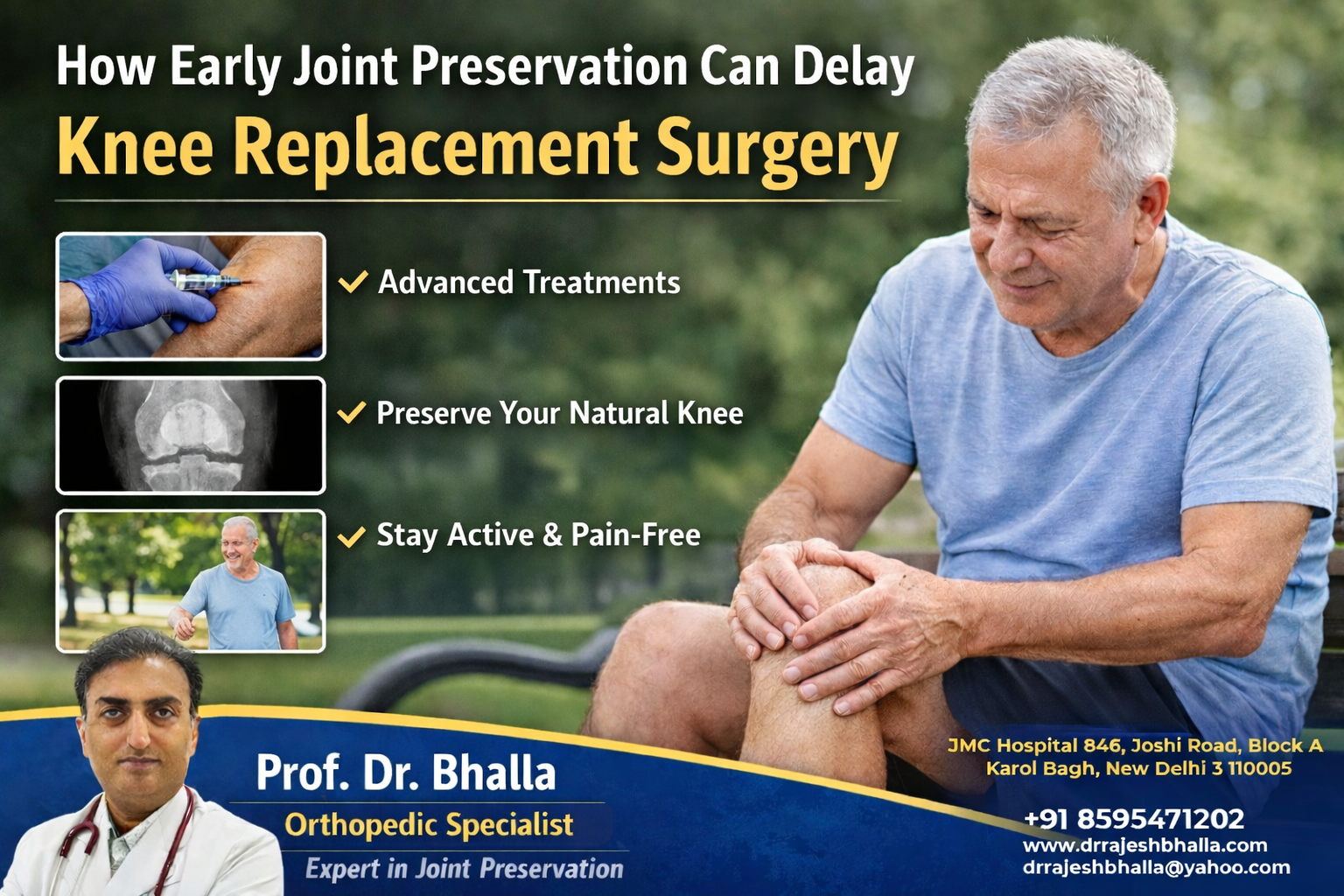
Knee pain, stiffness, and reduced mobility are common problems that can interfere with everyday activities. These symptoms are often caused by early arthritis, cartilage damage, meniscus injuries, or alignment issues within the knee joint. While knee replacement surgery is an effective option for advanced arthritis, it is not always the first or best solution especially when problems are identified early.
Early joint preservation focuses on protecting the knee before severe damage occurs. By addressing the root cause of pain at an early stage, joint preservation treatments can reduce symptoms, improve movement, and significantly delay or even prevent the need for knee replacement surgery.
Understanding how early intervention works and who benefits most helps patients make better decisions for long-term knee health.
What Is Early Joint Preservation for the Knee?
Early joint preservation refers to non-replacement treatments and surgical techniques designed to repair, restore, and protect the natural knee joint. Instead of removing the joint and replacing it with an artificial implant, these treatments aim to maintain the patient’s own knee structure for as long as possible.
The main goals of early joint preservation are to:
- Reduce knee pain and inflammation
- Improve joint stability and movement
- Slow the progression of arthritis
- Maintain natural knee mechanics
- Delay or avoid knee replacement surgery
When applied at the right time, joint preservation can extend the life of the knee joint by many years.
Why Early Joint Preservation Matters
Knee replacement surgery, while highly successful, has a limited lifespan and may require revision surgery later particularly in younger or active individuals. Preserving the natural knee joint early offers several important advantages:
- Retains natural movement and joint sensation
- Avoids or postpones major surgery
- Shorter recovery compared to knee replacement
- Better function for daily and athletic activities
- Reduced long-term surgical risks
Early intervention allows doctors to correct problems before irreversible joint damage occurs.
Common Early Joint Preservation Treatments for the Knee
Joint preservation for the knee includes both non-surgical and surgical approaches, depending on the extent of damage and patient needs.
Non-Surgical Knee Joint Preservation Options
These treatments are often the first step and aim to relieve pain while slowing joint degeneration:
- Physical therapy to strengthen muscles and improve joint support
- Weight management to reduce pressure on the knee
- Anti-inflammatory medications for pain control
- Injection therapies such as PRP or viscosupplementation
- Activity modification to avoid excessive joint stress
Many patients experience significant symptom relief with these measures alone.
Surgical Joint Preservation Procedures for the Knee
When non-surgical treatments are not sufficient, minimally invasive or corrective surgeries may be recommended:
- Arthroscopy to treat cartilage, ligament, or meniscus damage
- Cartilage repair or restoration techniques
- Osteotomy to correct knee alignment and redistribute joint load
- Meniscus repair or transplantation
These procedures aim to restore balance within the knee joint and slow the progression of arthritis, delaying the need for knee replacement.
Who Can Benefit Most from Early Joint Preservation?
Early joint preservation is most effective when knee damage is identified before it becomes severe.
Ideal Candidates Include:
- Patients with early-stage knee arthritis
- Younger or middle-aged individuals
- Active patients wishing to remain mobile
- Those with localized cartilage or meniscus damage
- Patients with knee pain but preserved joint space
- Individuals not ready for knee replacement surgery
Early diagnosis plays a crucial role in achieving successful outcomes.
When Knee Replacement May Be a Better Option
Joint preservation may not be suitable for everyone. Knee replacement surgery may be recommended for patients with:
- Advanced or end-stage arthritis
- Severe joint deformity
- Extensive cartilage loss
- Constant pain that limits daily life
- Poor response to conservative treatments
In these cases, knee replacement may provide more reliable long-term relief.
Benefits of Early Knee Joint Preservation
When performed at the right time, joint preservation offers many advantages:
- Pain relief without replacing the knee
- Improved function and flexibility
- Faster recovery compared to knee replacement
- Maintains natural joint mechanics
- Delays the need for major surgery
For many patients, early treatment can preserve knee function for years or even decades.
Recovery After Knee Joint Preservation
Recovery depends on the specific treatment used:
- Non-surgical treatments allow quick return to daily activities
- Minimally invasive surgeries typically require several weeks of rehabilitation
- Physical therapy is essential for restoring strength and movement
- Recovery is usually faster than knee replacement surgery
Following medical advice closely ensures the best possible outcome.
How to Protect Your Knees Long-Term
- Maintain a healthy body weight
- Stay active with low-impact exercises
- Avoid repetitive stress on the knees
- Seek treatment early for knee pain
- Follow rehabilitation and strengthening programs
Preventive care is key to successful joint preservation.
Why Choose Prof. Dr. Bhalla for Knee Joint Preservation?
At Prof. Dr. Bhalla’s clinic, we focus on early diagnosis and advanced joint preservation strategies to help patients delay or avoid knee replacement surgery.
Our approach includes:
- Accurate diagnosis using advanced imaging
- Personalized treatment plans
- State-of-the-art minimally invasive procedures
- Emphasis on preserving natural knee joints
- Continuous follow-up and patient education
With extensive orthopedic expertise, Prof. Dr. Bhalla ensures each patient receives the most appropriate and effective care.
Final Thoughts
Early joint preservation offers an effective way to manage knee pain and delay knee replacement surgery. By addressing knee problems before severe damage occurs, patients can maintain mobility, reduce discomfort, and protect their natural joints for years.If knee pain is affecting your quality of life, consulting an experienced orthopaedic specialist such as Prof. Dr. Bhalla can help determine whether early joint preservation is the right solution allowing you to stay active, comfortable, and confident in your movement.