
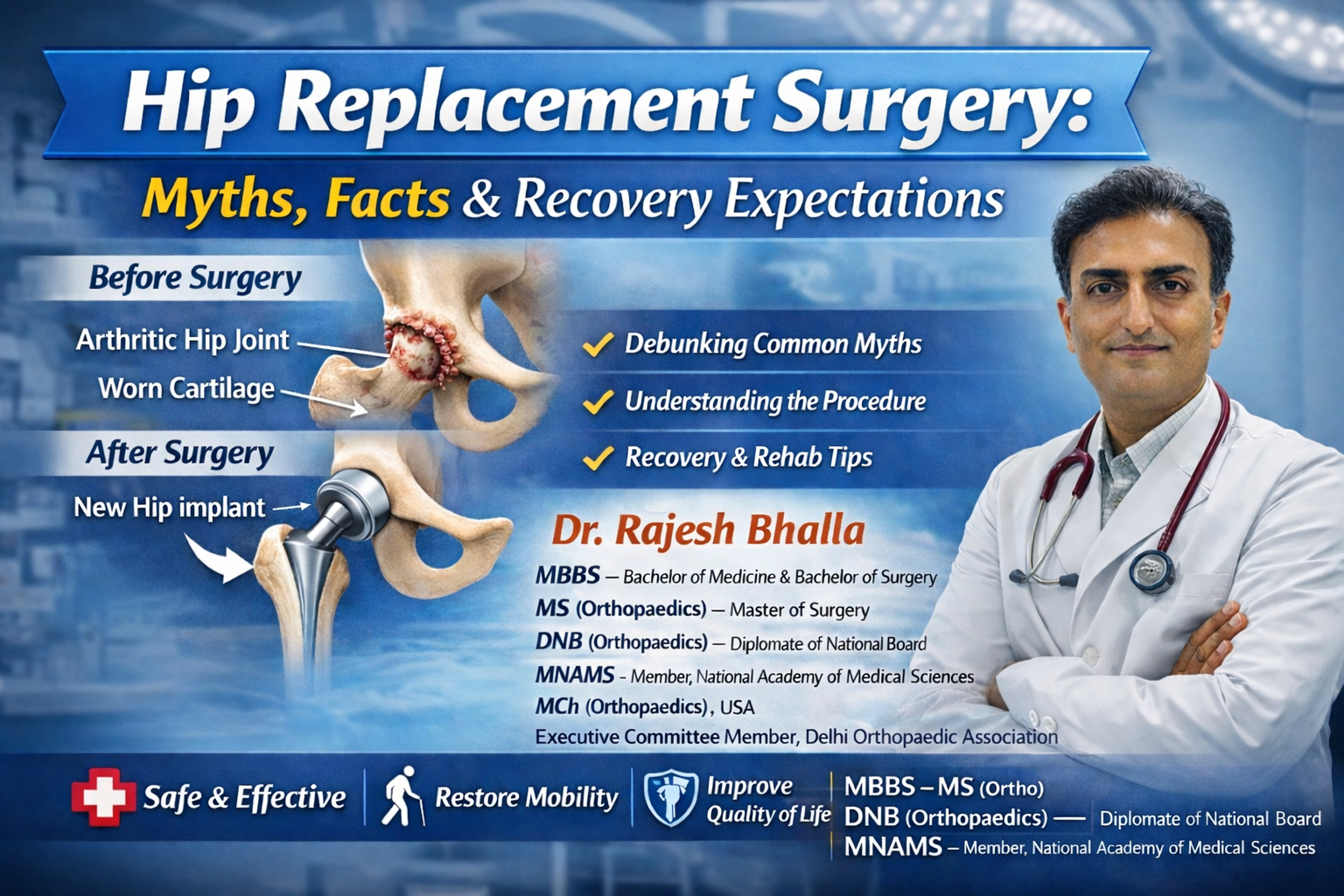
Hip pain caused by arthritis, joint degeneration, fractures, or long-term wear can significantly affect mobility and quality of life. When non-surgical treatments no longer provide relief, hip replacement surgery becomes a highly effective and reliable solution.
Despite being one of the most successful orthopedic procedures, hip replacement is often surrounded by myths and misconceptions. Understanding the facts, procedure, and recovery expectations can help patients make confident, informed decisions about their treatment.
What Is Hip Replacement Surgery?
Hip replacement surgery, also known as total hip arthroplasty, is a procedure in which a damaged hip joint is replaced with artificial components to restore movement and relieve pain.
How Hip Replacement Works:
- The damaged cartilage and bone of the hip joint are removed
- The hip socket is replaced with a durable artificial cup
- The femoral head is replaced with a metal or ceramic ball
- A smooth, stable joint is recreated to allow pain-free movement
Modern implants are designed to last many years and closely mimic natural hip function.
Common Myths About Hip Replacement Surgery
Many patients delay surgery due to misconceptions.
Myth vs Fact:
- Myth: Hip replacement is only for elderly patients
Fact: It is suitable for patients of all ages based on joint damage and pain level - Myth: Surgery results in permanent activity restrictions
Fact: Most patients return to walking, travel, and daily activities comfortably - Myth: Recovery takes years
Fact: Most patients resume normal routines within weeks to months - Myth: Artificial joints wear out quickly
Fact: Modern implants can last 15–25 years or more
Conditions Treated with Hip Replacement Surgery
Hip replacement is recommended for patients with severe joint damage, including:
- Advanced hip osteoarthritis
- Rheumatoid arthritis
- Avascular necrosis of the hip
- Hip fractures in older adults
- Severe hip deformities
- Chronic hip pain unresponsive to medication or therapy
It is advised when pain and stiffness significantly interfere with daily life.
What to Expect Before Hip Replacement Surgery
A thorough evaluation is essential before surgery.
Pre-Surgery Assessment Includes:
- Detailed clinical examination
- Review of medical history and prior treatments
- X-rays or MRI of the hip joint
- Blood tests and fitness evaluation
- Discussion of implant options and recovery goals
Patients may be advised to manage weight, stop smoking, and control medical conditions before surgery.
What Happens During Hip Replacement Surgery?
Hip replacement is a well-planned procedure performed under anesthesia.
Step-by-Step Process:
- Surgery typically lasts 1–2 hours
- Damaged joint surfaces are removed
- Artificial hip components are implanted
- Muscles and tissues are carefully repaired
Most patients begin walking with support within 24 hours after surgery.
What to Expect After Hip Replacement Surgery
Recovery begins immediately after the procedure.
Common Post-Surgery Experiences:
- Mild to moderate pain controlled with medication
- Temporary swelling and stiffness
- Gradual improvement in walking and movement
- Physical therapy starting early for strength and flexibility
Most patients experience significant pain relief within a few weeks.
Recovery Timeline & Expectations
Recovery varies depending on age, health, and activity level.
- Walking with support: 1–2 days
- Independent walking: 3–6 weeks
- Return to daily activities: 6–8 weeks
- Full recovery: 3–6 months
Following rehabilitation instructions is crucial for optimal outcomes.
Benefits of Hip Replacement Surgery
Hip replacement offers long-term relief and improved quality of life.
Key Benefits:
- Significant pain relief
- Improved mobility and flexibility
- Better posture and walking ability
- Enhanced independence
- Long-lasting results
- High patient satisfaction rates
Who Is an Ideal Candidate for Hip Replacement?
Hip replacement is suitable for patients who:
- Have severe hip pain affecting daily activities
- Do not respond to medications or physiotherapy
- Experience stiffness or deformity of the hip
- Have difficulty walking or climbing stairs
- Have realistic expectations about recovery
Age alone is not a limiting factor for surgery.
Limitations of Hip Replacement Surgery
While highly successful, it is important to understand:
- Recovery requires commitment to physiotherapy
- Temporary lifestyle adjustments are needed
- High-impact activities may be restricted
- Artificial joints may eventually require revision
Proper surgical technique and follow-up reduce risks significantly.
Why Choose Dr. Rajesh Bhalla for Hip Replacement Surgery?
Dr. Rajesh Bhalla offers comprehensive and patient-focused hip care.
Expertise Includes:
- Accurate diagnosis and surgical planning
- Advanced joint replacement techniques
- Minimally invasive approaches where appropriate
- Personalized rehabilitation protocols
- Long-term follow-up and support
Final Thoughts
Hip replacement surgery is a proven, safe, and life-changing solution for patients suffering from severe hip pain and mobility issues. By separating myths from facts and understanding recovery expectations, patients can approach surgery with confidence.
If hip pain is limiting your independence and quality of life, hip replacement surgery may be the right step toward restoring comfort, movement, and long-term joint health.