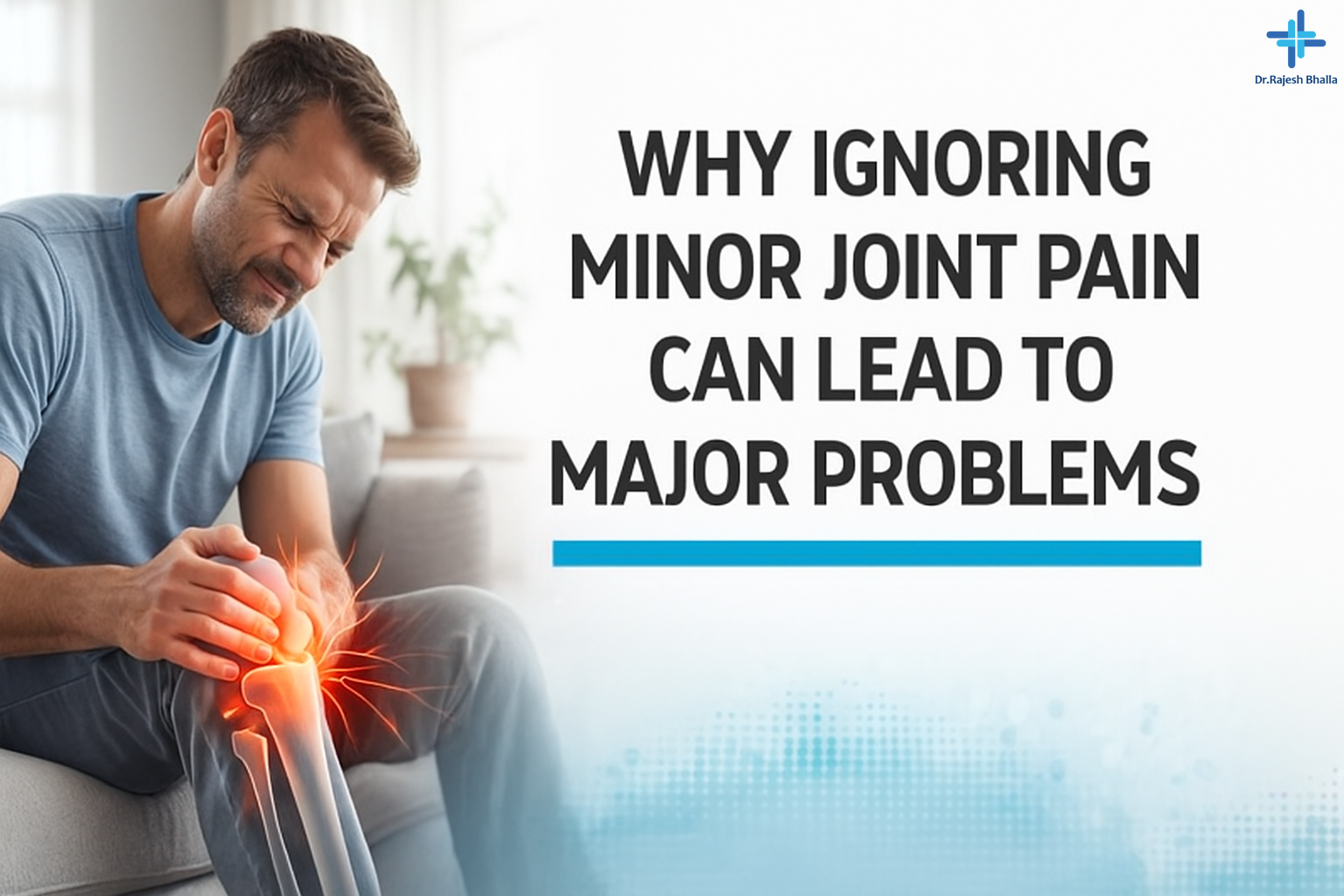
Why Ignoring Minor Joint Pain Can Lead to Major Problems
Joint pain is one of those things many people casually brush off, a slight ache in the knee while climbing stairs, a mild stiffness in the shoulder after a workout, or a dull discomfort in the wrist after long hours of typing. It feels manageable, so we assume it’s nothing serious. “Thoda dard toh chalta hai,” is what many people think. But here’s the surprising truth: minor joint pain is rarely “just a minor issue.” In many cases, it’s your body’s early warning signal telling you that something isn’t functioning as it should. These early aches are not random; they’re messages. Sometimes they indicate inflammation, sometimes overuse, and sometimes the beginning of cartilage wear and tear. When ignored for weeks or months, what starts as a tiny discomfort can silently progress into chronic issues like arthritis, ligament damage, tendonitis, or mobility restrictions that affect your day-to-day life. In today’s busy world, it’s easy to dismiss small pains, especially when you’re juggling work, home, and personal routines. Working professionals often blame long sitting hours, athletes chalk it up to “training stress,” and people in their 40s and 50s assume it’s “just age catching up.” But the reality is this: joint problems don’t develop overnight; they build up slowly. The earlier you address them, the better your chances are of preventing long-term damage.
Understanding Minor Joint Pain – Why It Starts Small
Joint pain rarely appears out of nowhere. Even the smallest discomfort is usually your body’s way of signalling that something underneath is not functioning optimally. While the pain may feel mild, the cause behind it can be much deeper. These early aches often arise from everyday habits, lifestyle choices, or subtle internal changes that gradually stress your joints.
Minor joint pain can develop for several reasons, including overuse, mechanical imbalance, inflammation, and even nutritional gaps. Many people dismiss these early signs because they seem manageable or temporary, but in reality, small pains often reflect the earliest stage of joint stress, which, if ignored, may progress into chronic problems.
Some of the most common early triggers include:
1. Repetitive Movements
Activities like typing, lifting, running, or even household chores can strain your joints when performed daily without proper form or rest. Micro-stress from repetition can irritate tendons and cartilage, causing small but persistent discomfort.
2. Sedentary Lifestyle
Sitting for long hours weakens the core, glutes, and stabilising muscles. When support muscles become weak, joints take on extra load, leading to stiffness, tightness, and minor pain, especially in the neck, back, and knees.
3. Excess Weight
Being overweight puts continuous pressure on weight-bearing joints such as the knees, hips, and ankles. Even a few extra kilos can increase joint load significantly, making pain more likely to show up during walking, climbing stairs, or standing for long periods.
4. Previous Injuries
A sprain, strain, or fracture that wasn’t fully rehabilitated can cause long-term stress on surrounding muscles and ligaments. Over time, this weakens joint stability and triggers repeated bouts of mild discomfort.
5. Inflammation or Early Arthritis
Many people are surprised to learn that arthritis doesn’t always begin with severe pain. In its early stages, it often starts subtly as occasional stiffness, a slight pinch during movement, or mild swelling that comes and goes.
Research shows that nearly 30% of adults experience mild joint pain at least once a week, yet most ignore it because the discomfort “disappears on its own.” While the visible pain may reduce, the underlying wear-and-tear, inflammation, or joint degeneration often continues silently, growing worse over time.
This is exactly the point where linking to reliable orthopaedic resources or professional healthcare pages becomes extremely useful, for example, directing readers to expert evaluation, early diagnosis, or treatment options. A well-placed link to an orthopaedic doctor or joint care clinic can guide readers toward timely assessment before a small issue becomes a major one.
The Hidden Dangers of Ignoring Minor Joint Pain
For many people, pain slowly becomes a part of daily life. A dull ache here, a little stiffness there, and before you know it, the discomfort starts feeling “normal.” But normalising pain is one of the biggest mistakes you can make. Minor joint pain is rarely harmless. When ignored, it silently progresses and can lead to long-term mobility issues, chronic diseases, and serious musculoskeletal damage. Here’s how that small ache can turn into a major problem:
1. Small Injuries Turn Into Chronic Conditions
What begins as a tiny ligament strain or a mild inflammation often evolves into something far more serious if left untreated. A small injury may cause only slight discomfort today, but over time, repeated stress weakens the joint structures and leads to chronic instability. For example, that “simple” knee pain after jogging could actually be the early stage of patellar tendinitis or cartilage wear. When someone continues high-impact exercises without rest or treatment, the micro-damage keeps increasing. Orthopaedic doctors frequently treat patients who initially felt “just a little pain” but ended up requiring advanced therapies due to worsening degeneration. This is a perfect point to include a subtle backlink guiding readers to a joint pain clinic or orthopaedic specialist page for proper evaluation.
2. Compensation Leads to New Pain in Other Body Parts
The human body is designed to protect itself. When one joint hurts, it naturally shifts weight or movement to other areas to reduce discomfort. But this compensation comes at a cost. Limping to avoid ankle pain can put unusual stress on the hip and lower back, eventually causing pain there, too. Similarly, if your shoulder feels stiff, your neck muscles and upper spine may take on extra strain, leading to muscle tightness or nerve compression. Even mild wrist discomfort can make you alter your hand posture, affecting grip strength and mobility over time. A study published in The Journal of Orthopaedic Research found that compensatory movements increase stress on secondary joints by up to 20%, significantly raising the risk of additional injuries. This chain reaction shows why early diagnosis is essential.
3. Inflammation Can Spread Beyond the Original Joint
Many joint issues begin with localised inflammation, a small swelling or irritation in one area. However, if ignored, the inflammation doesn’t always stay confined. It can gradually spread to surrounding structures such as tendons, ligaments, bursa, and even muscle tissue. This extended inflammation reduces joint stability and increases pain during movement. Over time, chronic inflammation can also trigger osteoarthritis, which affects millions of people worldwide. This natural progression from mild inflammation to long-term joint disease is one of the strongest reasons to seek guidance from an orthopaedic specialist early on. Linking readers here to an informative orthopaedic evaluation or treatment page fits seamlessly into the content.
4. Reduced Mobility Over Time
Minor joint pain often starts with a little stiffness, nothing too alarming. But as weeks and months pass, this stiffness can gradually limit your range of motion. Basic movements like bending, rotating your shoulder, or climbing stairs may become increasingly difficult. This reduced mobility isn’t just inconvenient; it affects your overall quality of life. Tasks like getting out of a chair, carrying groceries, sitting for long hours, or even typing at a desk may feel painful or exhausting. When mobility decreases, daily routines become frustrating, and physical activity reduces further, leading to more stiffness and weakness a cycle that worsens over time.
5. Mental Stress and Fatigue
Chronic joint pain doesn’t just hurt physically; it silently impacts mental and emotional well-being, too. Persistent discomfort can disrupt sleep, making it hard for the body to heal overnight. Day-to-day productivity drops as pain makes routine tasks more challenging. Over time, this ongoing struggle increases stress levels, reduces motivation, and affects mood stability. Studies show that people dealing with long-term pain are nearly 40% more likely to experience anxiety or depression. When the body hurts consistently, the mind naturally feels overwhelmed, leading to fatigue, irritability, and reduced quality of life.
How Minor Joint Pain Progresses: A Real-Life Example
To truly understand how small joint pain can slowly become a major issue, let’s look at a very common real-life situation faced by thousands of working professionals today.
Imagine a 32-year-old IT professional who spends 8–10 hours every day typing, coding, and using a mouse. One day, he notices a mild discomfort in his wrist, nothing severe, just a slight ache when he bends it or presses down. Because the pain is manageable, he decides to ignore it, assuming it’s just fatigue or strain that will go away on its own.
But beneath the surface, something else is happening.
Week 1–4 → Early Inflammation Begins
During the first few weeks, the wrist tendons experience minor inflammation due to repetitive movements. The pain appears occasionally, especially after long working hours. This is the ideal time for rest, ergonomic corrections, and small lifestyle changes. But since the discomfort isn’t constant, many people don’t take it seriously.
Month 2–3 → Tendon Swelling Increases
As he continues working without addressing the root cause, the repetitive strain worsens. Tendons start swelling, the wrist becomes slightly stiff, and the pain appears more frequently, especially during tasks like typing, holding objects, or moving the mouse. This is the stage where ergonomic solutions or early physiotherapy could drastically slow down or even reverse the problem.
Month 4–6 → Reduced Grip Strength and Numbness
Over the next few months, the inflammation begins affecting the nerves that pass through the wrist. Grip strength weakens, and he notices occasional numbness or tingling in the fingers. Even small daily tasks such as opening jars, carrying bags, or typing for long durations become uncomfortable. This is no longer a minor issue; the problem is progressing.
Month 6–12 → Chronic Tendinitis or Early Carpal Tunnel Syndrome
By the time a year passes, the ongoing stress and untreated inflammation may lead to chronic tendinitis or even early-stage carpal tunnel syndrome. At this point, pain becomes a constant companion. Sleeping positions start to matter, typing becomes difficult, and the hand may feel weak or fatigued by midday. What began as a tiny ache has now become a long-term condition that requires medical attention, rest, and structured treatment.
Warning Signs That Minor Pain Is Becoming Major
Minor joint pain may seem harmless at first, but certain symptoms indicate that the problem is progressing and needs proper medical attention. These warning signs are your body’s way of telling you that something deeper is going on, and ignoring them can lead to long-term joint damage. If you notice any of the following, it’s time to take your pain seriously:
1. Pain Lasting More Than 7–10 Days
If discomfort continues for more than a week, it’s no longer a simple strain. Persistent pain suggests that inflammation or tissue damage isn’t healing properly. This could be due to overuse, repetitive stress, or early-stage degeneration. Pain that lingers beyond 10 days should always be evaluated by a specialist.
2. Swelling, Redness, or Warmth Around the Joint
Visible swelling or warmth is a clear sign of inflammation. When fluid builds up inside the joint or surrounding tissues, it often means the body is reacting to an injury or irritation. Redness and warmth may also indicate bursitis, tendinitis, or an underlying inflammatory condition.
3. Stiffness After Waking Up
Morning stiffness is commonly associated with early arthritis or chronic inflammation. If your joints feel tight, heavy, or difficult to move after waking up, and it takes several minutes to loosen up, this is a sign that the joint structures are under stress.
4. Clicking or Grinding Sounds
Hearing clicks, pops, or grinding noises (called crepitus) during movement often indicates cartilage wear or misalignment. While occasional clicking is normal, frequent or painful clicking suggests joint degeneration or instability that should be assessed early.
5. Weakness or Reduced Grip Strength
Loss of strength is more than just fatigue; it indicates that tendons, ligaments, or nerves may be affected. Reduced grip strength in the wrist or hand, or weakness in the knee or shoulder, often points to progressing inflammation or structural imbalance.
6. Pain Increasing With Activity
If your pain gets worse when you move, lift, walk, or exercise, it’s a sign that the joint isn’t functioning normally. Activity-related pain suggests ongoing stress on cartilage, tendons, or ligaments, and continuing to push through it may cause more damage.
7. Difficulty Putting Weight on the Joint
Struggling to stand, walk, or bear weight indicates a more serious issue, such as ligament injury, cartilage breakdown, or a developing chronic condition. Weight-bearing pain should never be ignored, as it can quickly lead to joint instability.
Why Early Diagnosis Matters More Than You Think
When it comes to joint pain, timing is everything. A simple check-up today can prevent years of discomfort, costly treatments, or even major surgery in the future. Orthopaedic specialists consistently emphasise that early detection is the key to protecting long-term joint health. Minor pain may feel insignificant, but identifying its cause early makes treatment far easier, more effective, and less invasive. Here’s why early diagnosis is one of the smartest decisions you can make for your musculoskeletal health:
1. Early Treatment = Faster Recovery
Most joint problems, when caught early, respond exceptionally well to conservative treatments. In this stage, the inflammation or tissue stress is still minimal, and the body can heal quickly with the right guidance. Simple interventions such as physiotherapy, strengthening exercises, posture correction, anti-inflammatory care, rest, and lifestyle modifications can reverse the issue completely. This is where adding contextual backlinks becomes highly valuable, directing readers to a joint care guide, a physiotherapy resource, or an orthopaedic expert like Dr Rajesh Bhall, which allows them to explore trusted solutions without sounding promotional. Early care not only reduces pain but also helps prevent the condition from progressing to more serious stages.
2. Preventing Permanent Damage
Delaying treatment is one of the biggest contributors to long-term joint problems. The longer minor pain is ignored, the more damage accumulates within the joint. Cartilage wear is a perfect example. Once cartilage starts breaking down and reaches an advanced stage, it cannot naturally regenerate. Similarly, untreated ligament strain can eventually cause instability or chronic weakness. Early diagnosis helps detect these changes before they become irreversible. With timely intervention, the progression of conditions like arthritis, tendinitis, and cartilage degeneration can be slowed or even stopped, protecting your joint health for years to come.
3. Saves Time and Money
Seeking help early is not only medically wise, but financially smart too. Early-stage joint issues typically require simple, low-cost treatments such as exercises, posture improvement, physiotherapy, and temporary activity modification. However, when problems are ignored, they can develop into chronic conditions that require expensive imaging tests, injections, long-term therapy, or even surgery. Many patients who delay care end up spending far more in the long run, financially, physically, and emotionally. Early diagnosis dramatically reduces the chances of needing advanced treatments, helping you save both time and money.
How to Manage Minor Joint Pain Before It Gets Worse
The best way to prevent small joint issues from turning into major problems is by taking early action. Minor joint pain doesn’t always require heavy medication or advanced treatment, but it does require awareness, consistency, and smart daily habits. Here are some research-backed strategies to manage joint pain effectively before it begins to escalate:
1. Correct Posture
Poor posture is one of the most common yet overlooked causes of neck, shoulder, back, and even wrist pain. Sitting with a rounded spine, leaning forward toward the screen, or keeping your shoulders raised can place unnecessary stress on the joints. By making simple adjustments to your workspace, such as using an ergonomic chair, keeping the monitor at eye level, and ensuring your wrists remain neutral while typing, es circulation and muscle balance.
2. Don’t Force Through Pain
Many people make the mistake of pushing through pain, thinking it’s “normal” or a sign of a good workout. In reality, pain is a protective signal from your body that something needs attention. If you feel discomfort during exercise, work, or daily movement, pause immediately. Resting early prevents small irritations from turning into inflammation or serious injury. Remember, listening to your body today can save you months of treatment later.
3. Strengthen Surrounding Muscles
Strong muscles act as shock absorbers for your joints. When the muscles around a joint are weak, the joint bears more load, increasing the risk of pain and degeneration. Incorporate exercises that target key support areas such as:
Quadriceps strengthening for knee stability
Core workouts for spinal support
Shoulder stabilisation exercises to protect rotator cuffs
Even 15–20 minutes of targeted strengthening, three to four times a week, can dramatically reduce joint stress and improve long-term mobility.
4. Use Proper Footwear
Footwear has a bigger impact on your joints than most people realise. Shoes that lack cushioning or arch support can alter your walking pattern, leading to pain in the knees, hips, and lower back. Proper, supportive footwear keeps your body aligned, improves posture, and reduces pressure on weight-bearing joints. Whether you’re walking, running, or working long hours, choosing the right shoes is an easy way to prevent unnecessary strain.
5. Maintain a Healthy Weight
Excess body weight significantly increases pressure on your joints, especially the knees and hips. Research shows that every extra kilogram of body weight adds nearly four times the force on your knee joints during activities like walking or climbing stairs. Maintaining a healthy weight not only reduces pain but also lowers the risk of developing osteoarthritis and other chronic joint conditions. Even a small weight loss can make a meaningful difference.
6. Seek Professional Help Early
If pain continues despite rest and self-care, it’s important to consult an orthopaedic specialist before the issue progresses. Early evaluation can identify the root cause, whether it’s inflammation, muscle imbalance, or early-stage degeneration. At this point, you can naturally insert a contextual backlink to a joint specialist, orthopaedic clinic, or a trusted medical article (for example, Dr Rajesh Bhalla’s website) to guide readers towards professional support and further learning.
The Long-Term Benefits of Treating Joint Pain Early
Addressing joint pain at an early stage is one of the smartest investments you can make in your long-term health. When you take small symptoms seriously and manage them promptly, you’re not just reducing pain, you’re protecting your future mobility, strength, and overall quality of life. Early treatment creates a strong foundation for lifelong joint health. Here are the major benefits you gain when you act before the pain becomes severe:
1. Better Mobility
Early intervention helps preserve your joints’ natural range of motion. When stiffness or discomfort is addressed promptly, it prevents long-term restrictions that can affect walking, bending, lifting, or daily movement. Good mobility helps you stay independent and active as you age.
2. Stronger Joints
Strengthening exercises, physiotherapy, and corrective care help build supportive muscles that protect your joints from stress. Early treatment improves overall joint stability, reduces strain, and prevents micro-injuries from becoming chronic problems.
3. Lower Risk of Arthritis
Many forms of arthritis, especially osteoarthritis, begin with small episodes of inflammation or early cartilage wear. Treating minor pain early helps reduce this inflammation before it becomes chronic, significantly lowering your risk of developing arthritis later in life.
4. Improved Quality of Life
When your joints feel healthy, your whole lifestyle improves. You move more confidently, sleep better, and perform daily tasks with ease. Early care prevents chronic pain from affecting your mood, energy levels, and productivity, giving you a more comfortable and active life.
5. Reduced Reliance on Painkillers
Ignoring pain often leads to increased dependency on painkillers for temporary relief. Early diagnosis and targeted treatment address the root cause, reducing the need for long-term medications that may have side effects or lose effectiveness over time.
6. Ability to Maintain an Active Lifestyle
Active living, whether it’s walking, exercising, playing sports, or simply enjoying outdoor activities, becomes easier when your joints function smoothly. By treating issues early, you protect your ability to stay active without discomfort or limitations, even as you get older.
Conclusion
Minor joint pain may feel like a small inconvenience today, but the truth is that even the slightest discomfort can be an early warning sign of deeper issues. When ignored, these signals often lead to chronic inflammation, reduced mobility, and in many cases, irreversible joint damage. What begins as a manageable ache can eventually affect your ability to walk, work, exercise, or enjoy daily life comfortably. The encouraging part? Most joint problems can be prevented or controlled with early diagnosis and timely care. By paying attention to the initial signs, you give your body the chance to heal before the condition becomes serious. Simple actions like posture correction, strengthening exercises, lifestyle changes, and professional guidance can protect your joints for years to come. If you’ve been dealing with persistent or recurring joint pain, even if it feels mild, consider this your reminder to act now. Consult an orthopaedic specialist, explore trusted joint-care resources, or read expert-backed guides that help you understand your symptoms better. Early intervention not only saves you from long-term discomfort but also prevents costly treatments and maintains your active, healthy lifestyle.
Your joints support every movement you make. Taking care of them today ensures strength, flexibility, and pain-free living for the future. Don’t wait for the pain to grow; listen to your body and give your joints the attention they truly deserve.