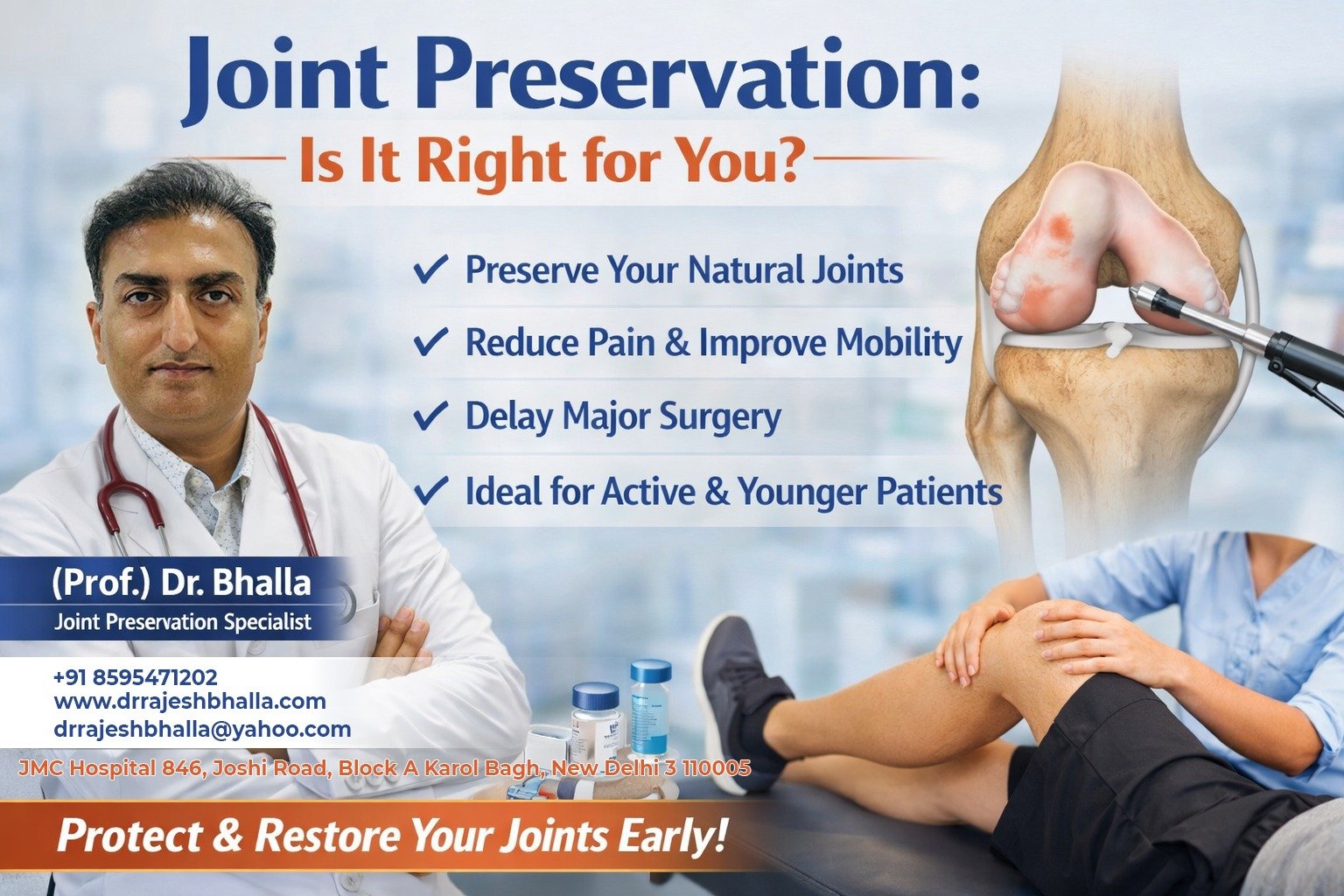
Joint pain and stiffness can significantly affect daily life, especially when caused by early arthritis, cartilage damage, or joint injuries. While joint replacement is a well-known solution for advanced cases, joint preservation offers an effective alternative for patients who want to protect their natural joints and delay or avoid major surgery.
Joint preservation focuses on treating joint problems early before severe damage occurs helping patients maintain mobility, reduce pain, and continue an active lifestyle using their own joints.
Understanding what joint preservation is and who can benefit from it helps patients make informed decisions about long-term joint health.
What Is Joint Preservation?
Joint preservation refers to a group of non-replacement treatments and surgical procedures designed to protect, repair, and restore damaged joints rather than replacing them with artificial implants.
The primary goal is to:
- Reduce joint pain
- Improve function and movement
- Slow or stop disease progression
- Preserve the natural joint for as long as possible
Joint preservation treatments are especially effective when joint damage is detected early and managed proactively.
Why Joint Preservation Is Important
Replacing a joint is not always the first or best option—especially for younger or active individuals. Preserving the natural joint offers several advantages:
- Maintains natural joint movement and sensation
- Delays or avoids joint replacement surgery
- Shorter recovery time compared to replacement
- Better long-term outcomes for selected patients
With advances in orthopedic care, joint preservation has become a reliable and effective solution for many patients.
Common Joint Preservation Treatments
Joint preservation includes both non-surgical and surgical options, depending on the severity of joint damage.
Non-Surgical Joint Preservation Options
These treatments focus on symptom relief and slowing joint degeneration:
- Physical therapy to improve strength and flexibility
- Weight management to reduce joint stress
- Medications to control pain and inflammation
- Injection therapies such as PRP or viscosupplementation
- Lifestyle and activity modification
These options are often the first line of treatment for early joint problems.
Surgical Joint Preservation Procedures
When non-surgical treatments are insufficient, minimally invasive or corrective procedures may be recommended:
- Arthroscopy to treat cartilage or ligament damage
- Cartilage repair or restoration procedures
- Osteotomy to correct joint alignment
- Meniscus repair or transplantation
These procedures aim to restore balance within the joint and prevent further deterioration.
Who Is the Right Candidate for Joint Preservation?
Joint preservation is not suitable for everyone. Careful evaluation is essential to identify the right candidates.
Ideal Candidates for Joint Preservation Include:
- Patients with early-stage arthritis
- Younger or middle-aged individuals
- Active patients wanting to maintain mobility
- Those with localized cartilage damage
- Patients with joint pain but preserved joint space
- Individuals not ready or suitable for joint replacement
Early diagnosis significantly improves the success of joint preservation treatments.
Who May Not Be Suitable?
Joint preservation may not be effective for patients with:
- Advanced or severe arthritis
- Significant joint deformity
- Extensive cartilage loss
- Persistent pain unresponsive to treatment
In such cases, joint replacement may provide better long-term relief.
Benefits of Joint Preservation
Joint preservation offers several long-term advantages:
- Pain relief without joint replacement
- Improved joint function and flexibility
- Faster recovery compared to major surgery
- Maintains natural joint mechanics
- Delays the need for joint replacement
When performed at the right time, these treatments can extend joint life by many years.
Recovery After Joint Preservation Procedures
Recovery depends on the type of treatment used.
- Non-surgical treatments allow immediate or short recovery
- Minimally invasive procedures usually require weeks of rehabilitation
- Physical therapy plays a key role in restoring strength and motion
- Patients often return to daily activities faster than with joint replacement
Following medical guidance closely ensures optimal outcomes.
Tips to Protect Your Joints Long-Term
- Maintain a healthy weight
- Stay physically active with low-impact exercises
- Avoid repetitive joint stress
- Address joint pain early
- Follow rehabilitation programs diligently
Preventive care is the foundation of successful joint preservation.
Why Choose Prof. Dr. Bhalla for Joint Preservation?
At Prof. Dr. Bhalla’s clinic, we specialize in early intervention and advanced joint preservation techniques to help patients maintain long-term joint health.
Our approach includes:
- Accurate diagnosis using advanced imaging
- Personalized treatment plans
- Latest minimally invasive techniques
- Focus on preserving natural joints
- Continuous monitoring and patient education
With extensive orthopedic expertise, Prof. Dr. Bhalla ensures every patient receives the most appropriate and effective care.
Final Thoughts
Joint preservation offers hope for patients seeking relief from joint pain without immediate replacement surgery. When treated early and correctly, joint preservation can restore mobility, reduce discomfort, and protect natural joints for years to come.
If joint pain is affecting your quality of life, consulting an experienced orthopaedic specialist, such as Prof. Dr Bhalla, can help determine whether joint preservation is the right solution for you, allowing you to move comfortably and confidently again.