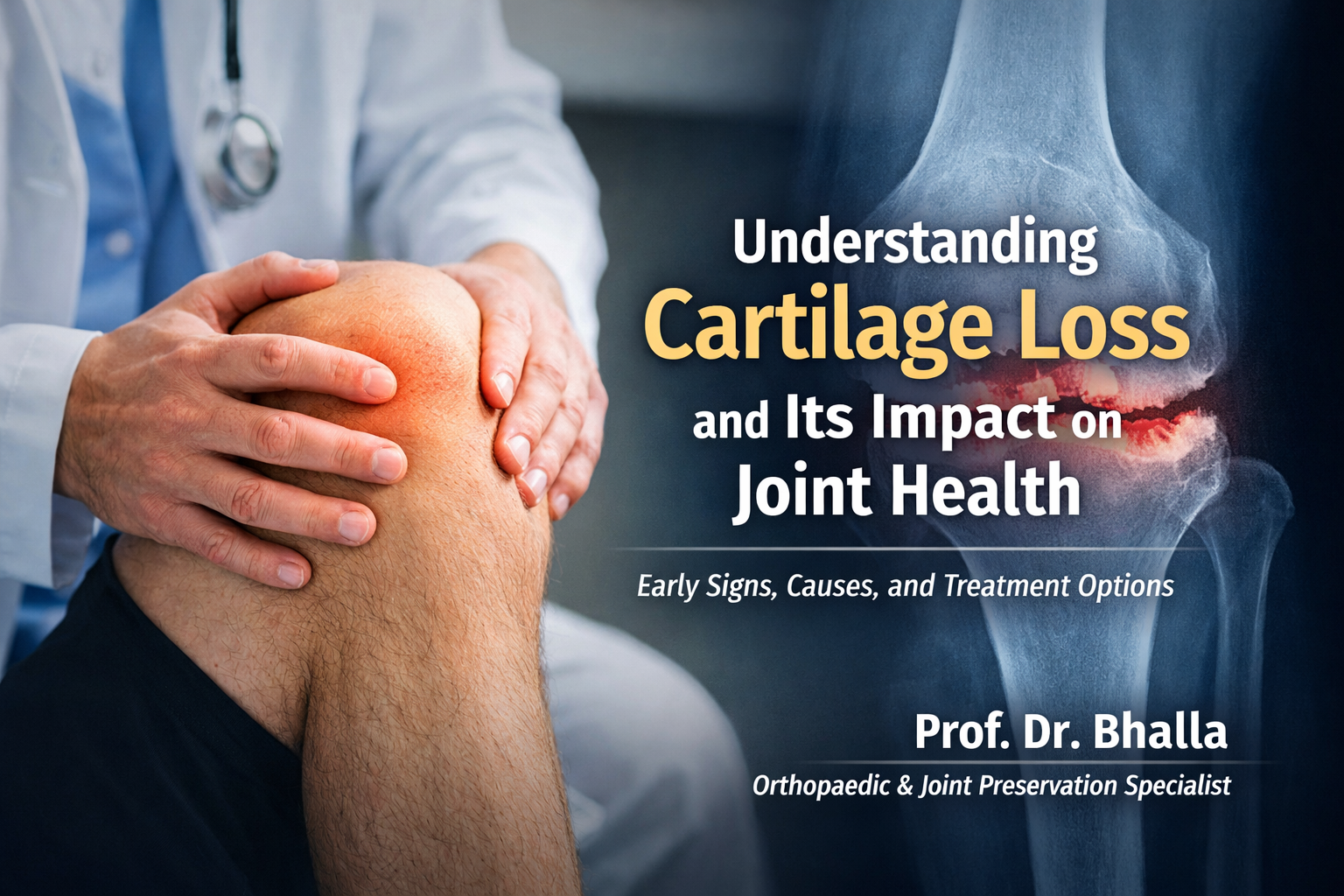
Cartilage plays a vital role in keeping joints healthy, flexible, and pain-free. When cartilage begins to wear down or become damaged, it can lead to joint pain, stiffness, and reduced mobility significantly affecting everyday activities. Cartilage loss is a common cause of joint problems, especially in conditions like arthritis, sports injuries, and age-related degeneration.
Understanding cartilage loss, its causes, and its effects on joint health helps patients recognize symptoms early and seek timely treatment to protect long-term mobility.
What Is Cartilage and Why Is It Important?
Cartilage is a smooth, rubber-like tissue that covers the ends of bones inside joints. It acts as a cushion and allows bones to glide smoothly against each other during movement.
Healthy cartilage helps to:
- Absorb shock during physical activity
- Reduce friction between bones
- Support smooth and painless joint motion
- Protect bones from wear and tear
Unlike other tissues, cartilage has limited ability to heal itself, making early care essential when damage occurs.
What Is Cartilage Loss?
Cartilage loss refers to the gradual breakdown or damage of cartilage within a joint. As cartilage wears away, bones begin to rub against each other, leading to pain, inflammation, and restricted movement.
Cartilage loss can be:
- Partial, affecting a specific area of the joint
- Progressive, worsening over time
- Localized, caused by injury
- Widespread, often seen in arthritis
Early detection can help slow progression and prevent severe joint damage.
Causes of Cartilage Loss
Several factors contribute to cartilage damage and degeneration, including:
- Aging and natural wear over time
- Joint injuries or trauma
- Repetitive stress or overuse
- Obesity, which increases joint load
- Poor joint alignment
- Genetic predisposition
- Inflammatory joint conditions such as osteoarthritis
Identifying the underlying cause is crucial for choosing the right treatment approach.
Symptoms of Cartilage Loss
Cartilage damage often develops gradually, and symptoms may worsen over time. Common signs include:
- Joint pain during movement
- Stiffness, especially after rest
- Swelling or inflammation
- Reduced range of motion
- Grinding or clicking sensations
- Weakness or instability in the joint
Ignoring these symptoms can lead to faster joint deterioration.
Impact of Cartilage Loss on Joint Health
When cartilage deteriorates, joint health is directly affected:
- Increased friction causes pain and inflammation
- Joint movement becomes restricted
- Risk of arthritis increases
- Daily activities become difficult
- Long-term damage may require surgical intervention
Untreated cartilage loss can significantly reduce quality of life.
Diagnosis of Cartilage Damage
Accurate diagnosis is essential for effective treatment. Evaluation may include:
- Detailed medical history and physical examination
- Advanced imaging such as X-rays or MRI scans
- Assessment of joint alignment and stability
Early diagnosis allows for more conservative and joint-preserving treatment options.
Treatment Options for Cartilage Loss
Treatment depends on the severity of cartilage damage and patient-specific factors.
Non-Surgical Treatment Options
These focus on pain relief and slowing disease progression:
- Physical therapy to strengthen surrounding muscles
- Weight management to reduce joint stress
- Anti-inflammatory medications
- Injection therapies such as PRP or hyaluronic acid
- Activity modification
These treatments are most effective in early stages.
Surgical Treatment Options
When conservative methods are insufficient, surgical intervention may be recommended:
- Arthroscopic procedures
- Cartilage repair or restoration techniques
- Alignment correction procedures
- Joint preservation surgeries
The goal is to restore joint function and delay joint replacement.
Who Is at Risk of Cartilage Loss?
Individuals more likely to experience cartilage damage include:
- Athletes and physically active individuals
- Older adults
- People with previous joint injuries
- Overweight individuals
- Those with a family history of arthritis
Awareness helps in early prevention and treatment.
Tips to Protect Cartilage and Joint Health
- Maintain a healthy body weight
- Stay active with low-impact exercises
- Avoid excessive joint strain
- Address injuries promptly
- Follow prescribed rehabilitation programs
Preventive care plays a major role in maintaining healthy joints.
Why Choose Prof. Dr. Bhalla for Cartilage Care?
At Prof. Dr. Bhalla’s clinic, we focus on early diagnosis and advanced treatment of cartilage-related joint conditions.
Our approach includes:
- Comprehensive joint evaluation
- Personalized treatment planning
- Advanced imaging and techniques
- Emphasis on joint preservation
- Ongoing patient education and follow-up
With extensive orthopedic expertise, Prof. Dr. Bhalla is committed to restoring joint function and improving quality of life.
Final Thoughts
Cartilage loss can have a significant impact on joint health if left untreated. Early recognition and proper management can reduce pain, improve mobility, and protect joints from long-term damage.
If you are experiencing joint pain or stiffness, consulting an experienced orthopaedic specialist like Prof. Dr. Bhalla can help identify cartilage damage early and guide you toward the most effective treatment allowing you to stay active and move with confidence.