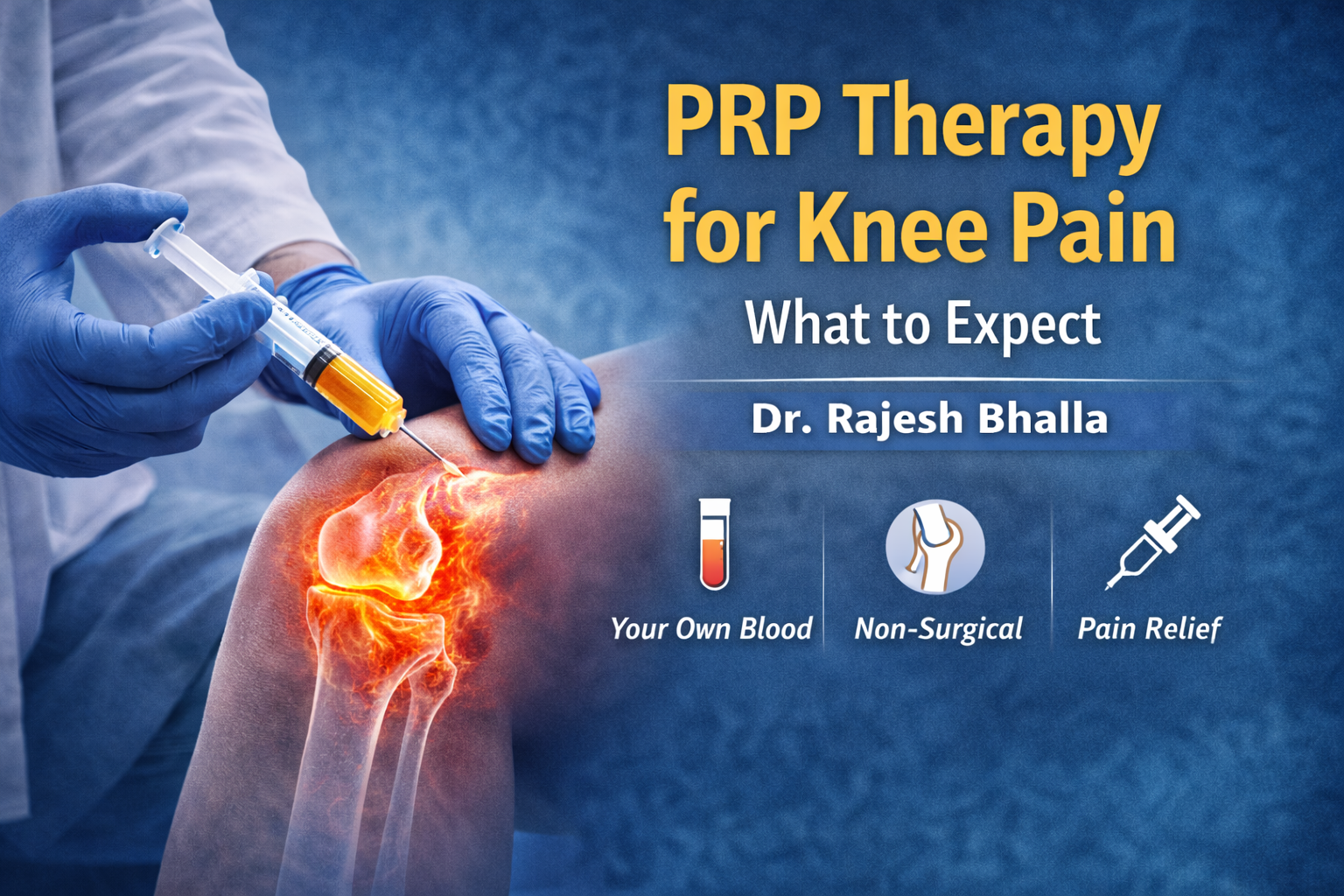
Knee pain caused by arthritis, cartilage damage, ligament injuries, or overuse can significantly affect daily life. In recent years, PRP therapy (Platelet-Rich Plasma therapy) has emerged as an advanced, non-surgical treatment option that promotes natural healing and pain relief.
PRP therapy is increasingly preferred by patients looking to delay or avoid surgery while improving knee joint function. Understanding what PRP therapy involves and what to expect can help you make an informed decision about your knee care.
What Is PRP Therapy?
PRP (Platelet-Rich Plasma) therapy is a regenerative treatment that uses your own blood to stimulate healing in damaged tissues.
How PRP Works:
- A small amount of blood is drawn from the patient
- The blood is processed to concentrate platelets.
- Platelets contain growth factors that promote tissue repair.
- The PRP is injected directly into the affected knee joint.
Because PRP is derived from your own blood, the risk of allergic reaction or infection is extremely low.
Conditions Treated with PRP Therapy for Knee Pain
PRP therapy is commonly used for a variety of knee problems, including:
- Early to moderate knee osteoarthritis
- Cartilage wear and degeneration
- Meniscus injuries
- Ligament and tendon injuries
- Chronic knee pain is not responding to medications.
- .Sports-related knee injuries
It is most effective in patients with early-stage joint damage, where natural healing potential still exists.
What to Expect Before PRP Therapy
Before recommending PRP therapy, Dr. Rajesh Bhalla performs a detailed evaluation.
Pre-Treatment Assessment Includes:
- Complete clinical examination of the knee
- Review of medical history and previous treatments
- Imaging tests, such as X-ray or MR I, if required
- Assessment of arthritis stage and joint condition
Patients may be advised to stop certain medications, such as anti-inflammatory drugsfor a few days before the procedure.
What Happens During the PRP Procedure?
PRP therapy is a simple, outpatient procedure that usually takes about 30–45 minutes.
Step-by-Step Process:
- Blood is drawn from your arm
- Platelet-rich plasma is prepared using a centrifuge.
- The knee area is cleaned and prepared
- PRP is injected into the affected knee joint under guidance
The procedure is minimally invasive and does not require hospital admission.
What to Expect After PRP Therapy
After PRP injection, the healing process begins gradually.
Common Post-Treatment Experiences:
- Mild pain or soreness at the injection site
- Temporary swelling or stiffness for a few days
- Gradual reduction in pain over weeks
- Improved knee movement and function
Pain relief usually starts within 2–6 weeks, with continued improvement over several months.
How Many PRP Sessions Are Needed?
The number of PRP sessions depends on the severity of knee damage.
- Mild cases may require a single injecti..on
- Moderate arthritis may need 2–3 sessions.
- Sessions are usually spaced a few weeks apart.
Dr. Rajesh Bhalla customizes the treatment plan based on individual patient needs.
Benefits of PRP Therapy for Knee Pain
PRP therapy offers several advantages compared to conventional treatments.
Key Benefits:
- Non-surgical and minimally invasive
- Uses the body’s natural healing process
- Reduces pain and inflammation
- Improves joint function and mobility
- Helps delay or avoid knee replacement surgery
- Safe with minimal side effects
Who Is an Ideal Candidate for PRP Therapy?
PRP therapy is best suited for patients who:
- Have early to moderate knee arthritis
- Experience chronic knee pain despite medication n.n.s
- Want to avoid or delay surgery.
- Are physically active or athletes
- Have realistic expectations about outcomes.
PRP may not be effective in advanced arthritis where cartilage loss is severe.
Limitations of PRP Therapy
While PRP is highly beneficial, it is important to understand its limitations:
- Results vary from patient to patient
- Not a cure for advanced arthritis
- Improvement is gradual, not immedia..te.
- May need repeat treatments over tim
A proper medical evaluation is essential before proceeding.
Why Choose Dr. Rajesh Bhalla for PRP Therapy?
Dr. Rajesh Bhalla provides evidence-based, personalized knee care with a focus on long-term joint health.
Expertise Includes:
- Accurate diagnosis and patient selection
- Advanced PRP preparation techniques
- Ultrasound-guided knee injections
- Comprehensive non-surgical and surgical care
- Rehabilitation and follow-up support
Final Thoughts
PRP therapy is an effective, natural, and non-surgical option for managing knee pain and improving joint function. When used at the right stage and under expert supervision, it can significantly enhance the quality of life and delay the need for surgery.
If knee pain is limiting your daily activities, PRP therapy may be a suitable treatment option worth exploring.