Maintaining healthy joints is essential for staying active, independent, and pain-free throughout life. Whether you are managing early knee arthritis or simply aiming to protect your joint health, long-term joint preservation depends greatly on daily lifestyle habits. While medical treatments and physiotherapy play an important role, sustainable lifestyle changes are the true foundation of protecting your natural joints for years to come.
Joint preservation is not only about treating pain when it occurs. It is about creating habits that reduce stress on the joints, improve strength and flexibility, and slow down cartilage wear over time. With the right approach, patients can maintain mobility, delay degenerative changes, and avoid or postpone major surgical interventions.
Understanding how lifestyle choices influence joint health empowers individuals to take proactive steps toward long-term joint preservation.
Why Lifestyle Matters in Joint Preservation
The joints of the body, especially weight-bearing joints like the knees and hips, are constantly under stress. Everyday activities such as walking, climbing stairs, and standing place repeated load on cartilage, ligaments, and surrounding muscles. Over time, poor habits can accelerate joint degeneration.
Healthy lifestyle choices help to:
- Reduce excessive pressure on joints
- Strengthen muscles that support joint stability
- Improve flexibility and range of motion
- Enhance circulation and cartilage nutrition
- Control inflammation within the body
- Slow the progression of early arthritis
By addressing these factors consistently, individuals can significantly improve long-term joint outcomes.
Maintain a Healthy Body Weight
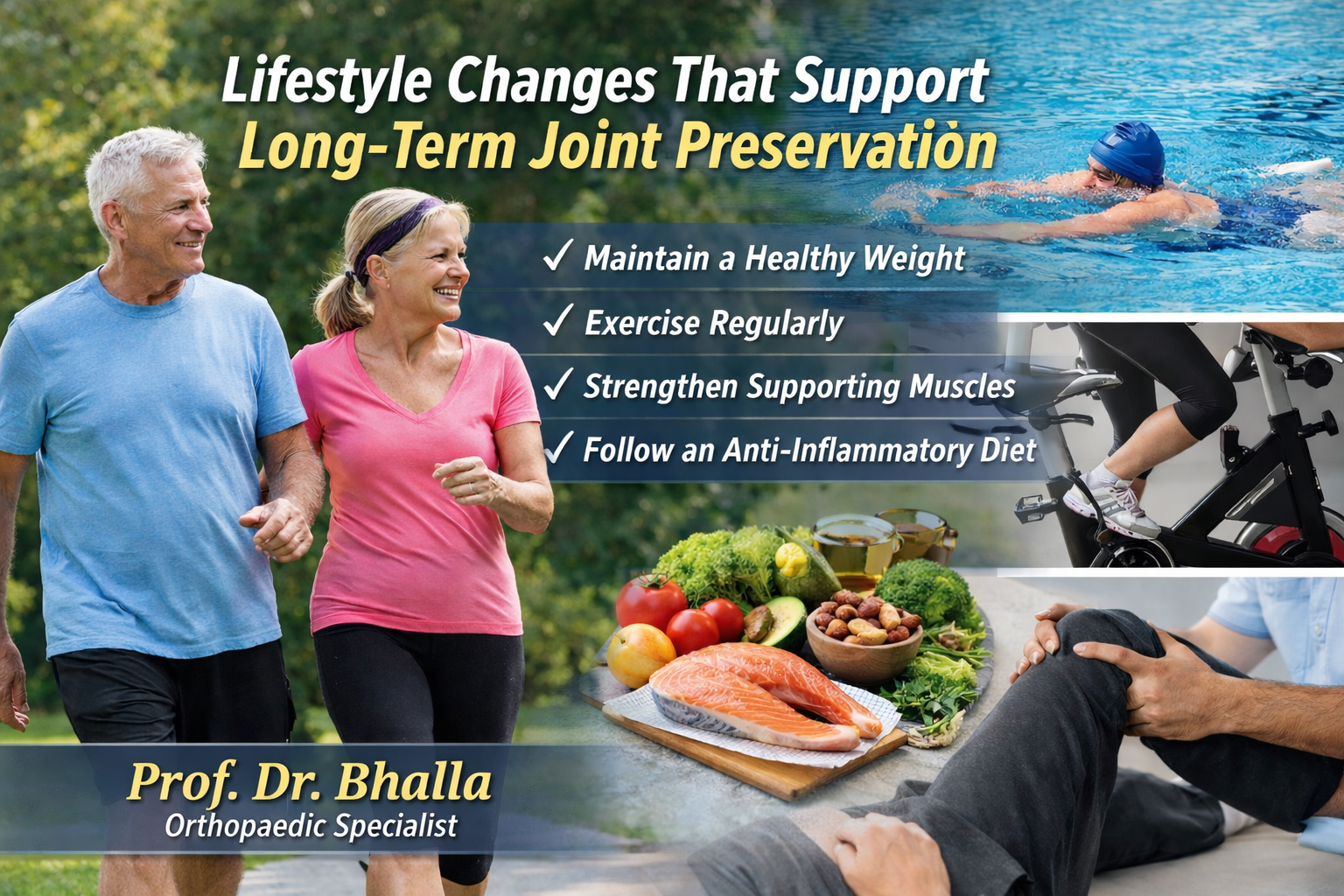
One of the most important lifestyle changes for joint preservation is maintaining an optimal body weight. Excess body weight increases mechanical load on weight-bearing joints, especially the knees. Even a small increase in weight can substantially raise the stress placed on cartilage with each step.
Benefits of weight management include:
- Reduced joint pain during activity
- Slower cartilage wear and tear
- Improved mobility and endurance
- Lower risk of developing advanced arthritis
Weight reduction does not require extreme dieting. Sustainable dietary changes combined with regular physical activity are more effective in the long term. Even modest weight loss can produce noticeable improvement in knee comfort and function.
Engage in Regular Low-Impact Exercise
Exercise is essential for joint preservation, but choosing the right type of activity is equally important. High-impact sports or repetitive stress activities can accelerate joint damage, especially in individuals with early arthritis.
Low-impact exercises help maintain joint health without excessive strain. These include:
- Swimming
- Cycling
- Walking on even surfaces
- Elliptical training
- Yoga and stretching routines
These activities improve muscle strength, enhance joint lubrication, and maintain flexibility. Strong muscles around the knee act as shock absorbers, reducing pressure on the joint surfaces.
Consistency is more important than intensity. Regular moderate exercise supports long-term joint stability and function.
Strengthen Supporting Muscles
Muscle strength plays a vital role in protecting joints. Weak muscles allow greater stress to be transferred directly to cartilage and ligaments. Strengthening the quadriceps, hamstrings, and hip muscles significantly improves knee alignment and reduces joint load.
A structured physiotherapy or strengthening program helps to:
- Improve joint stability
- Enhance balance and coordination
- Reduce risk of falls and injury
- Decrease joint pain during daily activities
Resistance training with proper technique ensures safe muscle development without aggravating the joint. Supervised guidance from an orthopaedic specialist or physiotherapist is beneficial, especially for individuals with early joint degeneration.
Improve Flexibility and Joint Mobility
Stiff joints are more vulnerable to injury and degeneration. Regular stretching exercises help maintain range of motion and reduce joint stiffness.
Flexibility training supports:
- Smooth joint movement
- Reduced muscle tightness
- Better posture and alignment
- Improved overall function
Gentle stretching before and after exercise improves circulation and reduces strain on surrounding tissues. Maintaining mobility is essential for long-term joint preservation.
Choose Joint-Friendly Footwear
Footwear has a direct impact on knee and hip alignment. Poorly designed shoes can alter walking mechanics and increase stress on joints. Supportive footwear with adequate cushioning and arch support promotes better shock absorption.
Proper footwear helps to:
- Improve weight distribution
- Reduce impact forces
- Enhance walking comfort
- Minimize joint strain
Individuals with alignment issues may benefit from customized orthotics to further protect joint mechanics.
Modify High-Impact Activities
While staying active is important, modifying certain activities can prevent long-term joint damage. Repetitive jumping, deep squatting, or high-impact sports may worsen cartilage wear in susceptible individuals.
Lifestyle adjustments may include:
- Reducing prolonged standing on hard surfaces
- Avoiding sudden twisting movements
- Limiting high-impact sports
- Taking regular breaks during physically demanding tasks
Adapting activities does not mean giving up exercise. It means choosing smarter alternatives that protect the joint while maintaining fitness.
Follow an Anti-Inflammatory Diet
Chronic inflammation can accelerate joint degeneration. Adopting a balanced diet rich in anti-inflammatory foods supports joint health from within.
Nutritional habits that benefit joints include:
- Consuming fruits and vegetables rich in antioxidants
- Including omega-3 fatty acids from fish and nuts
- Reducing processed foods and excess sugar
- Maintaining adequate hydration
Proper nutrition supports cartilage health and helps manage systemic inflammation that contributes to joint pain.
Stay Consistent With Rehabilitation Programs
For individuals who have undergone joint preservation procedures such as knee arthroscopy or cartilage repair, long-term success depends heavily on adherence to rehabilitation protocols.
Ongoing physiotherapy ensures:
- Gradual strengthening of the joint
- Prevention of stiffness
- Improved long-term outcomes
- Reduced risk of re-injury
Joint preservation is not a one-time treatment but a continuous process that requires commitment.
Protect Joints During Daily Activities
Simple ergonomic adjustments can significantly reduce joint strain. Maintaining proper posture while sitting, lifting objects correctly, and using supportive seating can prevent unnecessary stress.
Practical joint protection strategies include:
- Using handrails when climbing stairs
- Avoiding sitting for prolonged periods
- Maintaining correct sitting posture
- Using assistive devices when needed
These small changes accumulate over time to preserve joint health.
Address Pain Early
Ignoring early joint pain can allow minor issues to progress into significant degeneration. Early consultation with an orthopaedic specialist ensures timely intervention.
Early evaluation allows:
- Accurate diagnosis
- Identification of alignment issues
- Guided treatment planning
- Prevention of irreversible damage
Prompt action is essential for successful long-term joint preservation.
Manage Stress and Sleep Quality
Chronic stress and inadequate sleep can worsen inflammation and pain perception. Prioritizing mental well-being supports overall joint health.
Healthy habits include:
- Maintaining regular sleep schedules
- Practicing relaxation techniques
- Engaging in mindfulness or breathing exercises
- Balancing work and physical activity
Holistic wellness contributes significantly to long-term outcomes.
Who Benefits Most From Lifestyle-Based Joint Preservation
Lifestyle modifications are beneficial for:
- Individuals with early-stage knee arthritis
- Patients who have undergone joint preservation surgery
- Active adults aiming to prevent joint degeneration
- Middle-aged individuals with mild cartilage damage
- Those wishing to delay knee replacement surgery
The earlier these habits are adopted, the more effective they are in protecting joint health.
When Lifestyle Changes Alone May Not Be Enough
While lifestyle modifications are essential, advanced or end-stage arthritis may require additional medical or surgical intervention. Patients experiencing severe pain, joint deformity, or significant cartilage loss should seek specialized evaluation.
In such cases, lifestyle strategies remain supportive but may need to be combined with advanced treatments for optimal relief.
Benefits of Long-Term Lifestyle Commitment
Consistent lifestyle changes offer numerous long-term advantages:
- Sustained pain control
- Improved joint function
- Delayed progression of arthritis
- Enhanced quality of life
- Reduced likelihood of major surgery
Preserving the natural joint is always preferable when possible, and daily habits play a powerful role in achieving that goal.
Why Choose Prof. Dr. Bhalla for Comprehensive Joint Care
At Prof. Dr. Bhalla’s clinic, we believe that successful joint preservation extends beyond medical procedures. A comprehensive plan that integrates lifestyle guidance, physiotherapy, and advanced treatment ensures the best long-term outcomes.
Our approach includes:
- Early and accurate diagnosis
- Personalized joint preservation strategies
- Guidance on exercise and rehabilitation
- Patient education for long-term joint care
- Advanced minimally invasive techniques when required
With extensive orthopaedic expertise, Prof. Dr. Bhalla focuses on preserving natural joint function and empowering patients to take control of their joint health.
Final Thoughts
Long-term joint preservation is not achieved through a single treatment. It requires a combination of medical expertise and consistent lifestyle habits. Maintaining a healthy weight, exercising wisely, strengthening supporting muscles, and protecting joints during daily activities all contribute to lasting joint health.
If you are experiencing early knee discomfort or wish to safeguard your joints for the future, consulting an experienced orthopaedic specialist like Prof. Dr. Bhalla can help create a personalized plan that supports mobility, comfort, and confidence for years to come.