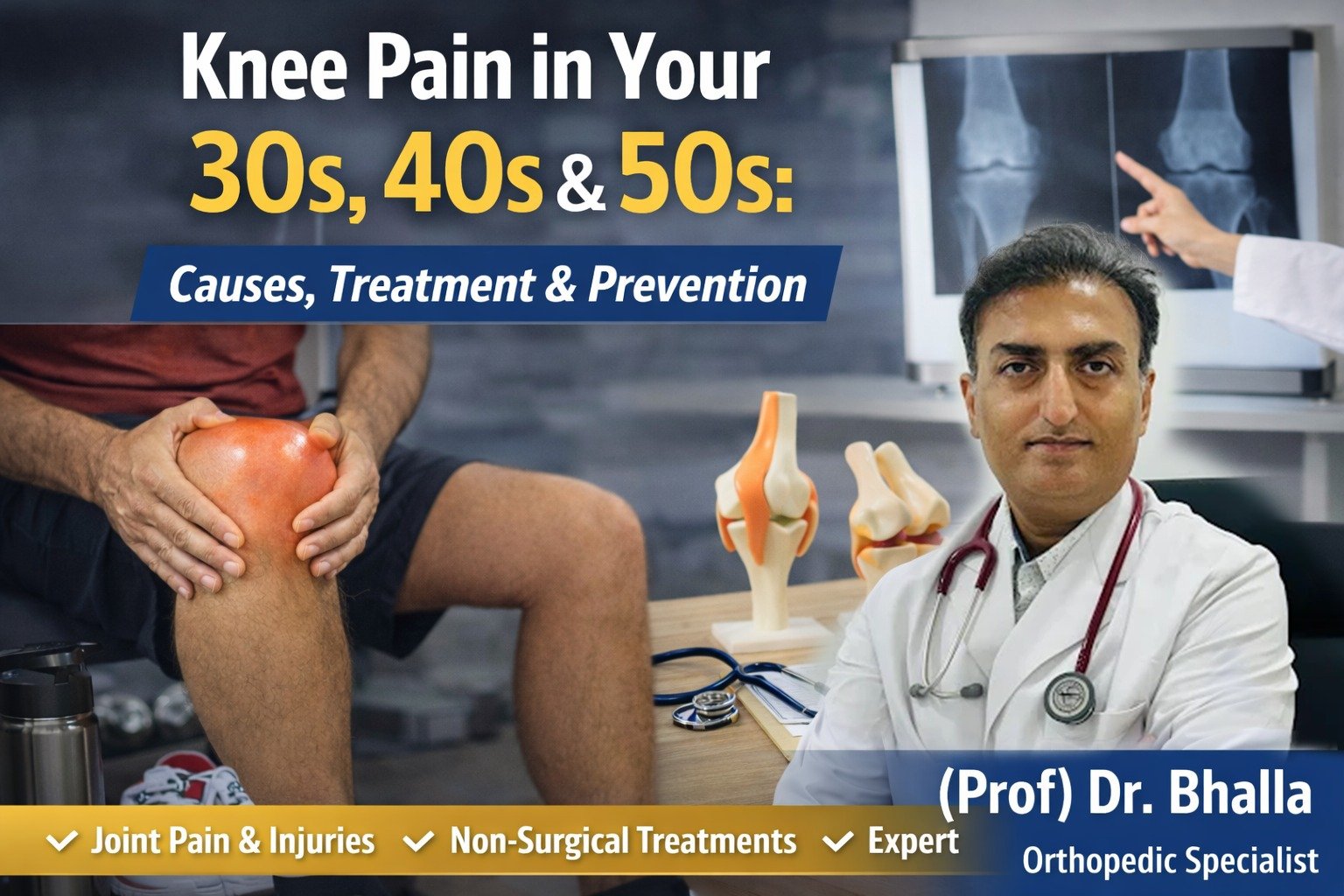
Knee pain is no longer a problem limited to old age. Today, people in their 30s, 40s, and 50s increasingly experience knee discomfort due to lifestyle habits, work-related strain, injuries, and early joint degeneration. What starts as mild pain or stiffness can gradually affect mobility, productivity, and overall quality of life if ignored.
Understanding the causes of knee pain at different stages of adulthood, along with the right treatment and prevention strategies, helps patients protect their joints and stay active for years to come.
Why Knee Pain Is Common in Your 30s, 40s & 50s
The knee joint bears the body’s weight and is involved in almost every movement walking, climbing stairs, sitting, and standing. Over time, repeated stress, poor posture, injuries, and reduced muscle strength begin to impact knee health.
In earlier decades, knee pain often results from overuse or injury. As people move into their 40s and 50s, natural wear and tear combined with lifestyle factors increases the risk of joint damage and arthritis.
Common Causes of Knee Pain by Age Group
Knee Pain in Your 30s
In your 30s, knee pain is often activity-related and usually reversible with early care.
Common causes include:
- Sports injuries such as ligament sprains or meniscus tears
- Overuse from running, gym workouts, or high-impact activities
- Poor posture and improper exercise technique
- Muscle imbalance or weak thigh muscles
- Sudden weight gain increasing joint stress
Ignoring recurring knee pain in this age group may lead to long-term joint problems later in life.
Knee Pain in Your 40s
During the 40s, early joint degeneration may begin to appear.
Frequent causes include:
- Early-stage osteoarthritis
- Cartilage wear due to long-term stress
- Old untreated injuries resurfacing
- Reduced muscle flexibility and strength
- Prolonged sitting or sedentary work habits
Pain may appear during climbing stairs, prolonged walking, or after physical activity.
Knee Pain in Your 50s
In your 50s, knee pain is often linked to progressive joint degeneration.
Common causes include:
- Moderate to advanced osteoarthritis
- Cartilage thinning and bone friction
- Ligament and tendon degeneration
- Obesity-related joint overload
- Inflammatory joint conditions
Stiffness in the morning, swelling, and reduced mobility become more noticeable at this stage.
Symptoms That Should Not Be Ignored
Persistent knee pain may indicate underlying joint damage.
Warning signs include:
- Pain lasting more than a few weeks
- Swelling or stiffness in the knee
- Difficulty walking or bending
- Grinding or clicking sounds
- Knee instability or buckling
- Pain that worsens with activity
Early evaluation can prevent progression and avoid surgical intervention.
Diagnosis of Knee Pain
Accurate diagnosis is essential for effective treatment.
Evaluation typically includes:
- Detailed clinical examination
- Assessment of walking pattern and joint movement
- Review of activity level and past injuries
- X-rays to detect arthritis or joint damage
- MRI scans for ligament or cartilage injuries
A personalized treatment plan is based on the severity and cause of pain.
Non-Surgical Treatment Options for Knee Pain
Most knee pain in the 30s, 40s, and early 50s can be managed without surgery.
Conservative Treatment Includes:
- Activity modification and rest
- Anti-inflammatory medications
- Physiotherapy for muscle strengthening
- Weight management to reduce joint stress
- Knee supports or braces when required
- Lifestyle corrections and posture improvement
These treatments aim to relieve pain, improve function, and slow joint degeneration.
Advanced Non-Surgical Treatments
When basic treatment is insufficient, advanced options may be recommended.
These include:
- Corticosteroid injections for inflammation relief
- Hyaluronic acid injections for joint lubrication
- Platelet-rich plasma (PRP) therapy in selected cases
- Customized rehabilitation programs
Early intervention helps delay or avoid surgery.
When Is Surgery Considered for Knee Pain?
Surgery is considered only when non-surgical treatments fail to provide relief.
Indications include:
- Severe knee arthritis
- Persistent pain limiting daily activities
- Significant joint deformity
- Difficulty walking or standing
- Poor quality of life despite treatment
Procedures may range from minimally invasive arthroscopy to partial or total knee replacement, depending on the condition.
Prevention of Knee Pain at Any Age
Protecting knee health is possible with simple daily habits.
Knee Care Tips:
- Maintain a healthy body weight
- Strengthen thigh and hip muscles
- Avoid high-impact activities without proper conditioning
- Use correct posture while sitting and lifting
- Warm up before exercise
- Wear supportive footwear
- Avoid prolonged squatting or floor sitting
Consistency in preventive care plays a major role in long-term joint health.
Benefits of Early Treatment
Addressing knee pain early offers long-term advantages.
Key benefits include:
- Prevention of arthritis progression
- Improved mobility and flexibility
- Reduced need for surgery
- Better activity tolerance
- Enhanced quality of life
Ignoring early symptoms often leads to more complex problems later.
Why Choose Dr. Rajesh Bhalla for Knee Pain Treatment?
Dr. Rajesh Bhalla provides comprehensive, patient-centered knee care using evidence-based techniques.
Expert care includes:
- Accurate diagnosis of knee conditions
- Personalized non-surgical treatment plans
- Advanced joint preservation strategies
- Surgical expertise when required
- Focus on long-term joint health and recovery
Patients receive guidance tailored to their age, lifestyle, and activity goals.
Final Thoughts
Knee pain in your 30s, 40s, or 50s should never be considered normal or ignored. Early understanding of the causes, timely treatment, and preventive care can help preserve knee function and avoid long-term disability.
With the right medical guidance, lifestyle changes, and expert care, knee pain can be effectively managed allowing you to stay active, independent, and pain-free for years to come.
If knee pain is affecting your daily life, consulting an experienced orthopedic specialist like Dr. Rajesh Bhalla can help you take the right steps toward lasting knee health.