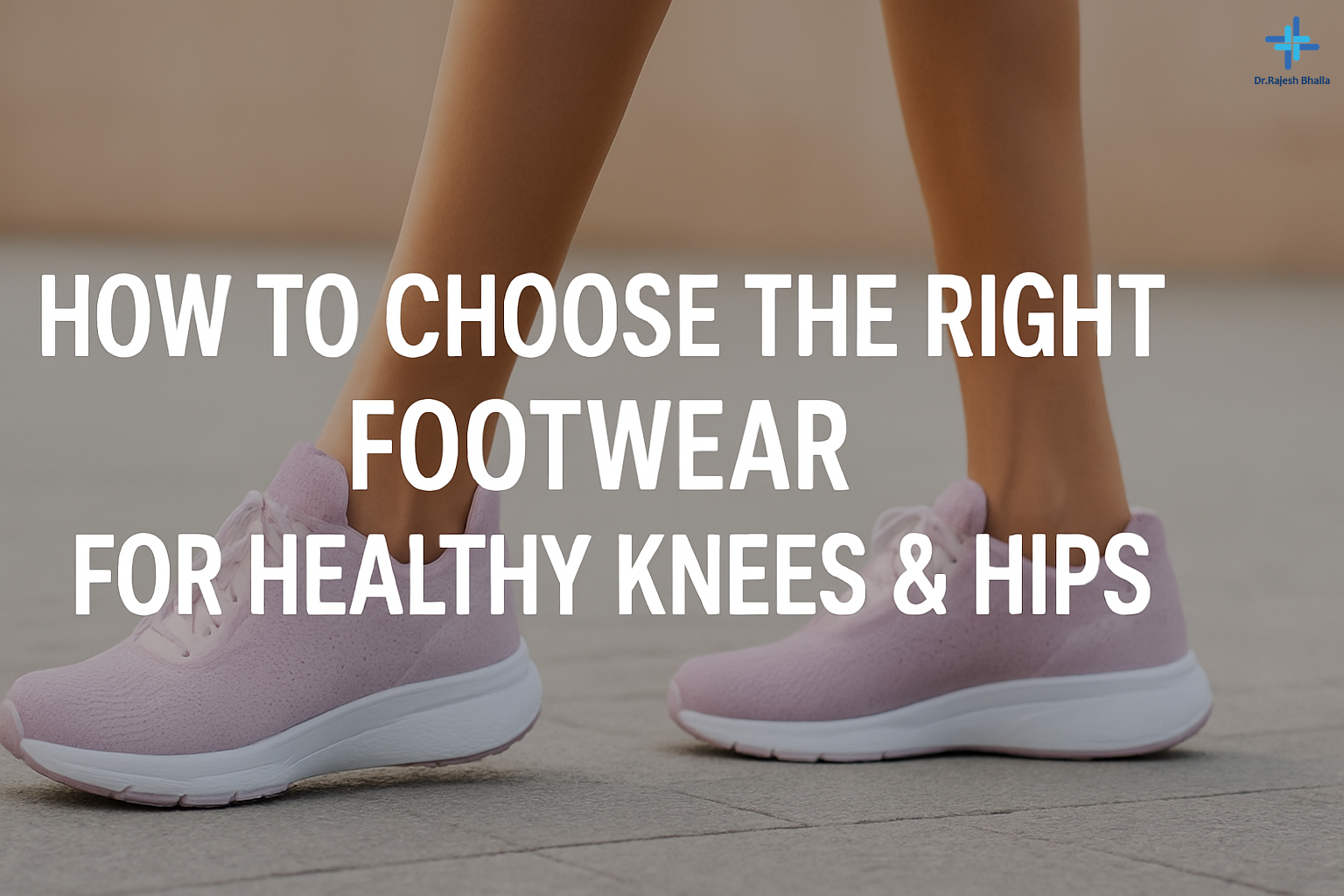
How to Choose the Right Footwear for Healthy Knees & Hips
When people think about knee and hip health, they usually focus on exercise, weight management, or medical treatment. However, one of the most overlooked yet crucial factors affecting joint health is footwear. The shoes you wear every day directly influence how your body absorbs impact, maintains alignment, and distributes pressure across your joints. Poor footwear choices can slowly damage your knees and hips, leading to pain, stiffness, and long-term orthopaedic conditions such as arthritis.
As an orthopaedic surgeon, I often see patients with knee pain, hip discomfort, and lower back problems that are not solely due to injury or aging, but rather due to years of wearing unsuitable footwear. Understanding how footwear impacts joint mechanics can help prevent pain and preserve mobility for years to come.
How Footwear Impacts Knee and Hip Health
The feet are the foundation of the human body. Every step you take creates a chain reaction of movement that travels upward from the feet to the ankles, knees, hips, and spine. If the feet are not properly supported, this chain becomes misaligned. Even minor imbalances at the foot level can significantly increase stress on the knees and hips over time.
Improper footwear can alter walking patterns, reduce shock absorption, and cause uneven weight distribution. This leads to excessive pressure on cartilage, ligaments, and muscles around the knee and hip joints. Over years of daily wear, these abnormal forces can contribute to joint degeneration, muscle fatigue, inflammation, and chronic pain. Proper footwear helps maintain natural alignment and reduces unnecessary strain on major joints.
Importance of Proper Arch Support
Arch support is one of the most important features of joint-friendly footwear. The arch of the foot plays a critical role in shock absorption and balance. When shoes lack adequate arch support, the foot may roll inward excessively (overpronation) or outward (supination), which disrupts the natural alignment of the legs.
This misalignment causes the knees to rotate inward or outward unnaturally, increasing stress on the knee joint surfaces. The hips also compensate for this imbalance, leading to hip strain and muscle fatigue. Over time, poor arch support can accelerate wear and tear in the knee and hip joints, increasing the risk of osteoarthritis. Shoes with proper arch support help maintain correct posture and evenly distribute body weight, reducing joint stress.
Role of Cushioning and Shock Absorption
Every step you take generates impact forces equal to several times your body weight. Without proper cushioning, these forces travel directly into the knees and hips. This is especially problematic for individuals who walk long distances, stand for extended periods, or engage in regular physical activity.
Well-cushioned footwear absorbs shock and reduces the load transmitted to the joints. However, excessively soft shoes can be just as harmful, as they reduce stability and force muscles to work harder to maintain balance. The ideal footwear provides a balance between cushioning and firmness, protecting the joints while maintaining control and stability during movement.
Stability and Heel Support Matter
Heel stability plays a vital role in maintaining proper walking mechanics. A firm heel counter helps keep the heel aligned and prevents excessive side-to-side movement of the foot. When the heel is unstable, the knees and hips must compensate, increasing joint stress and muscle fatigue.
Shoes with weak heel support can contribute to knee pain, hip discomfort, and even lower back issues. A stable heel improves balance, reduces strain on surrounding muscles, and supports proper posture. This is particularly important for older adults and individuals with existing joint conditions.
Choosing the Right Heel Height
Heel height has a direct impact on knee and hip alignment. High heels shift body weight forward, increasing pressure on the knees and forcing the hips into an unnatural position. Regular use of high heels significantly increases the risk of knee osteoarthritis and chronic hip pain.
On the other hand, completely flat shoes without support can also strain the joints by failing to absorb shock. The most joint-friendly footwear has a slight heel elevation, typically between one and two inches. This allows for better posture, improved shock absorption, and reduced strain on the knees and hips.
Flexibility and Sole Design
A good shoe should allow natural foot movement while controlling excessive motion. The sole should bend at the forefoot near the toes but remain firm in the middle to support the arch. Shoes that bend too easily in the middle offer little protection and increase joint strain.
Proper sole design helps maintain smooth walking mechanics, reduces stress on the knees, and prevents abnormal twisting of the hip joint. This balance between flexibility and support is essential for long-term joint health.
Footwear Selection Based on Lifestyle
Daily Walking and Workwear
For individuals who walk frequently or spend long hours standing, footwear must provide continuous support throughout the day. Lightweight shoes with good cushioning, arch support, and breathable materials are ideal. Avoid hard-soled shoes, thin sandals, or unsupportive slippers, as they increase joint strain during prolonged use.
Sports and Physical Activity
Sports footwear should be chosen based on the specific activity. Running shoes, gym shoes, and walking shoes are designed differently to support specific movement patterns. Wearing the wrong type of shoe during exercise increases the risk of joint injuries, muscle strain, and long-term damage to the knees and hips.
Footwear for Older Adults
As age increases, joint cartilage naturally wears down, and balance may become compromised. Older adults require shoes that offer stability, cushioning, and slip resistance. Supportive footwear can significantly reduce joint pain, prevent falls, and improve confidence while walking.
Common Footwear Mistakes That Harm Joints
Many people unknowingly damage their joints by wearing unsuitable shoes for years. Common mistakes include wearing worn-out footwear with uneven soles, using flat slippers daily, prioritizing style over support, and ignoring early signs of discomfort. These habits gradually increase stress on the knees and hips, leading to chronic pain and mobility issues.
Warning Signs Your Shoes Are Affecting Your Knees and Hips
Persistent knee pain after walking, hip stiffness, lower back discomfort, uneven shoe wear, and frequent foot fatigue are all signs that your footwear may be harming your joints. Addressing these issues early can prevent serious orthopaedic conditions in the future.
When Orthopaedic Insoles Are Needed
In some cases, standard footwear may not be sufficient. Individuals with flat feet, high arches, knee arthritis, hip arthritis, or leg length differences may benefit from custom orthopaedic insoles. These insoles improve alignment, reduce joint pressure, and provide personalized support. Consultation with an orthopaedic specialist ensures accurate diagnosis and effective treatment.
Conclusion
Choosing the right footwear is a simple yet powerful step in protecting your knees and hips. Proper shoes support alignment, absorb shock, and reduce joint stress, helping prevent pain and long-term damage. Ignoring footwear quality can silently contribute to serious orthopaedic problems over time.
If you are experiencing knee pain, hip discomfort, or difficulty walking, professional evaluation is essential. At https://drrajeshbhalla.com/, I offer comprehensive orthopaedic care focused on joint preservation, pain relief, and restoring mobility. With expert assessment and personalized treatment, you can protect your joints and maintain an active, pain-free lifestyle.