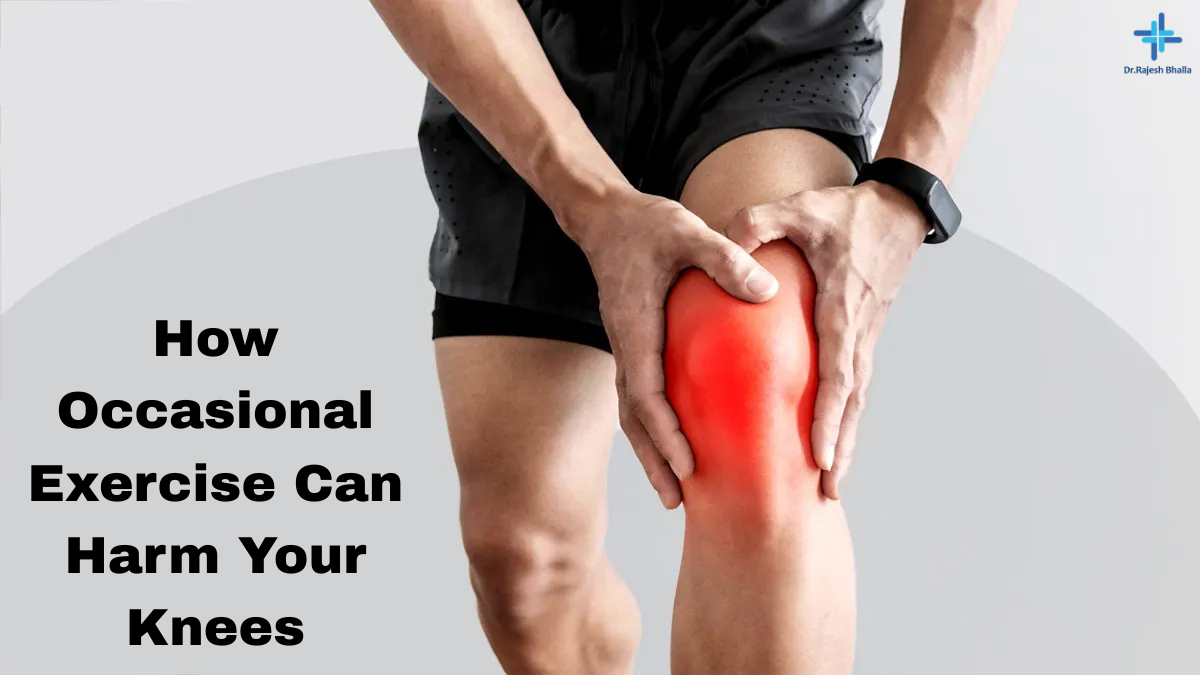
How Occasional Exercise Can Harm Your Knees
Many people believe that exercising “once in a while” is harmless or even beneficial, but the truth is quite different, especially when it comes to knee health. The knees are one of the most complex and heavily used joints in the body. They rely on strong muscles, flexible ligaments, and regular movement to stay healthy. When exercise is inconsistent, the knee joint doesn’t receive the conditioning it needs to stay stable and protected. Occasional or irregular workouts often mean that weeks or months pass without any physical activity. During these gaps, the muscles around the knees, particularly the quadriceps, hamstrings, and calf muscles, become weak and less supportive. Then, when someone suddenly performs a high-intensity activity like running, jumping, squats, or sports, the knees are forced to absorb a large amount of stress without proper muscular support. This sudden overload can easily lead to sprains, ligament tears, or strain on the meniscus and cartilage. Another issue with occasional exercise is the lack of a warm-up and proper form. People who exercise irregularly often jump straight into workouts without preparing their joints. Stiff muscles and tight ligaments reduce the knee’s range of motion and increase the chances of injury. Sudden movements, improper posture, and incorrect techniques become much more dangerous when the body is not conditioned for them. Inconsistent workout habits may also cause inflammation in the knee joint. After sudden or intense activity, the tissues can become irritated, leading to swelling, pain, and stiffness. Over time, repeated stress without conditioning can accelerate cartilage wear, eventually contributing to long-term problems like osteoarthritis. Moreover, occasional exercisers tend to overestimate their fitness levels. They may attempt activities their body is not ready for, like heavy gym workouts, long runs, or competitive sports, thinking they can handle it. This “weekend warrior” pattern is one of the most common reasons for ACL injuries, patellar tendinitis, and meniscus tears. Ultimately, the key to healthy knees is not occasional bursts of effort but regular, moderate, well-balanced exercise. A routine that includes strengthening, stretching, low-impact cardio, and proper warm-up helps build resilience and stability around the joint. Without consistency, even good-intentioned exercise can turn into a source of pain, injury, and long-term damage.
Why Knees Are Highly Vulnerable
The knee is one of the most complex and hardworking joints in the human body. Every time you stand, walk, climb stairs, or even shift your weight from one leg to the other, your knees are actively supporting you. They bear almost the entire weight of your upper body, making them especially prone to stress and strain. Unlike smaller joints, the knee must balance both strength and flexibility, allowing you to run, jump, squat, and turn while remaining stable. Because the knee is involved in almost every movement, even small issues can quickly turn into major problems. The joint is made up of bones, ligaments, tendons, cartilage, and muscles, all of which must work together perfectly. When these structures are exposed to sudden pressure, improper exercise techniques, or abrupt high-intensity movements, they can be injured easily. A weak muscle, a tight ligament, or even a slight imbalance can disrupt the entire joint mechanism. This constant load and complexity make the knee more vulnerable than most people realize. Something as simple as landing incorrectly during a jump, doing squats with poor form, or running on uneven ground can strain the ligaments or irritate the cartilage. And for individuals who exercise only occasionally, the risk becomes even higher because the muscles around the knee may not be strong enough to provide adequate support.
How Occasional Exercise Can Harm Your Knees
1. Sudden Stress on Unprepared Muscles
When you exercise only occasionally, your muscles stay weak, stiff, and unconditioned. Suddenly performing intense activities such as running, deep squats, jumping, or high-impact workouts puts unexpected pressure on these unprepared muscles. Because they are not strong enough to support the knee joint, the force directly impacts the ligaments and cartilage, increasing the risk of strains, sprains, and tiny micro-tears in the tissues. This sudden overload can quickly turn a simple workout into a painful knee injury.
2. Higher Risk of Ligament Injuries
Your knee ligaments—especially the ACL, MCL, and the meniscus—are highly sensitive to unexpected or excessive stress. When workouts are irregular, these structures do not stay flexible or well-conditioned. As a result, sudden twisting movements, an improper landing during jumps, or lifting heavy weights without preparation can cause serious injuries such as ACL tears, meniscus damage, or ligament sprains. These are some of the most common problems seen in individuals who exercise only once in a while.
3. Poor Exercise Form Due to Irregular Practice
Regular exercise helps you maintain proper form, posture, and technique. However, when workouts are inconsistent, your body forgets the correct way to perform movements like squats, lunges, deadlifts, or running. Poor form puts excessive pressure on the knee joint, causing pain, instability, and long-term wear and tear. Many irregular exercisers develop knee pain simply because their technique is incorrect and their body is not used to the movements required.
4. Lack of Warm-up and Stretching
One of the biggest issues with occasional exercisers is that they skip warm-ups and stretching because they are “short on time.” Without proper warm-up, the muscles stay tight, flexibility decreases, and blood flow to the joints remains low. Cold, stiff muscles cannot absorb shock well, so the knee joint takes the full impact of activity. This significantly increases the chances of strains, ligament injuries, and sudden knee pain during or after the workout.
5. Excess Weight Adds Extra Pressure
For individuals who are overweight, occasional exercise can become even more harmful. Every extra kilogram of body weight puts nearly four kilograms of pressure on the knees while walking and even more during running or climbing. When workouts are inconsistent, the knees don’t get time to adapt gradually, and the sudden impact can cause cartilage wear, early arthritis, inflammation, or severe joint pain. Without regular strengthening, the knee joint simply cannot handle the sudden load.
6. Weekend Workouts (“Weekend Warrior Syndrome”)
Many people do little to no exercise all week and suddenly push themselves hard on weekends. This “weekend warrior” approach is especially dangerous because the muscles, ligaments, and joints are unprepared for sudden high activity. Limited flexibility, lack of warm-up, and weak muscle support create the perfect conditions for knee injuries. The sudden spike in activity shocks the knee joint, often leading to swelling, stiffness, or sharp pain afterward.
7. Overconfidence After Long Gaps
When people return to exercise after several weeks or months of inactivity, they often overestimate their fitness level. Trying to lift heavy weights, run long distances, or perform intense workouts immediately after a long break is extremely risky. This sudden pressure can lead to tendon inflammation, patellar pain, muscle imbalance, or overuse injuries. Without gradual progression, the knee joint becomes highly vulnerable to strain and long-term damage.
Signs Your Knees Are Being Harmed by Occasional Exercise
Your knees often give early warning signals when they are being overstrained, especially due to inconsistent or occasional exercise. One of the first signs is pain around the kneecap, which may appear during or after physical activity. This discomfort usually means the joint is not handling stress well or the surrounding muscles are not supporting it adequately. Some people also notice a cracking or popping sound while moving their knee. While occasional sounds can be normal, frequent or painful popping may indicate irritation of the cartilage or ligament strain. Another common sign is swelling or stiffness after workouts. This happens when the tissues around the knee become inflamed due to sudden stress or improper movements. When swelling occurs repeatedly, it suggests that the knee is struggling to recover after each workout. Many individuals also experience difficulty bending or straightening the knee, which is a clear indication that the joint is under strain or that the surrounding structures are injured or inflamed. If you feel pain while climbing stairs, walking uphill, or getting up from a seated position, this could mean your knee joint is being overworked or misaligned. These activities put extra pressure on the kneecap, and if the muscles are not strong enough, the knee absorbs too much impact. Another important warning sign is the feeling of instability or the knee “giving way.” This suggests that ligaments or supportive muscles are not functioning properly a serious red flag that should never be ignored. These symptoms, even if mild at first, can signal early injury or developing joint problems. Paying attention to them helps prevent long-term damage and ensures timely treatment before the condition worsens.
How to Protect Your Knees While Exercising
1. Exercise Regularly
Consistency is the key to keeping your knees healthy. When you exercise only once in a while and suddenly push your body for long hours, the knee joint experiences excessive stress. Regular daily movement, just 20–30 minutes, is enough to keep your muscles active, joints lubricated, and overall knee function stable. This prevents sudden strain that often occurs during occasional heavy exercise.
2. Warm Up Before You Start
A proper warm-up prepares your knees for the workout ahead by increasing blood flow and improving joint mobility. Spending 5–10 minutes on light walking, stretching, and mobility drills reduces stiffness and enhances the flexibility of the surrounding muscles. This lowers the risk of sprains, strains, and shock to the knee joint during exercise.
3. Focus on Correct Form
Incorrect posture or technique is one of the leading causes of knee pain during workouts. Even a simple exercise like a squat can damage the knee if done with improper alignment. Learning and adopting the correct form either through a trainer, physiotherapist, or checking your alignment in a mirror ensures your joints move safely. Proper technique not only protects the knees but also improves overall workout effectiveness.
4. Strengthen Supporting Muscles
Your knees depend heavily on the strength of surrounding muscles such as the quadriceps, hamstrings, hips, and calves. When these muscles are weak, the knee joint ends up taking too much load, leading to pain and injuries. Including exercises like leg presses, hamstring curls, glute bridges, and calf raises builds balanced strength and provides stability to the knee, making your workouts safer.
5. Avoid Sudden High-Impact Movements
Abrupt increases in speed, intensity, or weights can shock your knees and cause micro-injuries. This is especially common in people who exercise occasionally and suddenly try high-intensity routines. Instead, increase your workout intensity gradually so the knee joint has time to adapt. A slow, steady progression protects the ligaments, cartilage, and tendons around your knee.
6. Use Proper Footwear
The shoes you wear during exercise directly influence knee health. Proper, well-cushioned footwear absorbs impact, supports the arch, and maintains correct leg alignment. Poor footwear, on the other hand, increases stress on your knees and can lead to pain or long-term injury. Choosing the right shoes for your activity, running, gym, or walking, keeps your knees safe and comfortable.
7. Maintain a Healthy Weight
Extra body weight puts additional pressure on the knees, especially during activities like walking, climbing stairs, or exercising. Even losing a few kilos can significantly reduce the strain on your knee joint and help prevent cartilage wear and tear. Maintaining a healthy weight is one of the simplest and most effective ways to protect your knees from unnecessary stress.
When to See an Orthopaedic Specialist
You should consult an orthopaedic or knee specialist if your knee pain lasts longer than 2–3 days, becomes worse during physical activity, or is accompanied by swelling and stiffness. These symptoms indicate that the knee joint is under stress and may already be injured. If the pain affects your movement such as difficulty bending, walking, or climbing stairs or if the discomfort repeatedly appears after exercise, it is a strong sign that something deeper is wrong. Ignoring these warning signs can allow minor issues to turn into major problems.
Delaying medical evaluation may result in long-term complications such as chronic ligament injuries, progressive cartilage wear, and early-onset arthritis. In some cases, untreated knee problems may eventually require surgical intervention to restore joint function. Early diagnosis and treatment not only prevent further damage but also help you return to your daily activities without long-term knee issues.
Final Note: Exercise Smart, Not Occasionally
Exercising only occasionally may seem harmless, but it often causes more harm than good, especially to your knees. Irregular workouts put sudden pressure on unprepared muscles and joints, increasing the risk of sprains, strains, and long-term injuries. The key to protecting your knees is consistency, proper technique, and gradually increasing intensity. When you train regularly, your muscles strengthen, your joints stay flexible, and your body adapts to physical stress safely. Remember, your knees support your body throughout your life; caring for them today ensures better mobility, strength, and independence in the future. Always opt for smart, consistent exercise over occasional intense bursts to maintain healthy and pain-free knees.