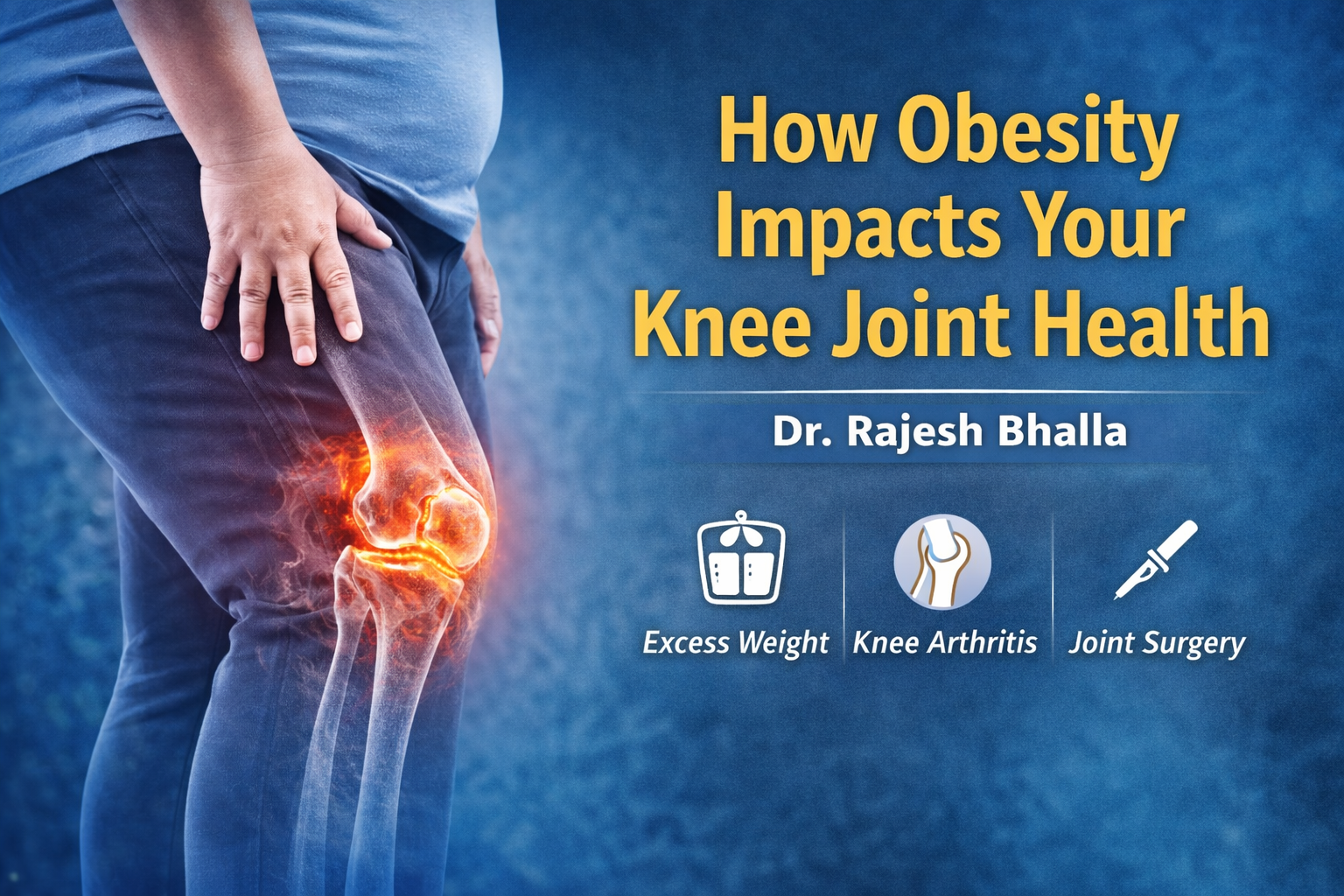
Obesity is one of the most significant yet often underestimated risk factors for knee joint problems. Excess body weight places continuous mechanical stress on the knee joints, accelerating cartilage wear and increasing the risk of pain, stiffness, and arthritis. Over time, obesity not only worsens existing knee conditions but can also trigger early joint degeneration even in younger individuals.
Understanding how obesity affects knee joint health is essential for preventing long-term damage and maintaining mobility and independence.
Why the Knee Joint Is Highly Vulnerable to Excess Weight
The knee is a primary weight-bearing joint, responsible for supporting the body during activities such as walking, standing, climbing stairs, and sitting.
Excess body weight impacts the knee joint by:
- Increasing joint load with every step, especially during walking and stair climbing
- Multiplying pressure across the knee cartilage during daily activities
- Reducing the knee’s ability to absorb shock effectively
- Accelerating wear and tear of protective joint cartilage
Even a small increase in body weight can significantly raise the stress placed on the knee joint.
How Obesity Damages Knee Cartilage
Cartilage acts as a cushion between the bones of the knee joint. Obesity directly contributes to cartilage damage in several ways:
- Continuous overload causes a gradual thinning of the knee cartilage
- Increased friction between joint surfaces leads to pain and stiffness.
- Reduced cartilage nutrition due to poor joint mechanics
- Higher risk of cartilage cracks and degeneration over time
Once cartilage is damaged, the knee joint becomes more prone to osteoarthritis.
Obesity and Knee Osteoarthritis
Obesity is one of the strongest risk factors for knee osteoarthritis.
How Excess Weight Contributes to Arthritis:
- Increased body weight accelerates cartilage breakdown
- Chronic joint inflammation worsens due to fat-related inflammatory chemicals..s
- Knee joint alignment may worsen, increasing uneven joint load..ing
- Arthritis develops earlier and progresses faster in obese individualss.s
Weight loss has been shown to significantly reduce knee pain and slow the progression of arthritis.
Impact of Obesity on Knee Ligaments and Meniscus
Obesity affects not only cartilage but also other knee structures.
- Increased stress weakens knee ligaments over time.
- Higher risk of ligament injuries due to reduced joint stability
- Greater chance of meniscus tears from excessive joint load
- Slower healing and recovery after knee injuries
These issues further compromise knee function and mobility.
Common Knee Problems Linked to Obesity
Individuals with obesity are more likely to experience:
- Chronic knee pain and stiffness
- Frequent knee swelling and inflammation
- Reduced walking endurance
- Difficulty climbing stairs or standing for long periods
- Early-onset knee osteoarthritis
- Increased likelihood of needing knee replacement surgery
How Weight Loss Improves Knee Joint Health
Even modest weight reduction can significantly benefit knee joints.
Benefits of Weight Loss Include:
- Reduced pressure on the knee cartilage and bones
- Decreased joint pain and inflammation
- Improved mobility and walking comfort
- Better response to physiotherapy and exercise
- Slower progression of knee arthritis
- Improved outcomes after knee surgery, if required
Losing even 5–10% of body weight can make a noticeable difference in knee health.
Treatment and Prevention Strategies
Managing obesity-related knee problems requires a comprehensive approach.
Non-Surgical Management
- Personalized weight management programs
- Low-impact exercises such as swimming or cycling
- Physiotherapy to strengthen knee-supporting muscles
- Pain-relief and anti-inflammatory medications
- Knee braces or supports to improve joint stability
Surgical Considerations
In advanced cases:
- Weight reduction improves surgical safety and outcomes
- Knee replacement surgery may be considered if arthritis is severe.
- Pre-surgical weight management is strongly recommended
Why Choose Dr. Rajesh Bhalla?
Dr. Rajesh Bhalla offers comprehensive care for knee joint problems with a focus on long-term joint preservation.
Key Advantages:
- Accurate assessment of obesity-related knee damage
- Personalized treatment and weight management guidance
- Expertise in non-surgical and surgical knee care
- Advanced joint replacement and rehabilitation protocols
- Continuous patient education and follow-up
Final Thoughts
Obesity has a direct and significant impact on knee joint health. Excess weight accelerates cartilage damage, worsens arthritis, and limits mobility. However, early intervention, weight management, and expert orthopedic care can greatly reduce knee pain and prevent long-term joint damage.
If knee pain or stiffness is affecting your daily life, timely evaluation by an experienced orthopedic specialist can help you protect your joints and maintain an active lifestyle.