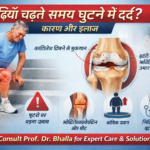
Meniscus is a semi lunar, crescent shaped collagen structure in the knee. These act like joint filler apparently are shock absorber of the knee .These are meant to give stability to knee in all 360 degree , namely anterior ,posterior, medial/ lateral (sideward), as well as rotational direction. Discoid Menisci as the name suggested are disc shaped. This is an uncommon anomaly of the menisci which is observed around 26% to 29% in Japanese or Korean population while less than 1% in rest of population of the world. This anomaly is more commonly observed in lateral menisci than in medial menisci.
They have been classified into three types as complete, incomplete according to discoid coverage of the lateral tibial( leg bone) and, third as wrisberge type . This is described as abnormal variant of normal menisci. It have normal semi lunar shaped instead of discoid and lack only posterior tibial attachment. These are frequent in young population.
Why Discoid Meniscal is bad for the knee?
While lateral Tibial condyle is naturally convex shaped and menisci being discoid (complete/Incomplete menisci) instead of being semicircular is subjected to pressure force on the anvil. This long term abnormal stress subjection will gradually create wear and tear of the meniscal body.
Wrisberge menisci have abnormal subluxation on bending and straightening of leg. This lead to its crush injury while running and walking.
How the Discoid menisci show off its symptoms?
Normally it is asymptomatic. It is silent and discovered radiologically, may be, while performing arthroscopy or after some injury. It will present similar to normal meniscal injury i.e. knee edema , sideward knee line pain while walking or the knee may freeze( locking) .
Wrisberg type menisci normally present with “POP UP” sound while walking. After injury it presents same as in a normal meniscal injury.
Knee specialist orthopaedics Doctor will examine the knee and once suspected after clinical examination, Radiological Diagnosis with MRI is done to confirm it.
How is the Treatment done?
As the Complete /Incomplete menisci are stable posteriorly they are punched out with basket forcep to recreate normal menisci – Sucerization. For menisci in unrepairable condition, menisectomy (removal) except peripheral rim which is spared to maintain the stability.
In wrisberg menisci total menisectomy (complete removal) is done. If peripheral rim spared, it is sutured with posterior knee capsule to create stability.
What is the Post operative protocol?
Now once operation is done to recreate the normal shape, saucerization, and immediate next day total weight bearing may be started.
If repair is done it takes at least minimal 3 to 4 weeks until weight training is tried. This should be done under observation of best orthopaedic doctor in Delhi or in your vicinity for secure results.