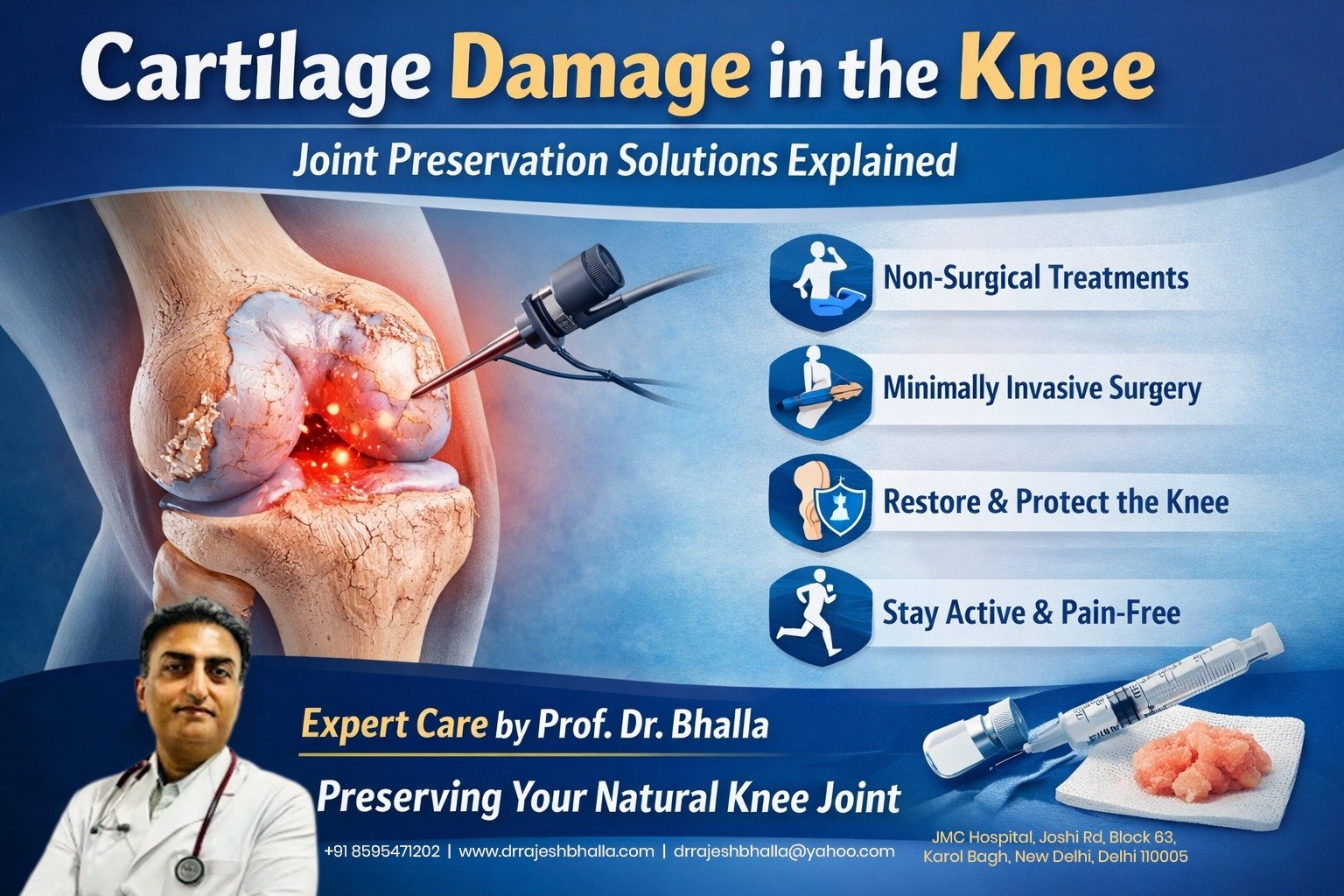
Cartilage damage in the knee is a common condition that can significantly affect mobility, comfort, and quality of life. Whether caused by injury, overuse, ageing, or early arthritis, damage to knee cartilage should never be ignored. The good news is that modern joint preservation strategies now offer effective ways to manage symptoms, slow disease progression, and protect the natural knee joint.
Joint preservation focuses on maintaining and restoring the knee’s natural structure rather than replacing it. With early diagnosis, appropriate treatment, and lifestyle support, many patients can delay or completely avoid knee replacement surgery while remaining active and pain-free.
Understanding the nature of cartilage damage and the available joint preservation solutions empowers patients to make informed decisions and protect their knee health for the long term.
Understanding Knee Cartilage Damage
Articular cartilage is the smooth, cushioning tissue that covers the ends of bones inside the knee joint. It allows frictionless movement and absorbs shock during walking, running, and daily activities. Unlike other tissues, cartilage has a limited ability to heal on its own due to poor blood supply.
Cartilage damage may result from:
- Sports injuries or trauma
- Repetitive stress on the knee
- Malalignment of the leg
- Meniscus injuries
- Early degenerative changes
When cartilage deteriorates, bones begin to rub against each other, leading to pain, stiffness, swelling, and reduced function.
Why Early Joint Preservation Is Important
Cartilage damage tends to worsen over time if left untreated. Early intervention plays a crucial role in preserving joint health and preventing progression to advanced arthritis.
Joint preservation aims to:
- Reduce pain and inflammation
- Improve joint mechanics
- Protect remaining cartilage
- Restore function and mobility
- Delay or avoid knee replacement
Treating cartilage damage early offers the best chance of long-term success.
Non-Surgical Joint Preservation Solutions
Many patients with mild to moderate cartilage damage can benefit from non-surgical treatments designed to reduce symptoms and protect the joint.
These include:
Activity Modification
Avoiding high-impact activities such as running or jumping helps reduce stress on damaged cartilage while maintaining overall fitness through low-impact alternatives.
Physiotherapy
Targeted strengthening of the quadriceps, hamstrings, and hip muscles improves knee stability and load distribution.
Weight Management
Reducing excess body weight significantly decreases pressure on knee cartilage and slows degeneration.
Medications and Injections
Anti-inflammatory medications, viscosupplementation, and biological injections may help relieve pain and support joint health in selected patients.
Surgical Joint Preservation Techniques
When non-surgical treatments are insufficient, minimally invasive surgical options may be considered to restore cartilage and improve knee function.
Knee Arthroscopy
Arthroscopy allows precise evaluation and treatment of cartilage lesions with minimal tissue disruption.
Microfracture Technique
This procedure stimulates the body to produce new cartilage-like tissue by creating small holes in the bone beneath the damaged cartilage.
Cartilage Repair and Restoration
Advanced techniques such as cartilage grafting or cell-based therapies aim to restore damaged areas and preserve joint integrity.
Alignment Correction Procedures
In patients with abnormal leg alignment, corrective osteotomy redistributes load away from damaged cartilage, significantly improving outcomes.
These procedures are designed to preserve the natural knee rather than replace it.
Rehabilitation After Cartilage Preservation Procedures
Rehabilitation is a critical component of joint preservation success. A structured physiotherapy program helps protect the repair, restore strength, and regain mobility.
Rehabilitation focuses on:
- Gradual weight-bearing progression
- Controlled strengthening
- Range-of-motion exercises
- Long-term joint protection strategies
Adherence to rehabilitation protocols greatly influences long-term results.
Lifestyle Support for Cartilage Health
Joint preservation extends beyond the operating room. Daily habits play a powerful role in protecting repaired or remaining cartilage.
Key lifestyle strategies include:
- Maintaining a healthy body weight
- Engaging in low-impact exercise
- Wearing supportive footwear
- Following an anti-inflammatory diet
- Managing stress and sleep quality
These measures enhance surgical and non-surgical outcomes alike.
Who Is an Ideal Candidate for Joint Preservation?
Joint preservation treatments are most effective for:
- Younger or middle-aged adults
- Patients with localised cartilage damage
- Individuals with early-stage arthritis
- Active patients wishing to avoid knee replacement
- Those with stable ligaments and meniscus support
A thorough clinical and imaging evaluation is essential to determine suitability.
When Knee Replacement May Be Necessary
In cases of advanced arthritis with widespread cartilage loss, joint preservation may no longer be effective. Severe pain, deformity, or functional limitation may require knee replacement surgery. However, even in such cases, joint preservation strategies can delay surgery and improve quality of life.
Benefits of Choosing Joint Preservation
Long-term advantages of cartilage-focused treatment include:
- Preservation of the natural knee joint
- Better range of motion
- Faster recovery compared to replacement
- Reduced long-term complications
- Improved activity levels
Whenever possible, preserving the native joint remains the preferred approach.
Why Choose Prof. Dr Bhalla for Knee Cartilage Care
At Prof. Dr. Bhalla’s clinic, knee cartilage damage is treated with a comprehensive joint preservation philosophy. Each patient receives an individualised plan combining accurate diagnosis, advanced imaging, and evidence-based treatment.
The approach includes:
- Detailed assessment of cartilage injury
- Personalised non-surgical and surgical options
- Advanced minimally invasive techniques
- Structured rehabilitation guidance
- Long-term joint health education
The goal is not just pain relief, but lasting joint preservation.
Final Thoughts
Cartilage damage in the knee does not automatically mean joint replacement. With early diagnosis, appropriate joint preservation strategies, and supportive lifestyle changes, many patients can maintain knee function and remain active for years.
If you are experiencing knee pain, swelling, or stiffness, consulting an experienced orthopaedic specialist like Prof. Dr Bhalla can help identify the best joint preservation solution and protect your knee for the future.