Bone fractures are among the most common injuries people experience, whether from sports, falls, accidents, or sudden impact. A fracture is essentially a broken bone, and while some may be minor cracks, others can be severe breaks requiring immediate medical attention. Knowing what to do right after an injury can make a huge difference in recovery. Proper first aid for fractures not only reduces pain but also prevents complications until professional help is available.
In this article, we’ll cover:
- What a bone fracture is
- Common causes and symptoms
- First aid steps you should take immediately
- When you must see a doctor
- Long-term care and recovery
- Why consulting a qualified orthopaedic specialist like Dr. Rajesh Bhalla is essential
What is a Bone Fracture?
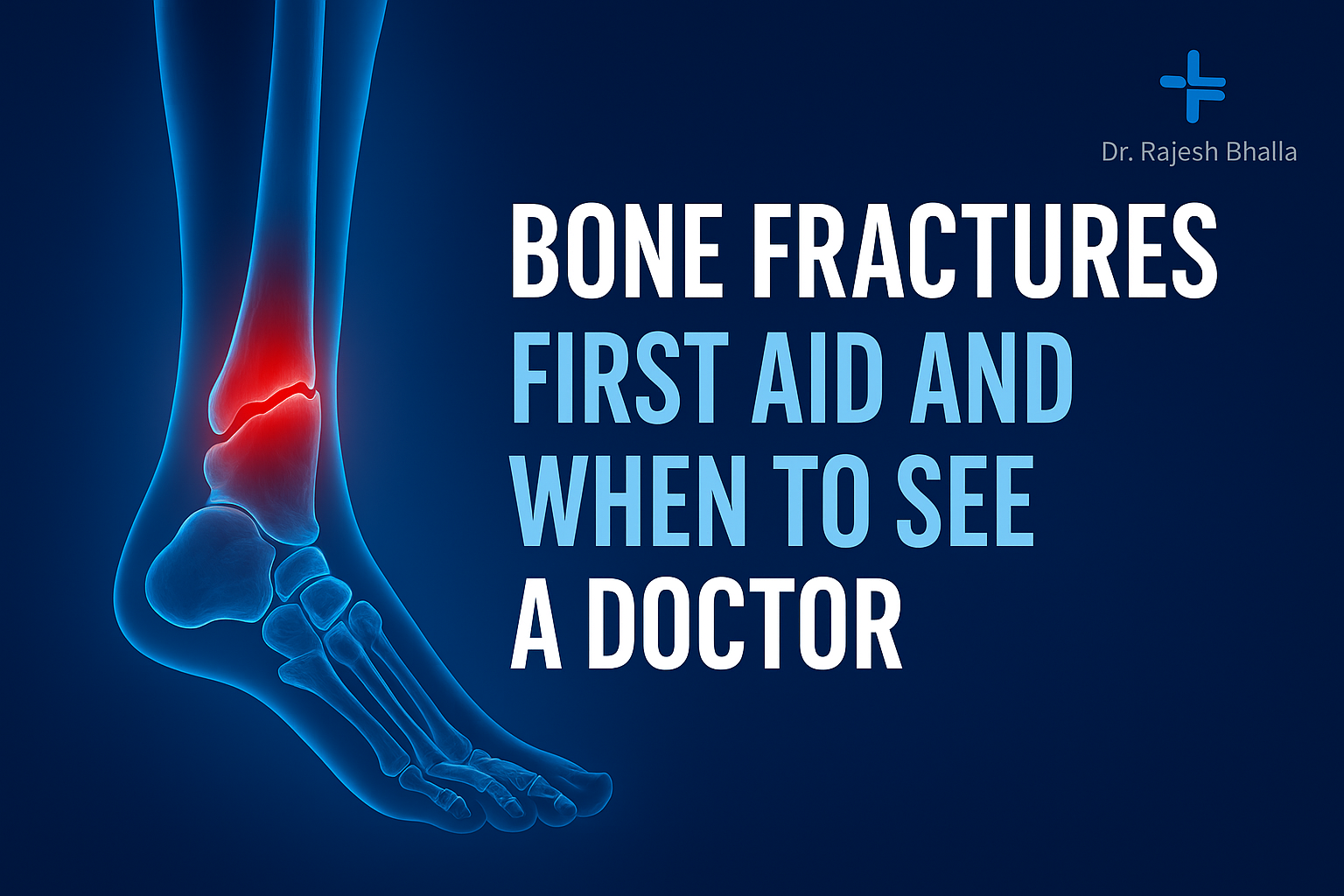
A bone fracture occurs when there is a break in the continuity of a bone. Fractures can vary from a tiny crack (hairline fracture) to a complete break that pierces through the skin (open fracture). The seriousness of the fracture depends on factors like the location, severity, and cause.
Common Types of Bone Fractures:
- Closed fracture: Bone is broken, but skin remains intact.
- Open (compound) fracture: Bone breaks through the skin, leading to a higher risk of infection.
- Hairline fracture: A small crack that may not be immediately visible but causes pain.
- Comminuted fracture: Bone shatters into multiple pieces.
- Greenstick fracture: Common in children; the bone bends and cracks partially.
Causes of Bone Fractures
Fractures can happen to anyone, at any age, but certain risk factors increase the likelihood:
- Trauma: Road accidents, sports injuries, or falls.
- Overuse: Repetitive stress leading to stress fractures (common in athletes).
- Osteoporosis: Weak and brittle bones that break easily.
- Medical conditions: Certain diseases or deficiencies that weaken bones.
Symptoms of a Bone Fracture
Recognizing the signs of a fracture helps in providing the right care quickly. Common symptoms include:
- Sudden and severe pain
- Swelling and bruising
- Deformity or unnatural angle of the limb
- Inability to move the affected area
- A grinding or popping sound at the time of injury
- Open wounds with visible bone (in severe cases)
If any of these symptoms appear, assume a fracture and act immediately.
First Aid for Bone Fractures
Immediate first aid can help reduce pain and prevent further injury before reaching a doctor.
1. Stay Calm and Ensure Safety
Keep the injured person calm and away from danger. Panic can worsen the situation.
2. Stop Any Bleeding
- If the fracture is open, use a clean cloth or sterile bandage to apply gentle pressure.
- Avoid pressing directly on the exposed bone.
3. Immobilize the Area
- Do not try to straighten the bone.
- Use a splint (a rigid material like wood, cardboard, or even rolled-up newspapers) to immobilize the injured limb.
- Tie the splint above and below the fracture site to restrict movement.
4. Apply Ice Packs
- Apply ice wrapped in a cloth to reduce pain and swelling.
- Do not apply ice directly to the skin.
5. Keep the Person Comfortable
- Support the injured limb with a pillow or soft cloth.
- Encourage rest and keep them warm.
6. Do Not Give Food or Water (if surgery is likely)
In severe cases where surgery may be required, eating or drinking could complicate anesthesia procedures..
When to See a Doctor
Not all fractures are the same. Some minor fractures may heal with rest and basic care, but many require medical intervention. You should seek medical attention immediately if:
- The bone is visibly out of place or piercing the skin.
- There is heavy bleeding that doesn’t stop with pressure.
- Severe pain and swelling persist.
- The person is unable to move or bear weight on the affected limb.
- The injured person shows signs of shock (pale skin, rapid pulse, fainting).
- A child or elderly person sustains any suspected fracture (as their bones are more vulnerable).
Even in the case of a hairline fracture, professional diagnosis is important. X-rays and medical evaluation are necessary to confirm the extent of the injury.
Treatment Options for Fractures
Once you visit an orthopaedic specialist, treatment may involve:
- Casting or splinting: Immobilizing the bone for weeks to allow natural healing.
- Traction: Using weights or pulleys to align bones.
- Surgery: Inserting rods, plates, or screws in complex fractures.
- Rehabilitation: Physiotherapy and gradual exercises to restore strength and mobility.
Recovery and Healing
The healing time for a fracture depends on factors such as age, bone health, severity, and treatment.
- Children may heal in 3–6 weeks.
- Adults may take 6–12 weeks or longer.
- Elderly individuals with osteoporosis may require extended recovery.
Following medical advice, rest, proper nutrition (rich in calcium and vitamin D), and physiotherapy play an essential role in regaining strength.
Preventing Bone Fractures
While not all accidents can be avoided, you can reduce risks with these preventive steps:
- Maintain strong bones through a calcium and vitamin D-rich diet.
- Engage in regular weight-bearing exercises.
- Use protective gear in sports and physical activities.
- Take fall-prevention measures at home for elderly family members.
- Get regular bone health checkups if you are at risk of osteoporosis.
Conclusion – Why Choose Dr. Rajesh Bhalla for Bone Fracture Care?
Dealing with a bone fracture can be stressful, but with the right medical care, most people make a full recovery. Immediate first aid, timely medical attention, and proper rehabilitation are essential for a successful recovery.
If you or your loved one is facing a bone injury, consulting an experienced orthopaedic specialist is vital. At Dr. Rajesh Bhalla Orthopaedics, I provide expert diagnosis, advanced fracture treatment, and personalized rehabilitation plans to ensure you regain mobility and strength safely. With years of experience in bone and joint care, my goal is to help patients recover quickly and prevent long-term complications.
Disclaimer
This blog is for educational purposes only and should not be considered as medical advice. Bone fracture treatment varies from person to person, depending on the severity, location, and individual health conditions. Always consult a qualified orthopaedic specialist or healthcare professional, such as Dr. Rajesh Bhalla, for an accurate diagnosis and personalized treatment plan.