
Effect of a Partial Meniscectomy on Articular Cartilage
A partial meniscectomy is a surgical procedure in which the damaged portion of the meniscus is removed to relieve knee pain and improve function. While this procedure can provide short-term relief.

Our services
Effect of a Partial Meniscectomy on Articular Cartilage

Comprehensive Knee Evaluation
We perform detailed clinical assessment and advanced imaging to evaluate cartilage condition and joint stability before and after partial meniscectomy, ensuring accurate diagnosis and structured long-term joint monitoring.

Altered Joint Mechanics
Removal of damaged meniscal tissue can change load distribution within the knee, increasing stress on articular cartilage and potentially accelerating wear if preventive measures are not properly followed.

Risk of Cartilage Degeneration
Although partial meniscectomy relieves pain, long-term cartilage thinning and early osteoarthritis may develop without proper rehabilitation, strengthening programs, and careful activity modification.
Cartilage Preservation Approach
Our treatment focuses on protecting joint surfaces through muscle strengthening, weight control, movement correction, and guided recovery plans that minimize excess cartilage stress.
Precision Arthroscopic Technique
We use minimally invasive surgical methods that preserve maximum meniscal tissue, helping maintain natural shock absorption and supporting long-term cartilage protection.
Structured Rehabilitation Program
Personalized rehabilitation restores knee strength, improves alignment, and reduces abnormal joint loading, promoting safer recovery and sustained cartilage health over time.
Advanced Knee Care & Cartilage Restoration Treatment
We provide specialized treatment for osteochondritis dissecans (OCD) and cartilage injuries using advanced diagnostic tools and precision-based surgical techniques.
Experienced Knee Specialist
Prof. Dr. Bhalla is highly experienced in diagnosing and treating osteochondritis dissecans and complex cartilage conditions. His approach focuses on accurate evaluation, joint preservation, and long-term knee stability.
Advanced Treatment Techniques
We use modern arthroscopic and cartilage restoration procedures designed to preserve healthy joint tissue, reduce pain, and improve functional recovery with minimal tissue disruption.
Accurate Diagnosis & Imaging
Comprehensive clinical examination and advanced imaging help determine cartilage damage, bone involvement, and lesion stability to guide precise treatment planning.
Comprehensive Joint Preservation
Our treatment emphasizes cartilage protection, load balance correction, muscle strengthening, and structured rehabilitation to support long-term knee function.
With trusted surgeons, personalized planning, and proven techniques, we deliver results that enhance your individuality, not change it.

#1 Best Clinic
Inspiring transformations from our clients
Explore inspiring client success stories of transformation. See how mindfulness coaching helps people move from stress and disconnection.

Our client say
Our Process
A clear, step-by-step medical approach designed to guide you smoothly through your knee replacement journey — from diagnosis to full recovery and long-term joint health.
Detailed Consultation
Your journey begins with a thorough evaluation of your knee condition, pain level, mobility, medical history, and lifestyle. Prof. Dr. Bhalla carefully examines reports and explains whether knee replacement is required, helping you clearly understand your condition and treatment options.
Personalised Treatment Planning
Based on your joint damage, age, activity level, and health condition, a customised surgical plan is created. Implant type, surgical technique, and recovery strategy are selected to ensure long-term stability, improved mobility, and the best possible outcome.
Advanced Surgical Precision
Knee replacement surgery is performed using modern, precision-based techniques to ensure accurate implant positioning, minimal tissue damage, and improved joint alignment. This helps reduce pain, improve movement, and support faster recovery.
Safe & Advanced Surgical Environment
The procedure is carried out in a fully equipped, sterile, and well-monitored surgical setup with advanced infrastructure and trained medical staff. Every safety protocol is followed to ensure a smooth, secure, and successful surgical experience.
Guided Recovery & Rehabilitation
After surgery, you receive structured physiotherapy guidance, mobility training, pain management, and recovery monitoring. This step is essential to restore strength, improve flexibility, and help you return to daily activities safely and confidently.
Long-Term Follow-Up Care
Regular follow-ups help track your recovery, joint performance, and implant stability. Continuous medical guidance ensures long-term success, sustained mobility, and a pain-free lifestyle after knee replacement surgery.
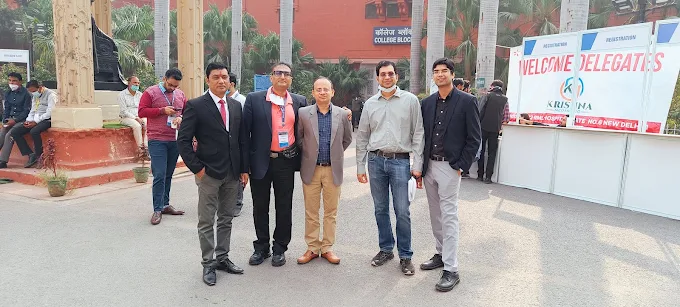
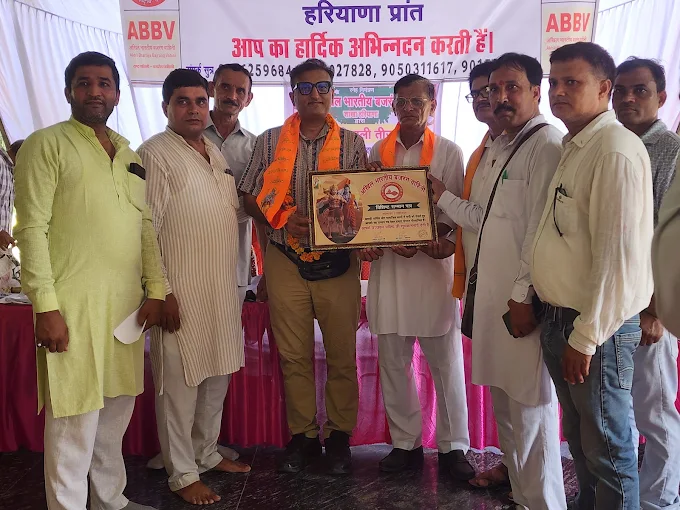
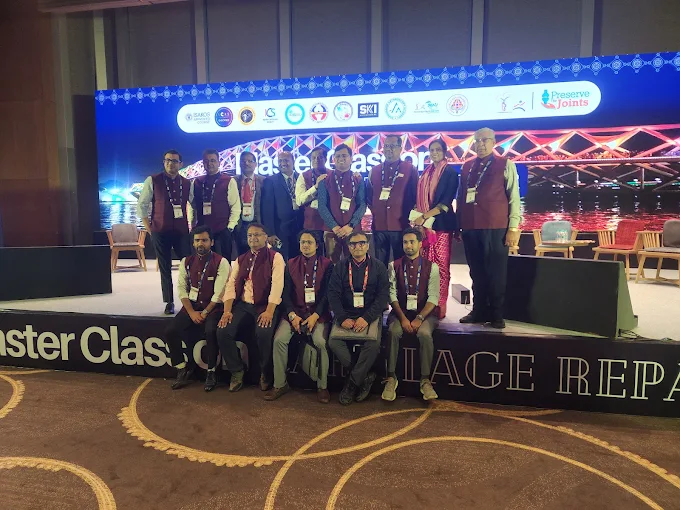
Our Gallery
Explore our collection of professional moments and achievements






The most common questions
We’re here to guide you at every step. Whether you’re exploring options for the first time or preparing for a procedure, our team ensures you feel informed, comfortable, and confident throughout your journey.
You can connect with us anytime for personalised advice, treatment details, or appointment assistance.
Contact Us
Call us: 8595471202
Email: care@drrajeshbhalla.com
Opening Hours
Mon - Sat: 10.00 am - 6.00 pm
1. What is articular cartilage in the knee?
Articular cartilage is the smooth, protective tissue that covers the ends of bones inside the knee joint. It allows smooth movement, reduces friction, and absorbs shock during walking, running, and daily activities.
2. Can damaged knee cartilage heal on its own?
Cartilage has limited natural healing ability because it does not have a direct blood supply. Small injuries may improve with rest and rehabilitation, but significant damage often requires medical treatment or surgical intervention.
3. What are the symptoms of cartilage damage in the knee?
Common symptoms include knee pain, swelling, stiffness, clicking sensations, locking of the joint, and difficulty bearing weight during movement or sports activities.
4. What treatments help protect or restore knee cartilage?
Treatment options include physiotherapy, activity modification, weight management, injections, and advanced procedures such as cartilage repair or restoration surgery, depending on the severity of the damage.
Beauty tips and surgical insights
Explore expert tips and insights in our plastic surgery blog. Learn about the latest techniques to enhance your beauty and boost your confidence.
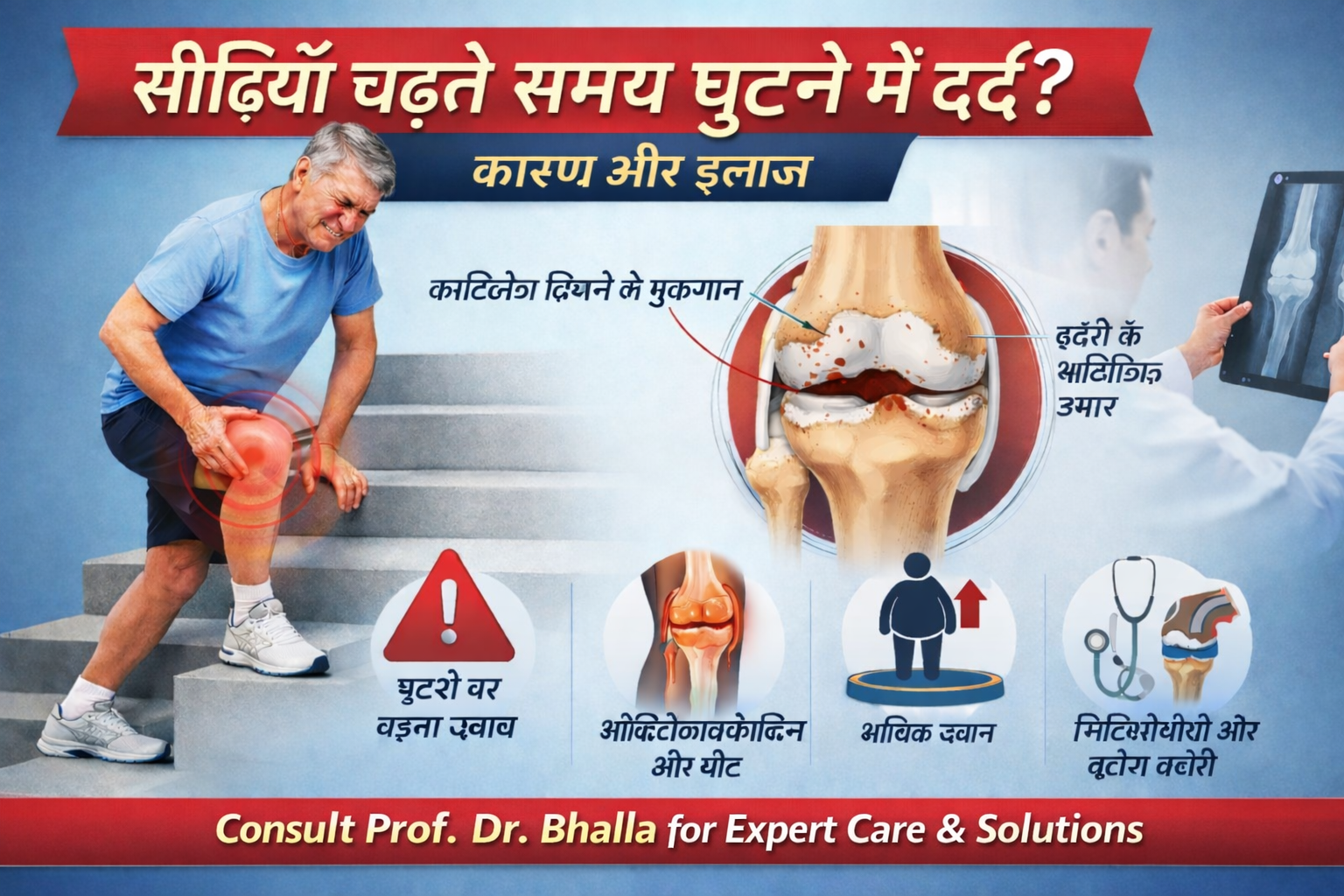
सीढ़ियाँ चढ़ते समय घुटने में दर्द? कारण और इलाज
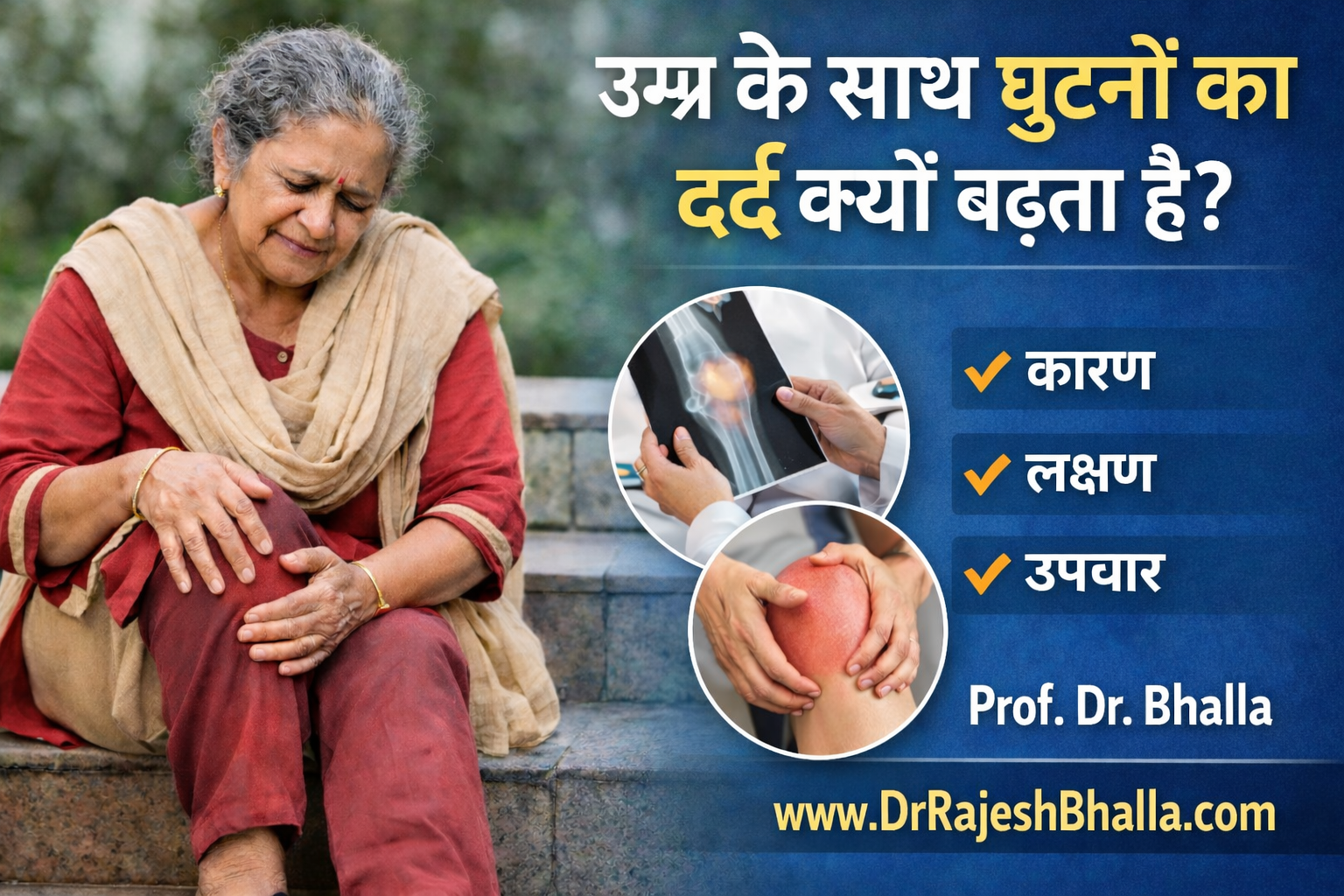
उम्र के साथ घुटनों का दर्द क्यों बढ़ता है?

Sleep and Recovery: How Rest Affects Bone Healing After Surgery
Jawline Sculpting Options Fillers Chin Implants and V Shaping
Orthopaedic Red Flags: When Self-Treatment Becomes Dangerous