Knee pain can significantly impact your daily life, limiting mobility and reducing overall quality of life. While total knee replacement is often recommended for severe arthritis, partial knee replacement has emerged as a less invasive and highly effective alternative for patients with localized knee damage. Understanding when partial knee replacement is the better option can help you make an informed decision and take the right steps toward recovery.
What is Partial Knee Replacement?
Partial knee replacement, also called unicompartmental knee arthroplasty, involves replacing only the damaged portion of the knee joint, rather than the entire knee. This procedure is ideal when arthritis or damage is limited to a single compartment of the knee – either the inner (medial), outer (lateral), or kneecap (patellofemoral) region.
Unlike total knee replacement, partial knee replacement preserves healthy bone, ligaments, and cartilage, allowing for more natural movement and better knee function after surgery.
Benefits of Partial Knee Replacement
Partial knee replacement offers multiple advantages over total knee replacement, including:
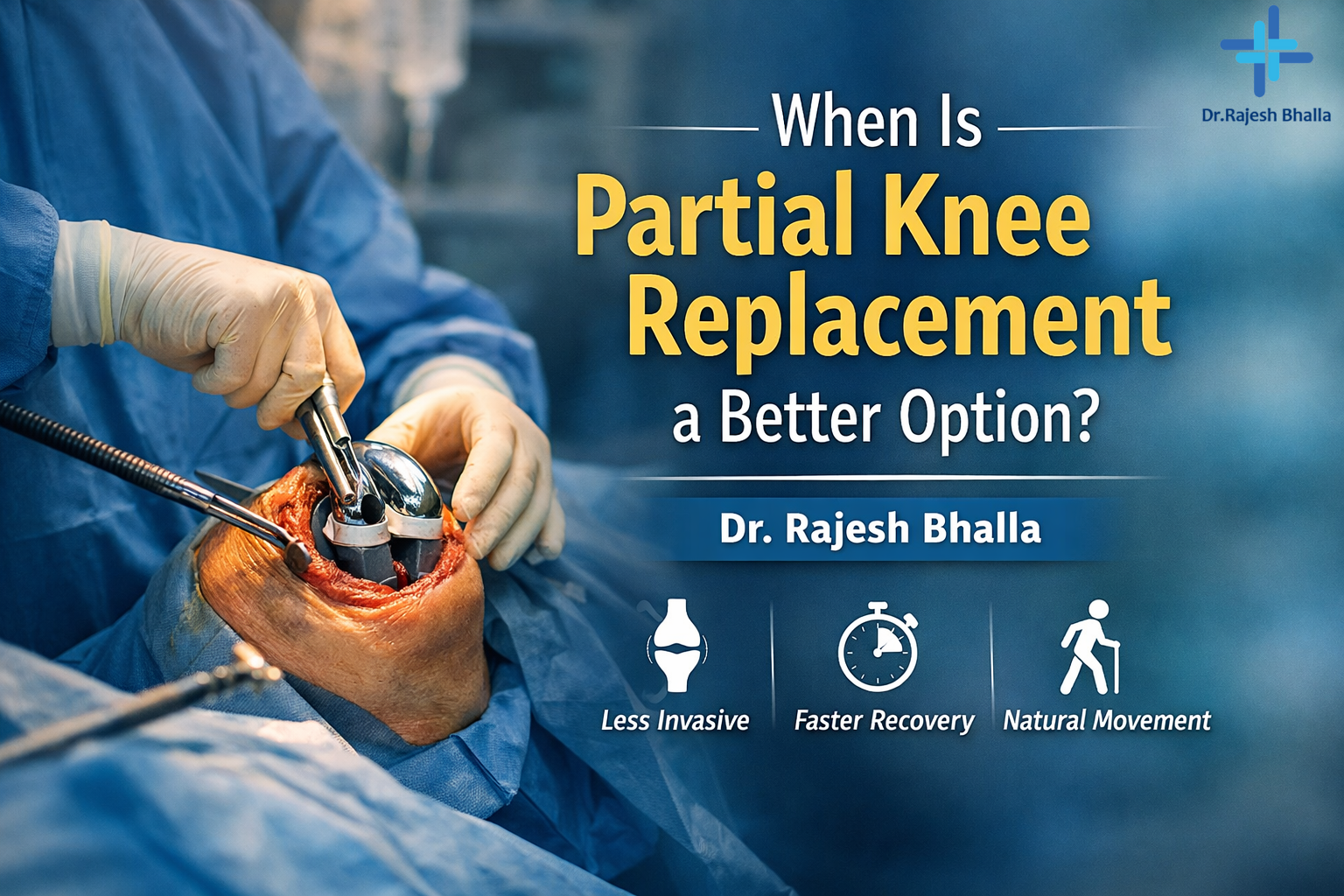
- Less Invasive Surgery: Only the damaged portion of the knee is treated, requiring smaller incisions and causing less trauma to surrounding tissues.
- Faster Recovery Time: Patients typically experience quicker rehabilitation, allowing them to resume daily activities and normal routines sooner.
- Preserves Natural Knee Function: Since healthy areas of the knee remain intact, patients often enjoy smoother, more natural movement and better overall joint stability.
- Reduced Post-Operative Pain: Less surgical trauma means patients generally experience lower pain levels after surgery compared to total knee replacement.
- Shorter Hospital Stay: Many patients are discharged within 1–2 days, minimizing disruption to daily life and reducing overall healthcare costs.
- Lower Risk of Complications: Preserving healthy tissue and ligaments can reduce the risk of certain post-surgery complications, such as stiffness or instability.
- Improved Long-Term Functionality: Partial replacement often allows for a more active lifestyle post-surgery, including walking, climbing stairs, and light sports activities.
Who is an Ideal Candidate?
Partial knee replacement is suitable for patients who meet specific criteria. The ideal candidates typically:
- Have arthritis confined to a single compartment of the knee (medial, lateral, or patellofemoral)
- Possess healthy ligaments and strong surrounding muscles, which are crucial for knee stability post-surgery
- Are of normal weight or mildly overweight, as severe obesity may affect implant longevity
- Do not have severe knee deformities or widespread arthritis affecting multiple areas of the knee.
A specialist will review knee X-rays, MRI scans, and your overall health to determine whether partial knee replacement is the best option for you.
Signs You May Need Partial Knee Replacement
You may be a candidate for partial knee replacement if you experience:
- Persistent Knee Pain: Pain that does not improve with conservative treatments like medications, physiotherapy, or joint injections
- Localized Swelling and Stiffness: Swelling and stiffness that interfere with daily activities such as walking or climbing stairs
- Pain Restricted to One Side: Discomfort limited to the inner, outer, or front portion of the knee
- Difficulty with Daily Movements: Challenges with bending, kneeling, or performing routine tasks due to limited knee mobility
Recovery and Results
Patients undergoing partial knee replacement can expect:
- Faster Recovery: Most patients regain mobility more quickly compared to total knee replacement
- Reduced Post-Surgery Pain: Less tissue trauma often results in lower levels of pain during recovery
- Improved Range of Motion: Patients typically achieve a more natural range of motion in the knee joint
- Long-Lasting Results: Modern knee implants can last 10–15 years or more, especially when combined with proper post-operative car
- Effective Rehabilitation: Physical therapy helps strengthen muscles, improve flexibility, and restore optimal knee function
Why Choose Dr. Rajesh Bhalla?
At the clinic of Dr. Rajesh Bhalla, we specialize in advanced knee replacement surgeries tailored to each patient’s unique needs. With years of experience in orthopedic and joint care, we provide:
- Accurate Diagnosis: Using advanced imaging and clinical evaluation to identify the exact area of knee damage
- Minimally Invasive Procedures: Focused surgical approaches for faster recovery and better outcomes
- Personalized Rehabilitation Plans: Customized physiotherapy and post-operative care to restore knee function quickly
- Ongoing Support: Guidance and follow-up to ensure long-term knee health and patient satisfaction
Final Thoughts
Partial knee replacement is a highly effective solution for patients with localized knee arthritis. By targeting only the damaged portion of the knee, it preserves natural joint function, reduces recovery time, and allows patients to return to daily activities faster. The success of the procedure depends on proper patient selection, accurate diagnosis, and expert surgical care.
If you are struggling with knee pain or mobility issues, consulting an experienced orthopedic specialist is the first step toward relief. At Dr. Rajesh Bhalla’s clinic, we combine advanced surgical techniques with personalized care to ensure the best outcomes for every patient.